Discovering mold in apartment units isn’t just inconvenient; it can compromise your health, damage your belongings, and lead to costly disputes. Whether you’re renting or subletting, knowing what to do about mold in apartment conditions is essential to protecting your rights and your well-being.
Signs That Mold Is Present in Your Apartment
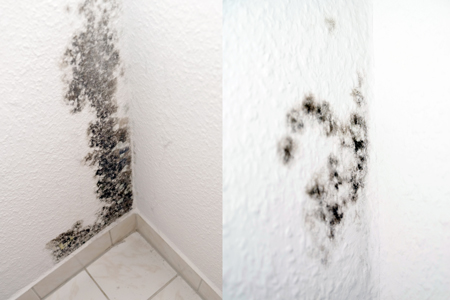
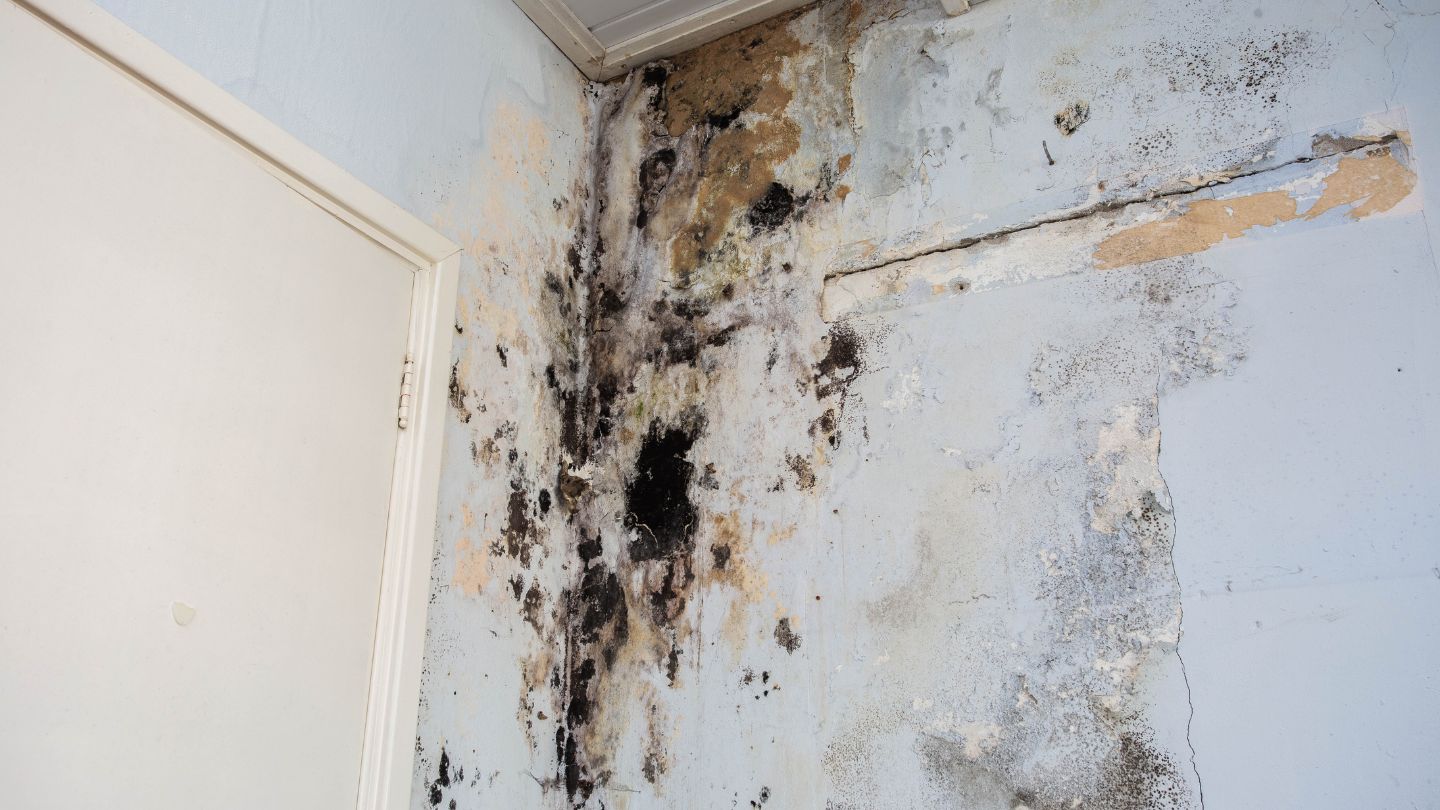
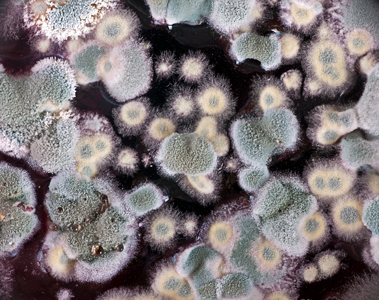
Mold may appear visibly as black, green, or white spots. However, not all mold is visible. Common signs include:
Musty or earthy odors
Peeling paint or bubbling walls
Respiratory symptoms like coughing, wheezing, or sinus irritation
Mold and your health are closely linked. Prolonged exposure can lead to allergies, asthma flare-ups, and long-term respiratory problems, making early detection and remediation essential.
If these symptoms persist and you find black mold in apartment corners, HVAC vents, or under sinks, professional remediation is necessary.
Many wonder is sleeping in a room with mold okay. The answer is no, breathing airborne spores overnight can cause coughing, congestion, and poor sleep quality.
What Causes Mold Growth Indoors?
Mold thrives in damp, humid conditions and can spread quickly without intervention. Key causes include:
Plumbing Leaks and Moisture Intrusion
Unseen leaks under floors or behind walls are a primary driver of mold issues in apartment units.
Poor Ventilation
Lack of airflow in bathrooms or kitchens allows condensation to build, creating the perfect environment for mold.
Structural Defects
Old windows, poor insulation, and weather damage allow water to enter and remain trapped.
Understanding who is responsible for mold in an apartment depends on the source of the problem and local landlord-tenant laws.
Landlords are typically responsible for mold caused by building defects, leaks, or deferred maintenance.
Tenants may be liable if mold results from negligence, such as not using ventilation fans or allowing excess moisture.
Still, the responsibility to maintain a habitable unit generally falls on the landlord, especially when mold is clearly defined as a tenant’s right under state law.
Steps to Take When You Discover Mold
Tenants wondering what can I do if my apartment has mold should act quickly and follow a structured process:
Document the Mold Thoroughly
Take photos, note dates, and log any health symptoms. This evidence will be vital if disputes arise.
Notify Your Landlord in Writing
Use email or certified mail. Keep copies of all communication regarding the presence of mold.
Request Professional Remediation
Avoid relying on DIY fixes or basic cleaning. Ask that certified mold specialists assess the property.
Escalate the Issue if Necessary
If ignored, contact your local housing authority or public health department. Georgia has resources for filing tenant complaints about unresolved mold.
Renters often ask, mold in my apartment what are my rights or mold in apartment tenant rights under state law. You may be entitled to:
Prompt repair and removal by the landlord
Rent reductions or reimbursement for personal loss
Lease termination without penalty
Legal action if health is affected or the apartment is uninhabitable
In Georgia, tenants can also seek code enforcement or legal aid if the landlord fails to maintain safe living conditions.
When Mold Keeps Coming Back
Persistent mold is a sign of an unresolved root cause, usually hidden moisture or inadequate remediation.
Ask for moisture testing
Request repairs to plumbing, roofing, or insulation
Demand that mold-affected materials be replaced, not just cleaned
When mold issues in apartment units recur, it’s often because deeper structural concerns haven’t been resolved.
How to Prevent Mold Recurrence
Tenants can reduce future risk by:
Reporting water leaks immediately
Running fans during and after showers
Keeping windows slightly open for ventilation
Cleaning HVAC filters regularly
While prevention is helpful, professionals should address any existing mold to ensure it doesn’t return. Applying top mold prevention tips, such as repairing leaks quickly, controlling humidity, and using exhaust fans, significantly reduces the chance of mold growth in living spaces.
Resources for Georgia Tenants
If you’re unsure what to do about mold in apartment buildings in Georgia, these resources may help:
Georgia Department of Public Health – Mold education and complaint submission
Georgia Legal Aid – Support for landlord disputes
Local Code Enforcement Offices – Inspection and enforcement
Final Thoughts
If you’re experiencing mold in apartment conditions that are putting your health or safety at risk, act decisively. Whether you’re documenting damage, requesting help, or escalating through official channels, understanding your rights is non-negotiable. Mold doesn’t just threaten your comfort, it can compromise your long-term well-being and your legal standing as a tenant.
Partnering with mold experts in Atlanta like Mold-B-Gone ensures that inspections are thorough, documentation is reliable, and remediation is handled correctly from start to finish. Don’t wait for the problem to worsen, take control and protect your living space.
Frequently Asked Questions
Can I break my lease because of mold?
Yes. If the apartment is deemed unsafe and the landlord refuses to act, tenants may legally break the lease.
Is mold removal the landlord’s responsibility?
If the mold is caused by leaks or structural issues, the landlord is typically responsible.
Can I get compensation for mold-related health issues?
If negligence can be proven, you may be entitled to compensation or rent refunds.
What if my landlord ignores my complaint?
File a report with code enforcement or seek legal counsel. You may also qualify for financial remedies.
When people think of indoor mold, they often assume it’s just an eyesore or mild allergy trigger. In reality, mold, especially toxic black mold, can wreak havoc on human health. From respiratory illness to neurological effects, even the rich and famous aren’t immune. The rise in cases involving celebrities affected by mold has sparked greater public concern, drawing attention to hidden household dangers most people overlook.
Celebrity Mold Exposure Cases
1. Suzanne Somers
An outspoken advocate for wellness, Suzanne Somers nearly lost her life to a toxic mold infestation in her home. She revealed the horror publicly, reinforcing just how insidious this silent intruder can be.
2. Muhammad Ali
Known as The Greatest, Muhammad Ali battled more than opponents in the ring. Later in life, he was reportedly exposed to mold, compounding his existing health challenges.
3. Dr. Oz
As a medical authority, Dr. Oz frequently highlighted the risks of toxic mold exposure. His public segments emphasized how mold can hide behind walls, under floors, and in HVAC systems, posing serious threats to anyone, including famous people with mold illness.
4. Bianca Jagger
The human rights activist and former actress became embroiled in a legal dispute over mold-infested housing. Her story underscored the health implications and legal complexities surrounding celebrities who have experienced toxic mold exposure.
5. Brittany Murphy
Tragically, this actress who died from mold has become the center of many mold-related conversations. Reports allege that the actress who died from mold in house conditions faced toxic exposure alongside her husband, raising concerns over inadequate inspection protocols in luxury homes.
Scheduling regular mold inspections is one of the simplest ways to keep a healthy home environment. Early detection of hidden moisture or air-quality issues stops mold before it causes structural damage or health concerns.
6. Ted Nugent
The rock legend’s mansion was invaded by mold, making it uninhabitable. His case made headlines and reminded the public that mold isn’t just a poor-home issue; it targets homes of all sizes and values.
7. Erin Brockovich
Even this environmental warrior wasn’t spared. Her struggle against indoor toxins like mold brought more visibility to the issue, especially among celebrities affected by toxic mold who later became advocates.
8. Lou Ferrigno
The original Hulk faced a real-life battle when toxic mold triggered respiratory complications. His case added to the growing list of celebrities who have been affected by mold despite seemingly ideal living conditions.
Practical mold prevention tips, like fixing water leaks quickly, improving ventilation, and keeping indoor humidity balanced, help block mold growth before it starts, saving both time and costly repairs.
9. Star Jones
A lawsuit followed after the TV personality discovered her condo had a severe mold problem. Her legal action emphasized just how difficult mold claims can be to resolve without strong documentation.
10. Katrina Parker
A singer on The Voice, Parker, temporarily lost her ability to sing due to mold exposure. This incident highlighted how mold can jeopardize not just health but also livelihood, especially for celebrities who have experienced toxic mold exposure.
Even MJ faced the mold menace. His luxury estate encountered indoor mold issues that were extensively documented during a high-profile property dispute.
12. Ed McMahon
In a heartbreaking twist, Ed McMahon claimed that mold contributed to his dog’s death and his own health decline. His lawsuit helped spotlight mold’s devastating impact across species.
Why Celebrities Are Speaking Out
The increasing number of celebrities affected by toxic mold isn’t a coincidence; it’s a reflection of how dangerous and overlooked mold exposure can be. From famous people with mold illness to the actress who died from mold headlines, these stories aren’t just shocking; they’re cautionary tales for homeowners everywhere.
The effects of long-term mold exposure can extend far beyond allergies, leading to chronic respiratory problems, skin irritation, and even cognitive changes if left unaddressed.
Mold Doesn’t Discriminate
Whether you’re a Hollywood icon or a suburban homeowner, mold doesn’t care about status. It spreads silently, damages property, and threatens health in every type of building. Identifying symptoms like unexplained fatigue, chronic coughing, or sinus issues could mean the presence of hidden mold colonies.
The common ways to tell if your house has mold include noticing a persistent musty odor, spotting water stains, or seeing condensation on windows and pipes, which are early signs that warrant professional attention.
Final Thoughts
These cases of celebrities affected by mold are proof that even the most elite aren’t safe from environmental hazards lurking behind walls and beneath floors. From the tragic loss of an actress who died from mold to the ongoing health struggles of icons exposed to toxic environments, these stories serve as urgent reminders. Mold is not just a nuisance; it’s a legitimate threat to health, safety, and quality of life.
Whether you’re dealing with subtle symptoms or visible signs of an infestation, timely action is critical. Ignoring mold can result in escalating health complications, structural damage, and costly repairs. Professional evaluation and remediation are the only ways to ensure long-term protection.
For comprehensive mold inspection, certified removal services, and long-term prevention strategies, trust Mold-B-Gone, a leading mold removal company in Atlanta that homeowners and businesses rely on. Our team delivers precision, speed, and peace of mind, so you don’t become the following cautionary tale.
Frequently Asked Questions:
Can celebrities really be affected by toxic mold?
Yes. Several well-known figures, from actors to athletes, have publicly shared their struggles with toxic mold exposure, proving that it can impact anyone regardless of status or lifestyle.
Which actress died from mold exposure?
Brittany Murphy is often cited in connection with toxic mold exposure. Reports suggest both she and her husband may have faced severe health consequences linked to mold in their home.
What health problems can toxic mold cause?
Toxic mold can trigger respiratory illness, neurological issues, fatigue, skin irritation, and worsen pre-existing conditions like asthma. In severe cases, prolonged exposure can lead to life-threatening complications.
Why are celebrities speaking out about mold exposure?
Celebrities bring visibility to mold dangers because their stories highlight that even luxury homes can hide toxic mold. Their experiences raise awareness about hidden risks in everyday environments.
How can homeowners protect themselves from toxic mold?
Homeowners should watch for early symptoms like persistent coughing, fatigue, or sinus issues, and schedule professional inspections if mold is suspected. Certified remediation is key to eliminating mold safely and preventing recurrence.
For centuries, scripture has been a source of guidance not only for faith but also for practical living. One surprising example is mold. When people wonder what does the bible say about mold, they often expect only symbolic language. Yet the Bible goes into great detail, especially in the book of Leviticus, about mold in fabrics, homes, and even spiritual cleanliness. These passages reveal how ancient communities treated mold as a real danger and offered structured ways to address it.
In this blog, we will explore mold in Leviticus, highlight important passages, and explain how these biblical insights connect to modern understanding of health and safety.
References to Mold in Leviticus
The first step in answering what does the bible say about mold is turning to the Old Testament, particularly Leviticus chapters 13 and 14. These sections outline laws of cleanliness for the Israelites, focusing on both human health and the integrity of their living spaces.
Leviticus 13:47–50 provides some of the earliest documented instructions on mold found in clothing or fabric. The text states that garments made of wool or linen that develop greenish or reddish spots must be inspected by priests. If the discoloration spread, the fabric was considered unclean and destroyed. This demonstrates how seriously mold in Leviticus was treated, not only as a matter of hygiene but as an issue tied to spiritual impurity.
Leviticus Mold and Household Contamination
The Bible also extends these laws to mold in homes. Leviticus 14:33–47 describes in detail how mold appearing on walls or stones was to be handled. If a homeowner noticed suspicious marks, they were required to report them to the priest. The priest would then quarantine the house for seven days before returning to inspect.
If the discoloration had spread, affected stones were removed and replaced. If the problem persisted, the entire house could be torn down. This level of strictness shows how mold in Leviticus was seen as both a physical threat and a sign of spiritual corruption. Such thorough measures ensured the community was not exposed to potential illness, which aligns closely with today’s understanding of mold’s impact on health.
In modern translations, the terms “mold” and “mildew” sometimes appear interchangeably. When studying what does the bible say about mold, it’s important to recognize that the Hebrew language used words that may refer to a range of fungal growths or surface decay. Whether mold in garments, homes, or objects, the concern was the same, visible decay required immediate action.
Some translations prefer “mildew,” but the context makes it clear that these instructions were about contamination that could spread and cause harm. Whether mold or mildew, both carried weight in biblical law and required priestly oversight.
The Symbolism of Mold in Scripture
Beyond the physical threat, mold in Leviticus also carried symbolic significance. In a faith-based society, mold was more than just a nuisance; it represented impurity, corruption, and decay. The laws requiring cleansing rituals after mold removal reinforced this symbolism.
For example, once a contaminated house was repaired and cleaned, the priest would perform a purification ritual involving birds, cedarwood, and hyssop. These symbolic acts restored the house not just physically but spiritually. It demonstrates that what the bible says about mold extends beyond hygiene to reflect the broader theme of purity before God.
Lessons from Bible Verses About Mold
When reflecting on a bible verse about mold, one takeaway is the urgency of addressing it quickly. The scriptures did not suggest waiting to see if the problem would go away. Instead, they emphasized inspection, cleansing, and in some cases, destruction of contaminated materials.
This same principle applies today. Modern science confirms that mold can damage property, worsen allergies, and even cause respiratory illness. While we no longer call priests to our homes, we do rely on professional inspectors and remediation experts to assess and eliminate the problem. The underlying principle remains the same: mold must not be ignored.
It’s striking to compare the biblical approach with modern mold remediation practices. Thousands of years ago, the Israelites were instructed to remove contaminated stones or garments to stop the spread. Today, professionals do the same by removing porous materials like drywall, carpeting, or insulation once mold has infiltrated them.
This overlap suggests that mold in Leviticus reflects more than just religious law, it contains practical wisdom that aligns with today’s science. Asking what does the bible say about mold leads us to see that scripture acknowledged health risks long before medical research confirmed them.
Mold in Leviticus and Community Health
Another overlooked lesson is the role of mold in Leviticus in protecting community health. If a house was infected and not cleansed, the risk spread beyond one family to the wider village. This collective responsibility mirrors how public health operates today.
For example, ignoring mold in an apartment building or school can create problems for dozens of people. The biblical response to mold, swift action, inspection, and even demolition when necessary, reminds us that protecting health is a responsibility shared by the entire community.
Frequently Overlooked Interpretations
While Leviticus mold references are the most direct, other passages indirectly touch on decay and impurity. Some scholars argue that mildew and mold were viewed as visible reminders of spiritual corruption, urging believers to cleanse both their homes and their hearts.
These interpretations enrich our understanding of what does the bible say about mold. They show that while the practical concern was health, the deeper message was about living in purity and vigilance against forces that corrupt.
Why This Still Matters Today
Although mold is usually thought of as a modern household problem, its recognition in scripture proves it has always been a threat. People asking what does the bible say about mold often find reassurance that even ancient communities understood the importance of removing it quickly.
This biblical perspective also reinforces that neglecting mold can have lasting effects on health, property, and even spiritual well-being. Just as scripture encouraged immediate intervention, modern families are wise to do the same in their own homes.
Wrapping Up
From a bible verse about mold to mold in Leviticus, the scriptures make it clear: mold is destructive, impure, and dangerous if ignored. Ancient instructions emphasized cleansing, removal, and even demolition to protect communities from harm. These timeless lessons align with modern mold remediation practices, underscoring that the threat has always been serious.
For homeowners facing mold concerns today, professional help is essential. Just as the priests in Leviticus took responsibility for identifying contamination, modern remediation experts do the same with advanced tools and methods. For trusted solutions in removing mold and restoring safe living environments, Mold-B-Gone provides comprehensive services.
Whether you live in Alpharetta, Woodstock, Duluth, Flowery Branch, or surrounding areas, Mold-B-Gone offers expert remediation to keep your home safe. Contact us today to schedule an inspection and take the first step toward a cleaner, safer living environment.
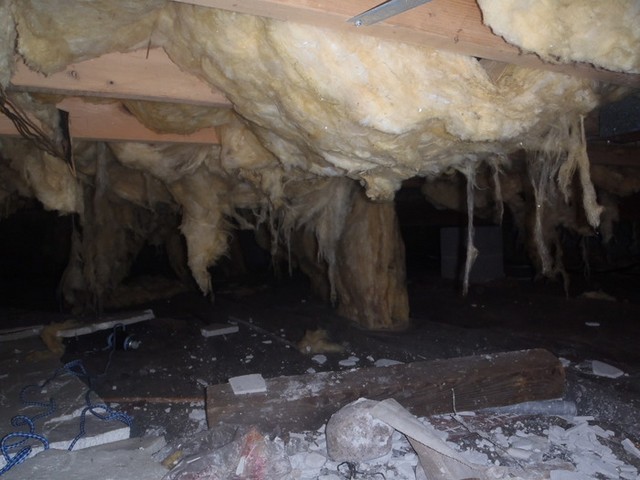
Crawlspaces are the ideal environment for mold to thrive.
Most crawlspaces are dark, dirty, and humid. Bugs like to live in there. They’re vented to the outside air in the summer (and in the winter if you neglect to close your vents) which can be very humid and this defeats the purpose of venting.
Mold is a fungus that requires moisture and high humidity to grow and thrive.
Like plants, mold has cells. However, unlike a plant that has chlorophyll and able to makes it’s food through photosynthesis, mold can not feed without moisture.
Mold reproduces by releasing it’s spores, this is mold’s survival mechanism.
In addition to moisture, mold also requires the right temperature of 41 degrees fahrenheit up to 100 degrees fahrenheit, common in Atlanta, Georgia and the South.
The final ingredient mold needs to thrive is food: high cellulose materials such as paper and wood, drywall, wallpaper, carpet, ceiling tiles, dust, and dirt.
If you want to know more about mold, then read: 10 Facts About Mold.
Now that you understand why mold grows in your crawlspace, the remainder of this article will list and explain the top three reasons why you have moisture in your crawlspace and what you can do to fix the humidity issues.
How To Measure The Relative Humidity Of Your Crawlspace!
The easiest way to determine the relative humidity of your crawlspace is to use a hygrometer or you could install a digital thermo-hygrometer with a remote sensor to track it.
If the relative humidity is greater than 50% this could cause moisture issues that leads to mold.
Mold will begin to grow at 50%, and will thrive when the humidity is greater than 70%.
The key to ensuring that your crawlspace does not become a source of mold is to figure out how to control the humidity.
Listed below are the top three reasons your crawlspace has high humidity.
#1 Water Accumulation!
If your crawlspace has standing water, you probably have a drainage problem or a plumbing leak. This needs to be fixed immediately.
You do not want water to accumulate in your crawlspace because this will compound your potential mold problems, not to mention as mold grows it will impact the indoor air quality of your home and health.
#2 Moisture Evaporating From The Ground!
When homes are built with crawl spaces, most builders neglect to cover the ground, meaning that the crawlspace is covered with dirt.
Dirt has moisture and as the moisture evaporates, it will increase the humidity in your crawlspace.
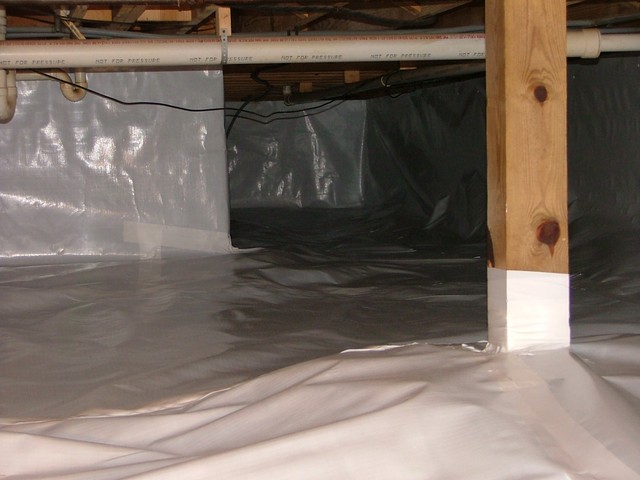
Unfortunately, this is a common problem in Atlanta, Georgia, and other southern states. To prevent moisture from evaporating from the ground, the easiest solution is to cover it up with a vapor barrier during crawlspace encapsulation.
#3 Outdoor Air Coming In Through The Crawlspace Vents!
The third reason your crawlspace could have moisture issues is through the vents.
When you bring outdoor air into the crawlspace, the relative humidity can increase.
Cool air cannot hold as much moisture as warm air, so the air that enters is now closer to its saturation point, referred to as the dew point.
It might be 60% relative humidity outside, relative to a temperature of 90 degrees fahrenheit, but when that air enters the crawlspace and cools down to 75 degrees fahrenheit, the relative humidity jumps up to 95%.
In the past, we were told that crawlspaces needed to be ventilated. Now, however, we are learning that crawlspaces need to be treated almost as if they were living spaces.
Fixing Your Crawlspace Humidity and Mold Problems
If your crawlspace is vented and the relative humidity is high, you need to fix the problems. It is not as simple as installing a dehumidifier either.
If you have water accumulation, the source of the water must be addressed. If it is a plumbing issue, fix the leak. If the problem is caused by drainage, this must be fixed as well.
If the problem relates to moisture evaporating from the ground or outdoor air coming into your vents, this can be fixed with crawlspace encapsulation in Atlanta, GA.
Mold-B-Gone Remediation, LLC specializes in drying out damp crawlspaces and turning them into dry, healthy foundations for your home.
Our dry-space crawlspace system includes the following:
Thorough cleaning of the crawlspace, including mold removal and prevention.
Installation of a wall-to-wall guide, durable, 14 mil vapor barrier.
Attachment of the vapor barrier over ground and up sidewalls to 6 inches below floor joists.
It’s that time of year when the real estate market begins heating up in Atlanta, Georgia. More houses on the market to fill the need of anxious home buyers.
Many homes built since the 1970s are showing signs of mold growth because of the oil crisis that occurred. This event encouraged home builders to make the homes more air-tight, meaning there were less drafts that brought outdoor air into the home.
This trend to energy efficiency has led to mold problems because mold needs water and moisture to thrive and the air-tight environments trap moisture in.
The upside is energy efficiency has saved you costs on utilities.
The downside, indoor air quality has suffered because of mold growth! This has led to higher incidences of mold related illness and reduced home values because mold literally feeds on the home, impacting its structural integrity.
The major problem with mold is that it can be hidden. You could have mold in your home and not even know that you have it. Sometimes the only clue that you have mold is family members may be getting sick more often. The problem with hidden mold is the mold spores are not visible and because of modern day HVAC systems, the air borne spores will continue to be circulated in your home, thereby spreading the spores in every room of your home.
As a home seller or home buyer, you need to be aware of the potential concerns caused by mold. Consult with your Real Estate Agent and ask them to call Mold B Gone, 470-545-4467; for a limited time we are offering mold inspections.
If you are selling your home and know that you have mold, had past water leaks that have been fixed and/or experienced a major water event like a flood or sewage backup, you should disclose this information to the realtor listing your home to avoid potential litigation.
In a perfect world, the home seller will disclose this information, but let’s face it, we are not living in a perfect world.
When a home seller wants to sell their home, their objective is to list the property and get the highest price for their home. This is the reason they get the help of a realtor.
The only way home buyers can protect themselves is to take matters into their own hands and make sure that the home they are buying does not have mold or moisture concerns that could lead to mold.
Most home buyers rely on the expertise of their home inspector, but as this article explains, can you really just rely on the opinion of your home inspector? Are they experts in mold? Most home inspectors are not and they rely on the goodwill of referrals from realtors, so there could be an inherent conflict of interest.
This article explains why you should submit an offer to purchase, subject to a home inspection AND a mold inspection. It also reveals the top 3 reasons to have a mold inspection before buying a home.
What Is Mold?
What Is Mold?
A fungus, some molds are visible, in various colors–black, white, green, gray–and will likely give off a smell.
Mold is nature’s recycler. It is everywhere because it has an important purpose in our eco-system: to breakdown and eat dead organic matter.
Mold needs three important ingredients to grow.
First, a food source, dead organic material like wood, paper, carpet, etc.
Second, the ideal temperature of 41 degrees fahrenheit up to 100 degrees fahrenheit.
Third, and most importantly, moisture. Without moisture, mold will not grow.
Why Is Mold A Problem?
Aside from the structural and health concerns (asthma and chronic sinusitis for example) that mold poses, the other major concern is that mold is often out of sight and difficult to see.
Common reasons and areas of the home that mold can be found include:
Around leaking pipes, windows, or roofs. Water provides mold spores the moisture they need to grow.
Basements or other areas of the home that have flooded and were not dried properly.
Common with new construction is the practice of tightly sealing the building, which can trap moisture leading to mold growth.
Poorly ventilated homes that does not enable outside air to circulate in the home.
Some other clues that there could be mold in the home include the following:
Water stains on the walls and ceilings.
Musty odors in areas of the home like the bathroom, kitchen, laundry room, and basement, where leaky pipes are commonly found.
Standing water in the basement.
Be particularly careful if you are looking at purchasing a foreclosed home. These homes are susceptible to mold growth because cost saving measures by the banks usually means they will shut down the HVAC system, which is a major concern because it results in high humidity levels and ultimately mold growth.
If you are buying a new home, you may think that mold will not be an issue either. New does not necessarily mean mold for several reasons:
The trend towards building energy efficient homes may save money on heating and cooling. The negative, however, is that by building homes so that they are air tight could result in a lack of proper ventilation, leading to mold growth.
Simple construction errors like installing the vapor barrier when there is moisture present. This error will lead to mold growth because the moisture is trapped.
The time of year the home was built could also be a factor. If the home was built when there was lots of rain and the foundation was not allowed to completely dry before installing the insulation and vapor barrier, then moisture could be trapped behind the walls.
Cost saving construction measures is another factor. Home builders are using more Orient Strand Board (OSB) and less plywood and timber which provided some resistance to mold because these materials are semi-porous. In contrast, OSB and particle board are porous and susceptible to mold growth.
Top 3 Reasons To Have a Mold Inspection Before Buying a Home
Aside from the peace of mind that mold inspection offers, here are the top three reasons why you should consider a mold inspection when you buy a home:
Mold Remediation Can Be Costly!
Real Estate Agents Are Not Mold Experts!
Home Inspectors Are Not Mold Experts!
#1 Mold Remediation Can Be Costly!
#1 Mold Remediation Can Be Costly!
As stated in an earlier article, the cost of mold remediation will depend on three key factors:
1. How much of the area is infected with mold?
2. What kind of materials are infected?
3. How easy is it to access the mold?
On average, the typical household mold removal project will range from $2,000 to $6,000, but can be as high as $30,000 or more depending on the extent of contamination.
Considering the potential cost of mold removal, you are much better off finding out if there is a potential mold problem before purchasing the home. A mold inspection will provide you with the data you require to make an informed decision.
Best case scenario, no mold is found. Worst case scenario, mold is found, but then if you still have your heart set on the home, at least you now have some negotiating power to bring down the price so the home can be properly remediated before you move in.
#2 Real Estate Agents Are Not Mold Experts!
#2 Real Estate Agents Are Not Mold Experts!
The goal of every real estate professional is to list and sell homes. They will only make their commission when the property sells, so they have significant motivation to do what it takes to facilitate the sale. Their end goal is pretty defined: sell the home and collect the commission.
In addition, real estate agents are sales and marketing professionals, they are not construction experts and likely know very little about mold, where it could be found, and why it is a problem.
When listing a home, the agent is relying on the honesty and integrity of the seller who fills in a property disclosure form. If the seller fails to disclose a mold problem that has not been fixed and is trying to hide the mold problem by painting over it or trying to hide it, how is the agent going to know. How will you know?
Buyers should pay close attention to the property disclosure form because it could provide you with clues of potential moisture problems that could cause mold. Some clues include YES answers to these types of questions:
Is the property in a flood hazard area or an inland wetlands area?
Does the home have basement water, seepage, or dampness issues?
Has the home had roof leaks?
Does the home have any rot and water damage problems?
Does the home have any water drainage problems?
Does the home have any sump pump problems?
#3 Home Inspectors Are Not Mold Experts!
#3 Home Inspectors Are Not Mold Experts!
Mold sickness is considered a hidden epidemic for two key reasons. First, most physicians are not trained to identify or treat mold illness. Second, most homes have mold, but the owners do not realize they have mold because it is hidden.
Since some people get sick from mold and other’s do not, a family could have been living in a moldy home and never experienced any major health concerns. In short, a seller of a home could have mold and not know because mold can be hidden underneath carpet, a new paint job, baseboards, behind walls, above ceiling, etc.
Taking this into consideration, when you hire a home inspector, their primary concern is not to identify if the home has mold. Rather, they are inspecting the overall structural integrity of the home, the roof, wiring, bathrooms, plumbing, etc.
A home inspector may point out water stains or moisture concerns in areas of the home, advise you that your basement has an odor, identify water seepage or a leaky roof, but they will not tell you if you have mold, what type of mold you have, and how extensive the mold problem is.
As a final note, like many business owners, home inspectors rely on referrals. Not surprisingly, one of the biggest sources of referrals tends to be real estate agents, whose primary objective is to sell property. Mold concerns present challenges to home sellers and their agents. Could there be a potential conflict of interest?
Mold Inspections Are Important!
The process of buying a home is an exciting process. You have big plans for your new home! You are looking forward to the future in your dream home to raise your family.
But in all the excitement, many home buyers forget about the future problems that mold and past moisture issues could have caused. This fact is ignored because many home buyers think a home inspection is a enough to protect them from future and costly repair problems. This is the #1 mistake home buyers make; home inspectors are not mold experts!
The worst case scenario is you move your family and all your possessions into your new home and eventually discover mold. Now what? You can ignore the problem which could cause future health and structural concerns for your property or you make the financial decision to deal with your mold problem.
Both options can be costly. Ignoring the problem will reduce your property value as the mold eats away at your home, not to mention the potential health issues. Addressing the mold concern can also be costly because proper remediation needs to be done by professionals.
Likely, the last concern you have when you are purchasing a home is the potential problems that mold could cause. Once you find your dream home, you want to submit your offer and close the deal.
However, I caution against being too hasty. In addition to hiring a reputable home inspector, seriously consider the services of a mold inspector.
Mold inspectors are trained to not only identify the moisture issue causing the mold but will also provide you with information on what type of mold is growing in your home and how extensive the problem is.
As mentioned earlier, the best case scenario is that no mold is found in your home.
However, if the mold inspector does find a mold problem it is better to be aware of the problem so that you can adjust your offer, subject to mold removal by the seller along with proper clearance letters. If the seller does not want to cover the cost of the removal, then at least you can factor in the cost of the mold removal into the purchase price.
Bottom line, it is better to be safe and informed, then sorry. The relative cost of a mold inspection is minor compared to the overall investment into the home and the potential costly headaches you will face if you have to pay for mold removal in the future.
As mentioned earlier in this article, consult with your Real Estate Agent and ask them to call Mold B Gone, 470-545-4467; for a limited time we are offering mold inspections.
Got Mold Questions?
We are mold inspection, detection, and removalexperts. Call us, 470-545-4467, or contact us via e-mail. We look forward to serving you! 🙂
Are You Buying or Selling A #Moldy Home? | Atlanta GA | Mold-B-Gone https://t.co/tGIGFvU9jQ Does the home you are buying or selling have #mold? This article lists the top 3 reasons why you should get a mold inspection before buying or selling a home! PLS RT pic.twitter.com/SGO0pWJo1H