by Eric Brown | Oct 16, 2015 | Beware Of Mold When Buying A Home, Health, Indoor Air Quality, Mold Facts, Mold Information, Mold Inspection, Mold Removal, Questions and Answers
Top 3 Reasons A Mold Inspection Is Essential When You Buy A Home!

Top 3 Reasons A Mold Inspection Is Essential When You Buy A Home!
How Reliable Is Your Home Inspection?
The process of buying a home is an exciting process. You have big plans for your new home! You are looking forward to the future in your dream home to raise your family.
But in all the excitement, many home buyers forget about the future problems that mold and past moisture issues could have caused. This fact is ignored because many home buyers think a home inspection is a enough to protect them from future and costly repair problems. This is the #1 mistake home buyers make; home inspectors are not mold experts!
The worst case scenario is you move your family and all your possessions into your new home and eventually discover mold. Now what? You can ignore the problem which could cause future health and structural concerns for your property or you make the financial decision to deal with your mold problem.
Both options can be costly. Ignoring the problem will reduce your property value as the mold eats away at your home, not to mention the potential health issues. Addressing the mold concern can also be costly because proper remediation needs to be done by professionals.
This article explains why you should submit an offer to purchase, subject to a home inspection AND a mold inspection. It also reveals the top 3 reasons to have a mold inspection before buying a home.
What Is Mold?
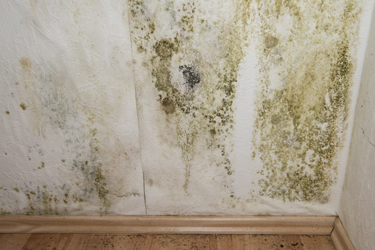
A fungus, some molds are visible, in various colors–black, white, green, gray–and will likely give off a smell.
Mold is nature’s recycler. It is everywhere because it has an important purpose in our eco-system: to breakdown and eat dead organic matter.
Mold needs three important ingredients to grow.
First, a food source, dead organic material like wood, paper, carpet, etc.
Second, the ideal temperature of 41 degrees fahrenheit up to 100 degrees fahrenheit.
Third, and most importantly, moisture. Without moisture, mold will not grow.
Why Is Mold A Problem?
Aside from the structural and health concerns (asthma and chronic sinusitis for example) that mold poses, the other major concern is that mold is often out of sight and difficult to see.
Common reasons and areas of the home that mold can be found include:
- Around leaking pipes, windows, or roofs. Water provides mold spores the moisture they need to grow.
- Basements or other areas of the home that have flooded and were not dried properly.
- Common with new construction is the practice of tightly sealing the building, which can trap moisture leading to mold growth.
- Poorly ventilated homes that does not enable outside air to circulate in the home.
Some other clues that there could be mold in the home include the following:
- Water stains on the walls and ceilings.
- Musty odors in areas of the home like the bathroom, kitchen, laundry room, and basement, where leaky pipes are commonly found.
- Standing water in the basement.
Be particularly careful if you are looking at purchasing a foreclosed home. These homes are susceptible to mold growth because cost saving measures by the banks usually means they will shut down the HVAC system, which is a major concern because it results in high humidity levels and ultimately mold growth.
Recently renovated homes are another concern because improperly trained contractors or the home seller could have found mold, but not addressed it properly.
A Brand New Home Could Have Mold!
If you are buying a new home, you may think that mold will not be an issue either. New does not necessarily mean mold free for several reasons:
- The trend towards building energy efficient homes may save money on heating and cooling. The negative, however, is that by building homes so that they are air tight could result in a lack of proper ventilation, leading to mold growth.
- Simple construction errors like installing the vapor barrier when there is moisture present. This error will lead to mold growth because the moisture is trapped.
- The time of year the home was built could also be a factor. If the home was built when there was lots of rain and the foundation was not allowed to completely dry before installing the insulation and vapor barrier, then moisture could be trapped behind the walls.
- Cost saving construction measures is another factor. Home builders are using more Orient Strand Board (OSB) and less plywood and timber which provided some resistance to mold because these materials are semi-porous. In contrast, OSB and particle board are porous and susceptible to mold growth.
Top 3 Reasons To Have a Mold Inspection Before Buying a Home
Aside from the peace of mind that mold inspection offers, here are the top three reasons why you should consider a mold inspection when you buy a home:
1. Mold Remediation Can Be Costly!
2. Real Estate Agents Are Not Mold Experts!
3. Home Inspectors Are Not Mold Experts!
#1 Mold Remediation Can Be Costly!
As stated in an earlier article, the cost of mold remediation will depend on three key factors:
1. How much of the area is infected with mold?
2. What kind of materials are infected?
3. How easy is it to access the mold?
On average, the typical household mold removal project will range from $2,000 to $6,000, but can be as high as $30,000 or more depending on the extent of contamination.
Considering the potential cost of mold removal, you are much better off finding out if there is a potential mold problem before purchasing the home. A mold inspection will provide you with the data you require to make an informed decision.
Best case scenario, no mold is found. Worst case scenario, mold is found, but then if you still have your heart set on the home, at least you now have some negotiating power to bring down the price so the home can be properly remediated before you move in.
#2 Real Estate Agents Are Not Mold Experts!
The goal of every real estate professional is to list and sell homes. They will only make their commission when the property sells, so they have significant motivation to do what it takes to facilitate the sale. Their end goal is pretty defined: sell the home and collect the commission.
In addition, real estate agents are sales and marketing professionals, they are not construction experts and likely know very little about mold, where it could be found, and why it is a problem.
When listing a home, the agent is relying on the honesty and integrity of the seller who fills in a property disclosure form. If the seller fails to disclose a mold problem that has not been fixed and is trying to hide the mold problem by painting over it or trying to hide it, how is the agent going to know. How will you know?
Buyers should pay close attention to the property disclosure form because it could provide you with clues of potential moisture problems that could cause mold. Some clues include YES answers to these types of questions:
- Is the property in a flood hazard area or an inland wetlands area?
- Does the home have basement water, seepage, or dampness issues?
- Has the home had roof leaks?
- Does the home have any rot and water damage problems?
- Does the home have any water drainage problems?
- Does the home have any sump pump problems?
#3 Home Inspectors Are Not Mold Experts!
Mold sickness is considered a hidden epidemic for two key reasons. First, most physicians are not trained to identify or treat mold illness. Second, most homes have mold, but the owners do not realize they have mold because it is hidden.
Since some people get sick from mold and other’s do not, a family could have been living in a moldy home and never experienced any major health concerns. In short, a seller of a home could have mold and not know because mold can be hidden underneath carpet, a new paint job, baseboards, behind walls, above ceiling, etc.
Taking this into consideration, when you hire a home inspector, their primary concern is not to identify if the home has mold. Rather, they are inspecting the overall structural integrity of the home, the roof, wiring, bathrooms, plumbing, etc.
A home inspector may point out water stains or moisture concerns in areas of the home, advise you that your basement has an odor, identify water seepage or a leaky roof, but they will not tell you if you have mold, what type of mold you have, and how extensive the mold problem is.
As a final note, like many business owners, home inspectors rely on referrals. Not surprisingly, one of the biggest sources of referrals tends to be real estate agents, whose primary objective is to sell property. Mold concerns present challenges to home sellers and their agents. Could there be a potential conflict of interest?
Concluding Remarks On The Importance Of A Mold Inspection
Likely, the last concern you have when you are purchasing a home is the potential problems that mold could cause. Once you find your dream home, you want to submit your offer and close the deal.
However, I caution against being too hasty. In addition to hiring a reputable home inspector, seriously consider the services of a mold inspector.
Mold inspectors are trained to not only identify the moisture issue causing the mold but will also provide you with information on what type of mold is growing in your home and how extensive the problem is.
As mentioned earlier, the best case scenario is that no mold is found in your home.
However, if the mold inspector does find a mold problem it is better to be aware of the problem so that you can adjust your offer, subject to mold removal by the seller along with proper clearance letters. If the seller does not want to cover the cost of the removal, then at least you can factor in the cost of the mold removal into the purchase price.
Bottom line, it is better to be safe and informed, then sorry. The relative cost of a mold inspection is minor compared to the overall investment into the home and the potential costly headaches you will face if you have to pay for mold removal in the future.
Questions? We are mold inspection, detection, and removal experts. Call us, 678-697-6267, or contact us via e-mail. We look forward to serving you! 🙂

by Eric Brown | Oct 10, 2015 | Health, Indoor Air Quality, Mold Facts, Mold Information, Mold Inspection, Mold Remediation, Mold Removal, Questions and Answers
Top 3 Reasons Mold Sickness Is A Hidden Epidemic!
Top 3 Reasons Mold Sickness Is A Hidden Epidemic!
You Could Be Sick From Mold, But Are Not Aware Of It!
Working, researching, and writing about mold since 2011 has taught me one critical lesson: most people sick from mold do not realize that mold is making them sick.
Unfortunately, the burden of determining if mold is the cause of the sickness, is usually up to the patient. This conclusion is based upon over a dozen interviews I have conducted with mold survivors that began in 2013 when I worked with a company in Western Canada and currently with Wonder Makers Environmental as their Marketing Director.
As stated in a previous blog, I have learned five key lessons during these interviews:
- There is a lack of appreciation in the medical community of the impact mold can have on certain individuals.
- Symptoms from mold sickness are broad, leading to multiple mis-diagnosis of patients by many doctors.
- Mold sensitized individuals seek help from multiple medical practitioners because their illnesses continue.
- The mold sensitized individual eventually learns that mold has been the cause of their sickness.
- Because traditional remediation approaches do not adequately address their sensitivities, mold sensitized individuals often are forced to seek alternative shelters.
The purpose of this article is to explain the top three reasons that mold sickness is a hidden epidemic.
#1 Hidden Mold!
One of the major points made by the one hour documentary, MOLDY is that hidden mold is a huge concern. Simply put, the dramatic photos you see showing full-scale infestations of black mold after floods and hurricanes are the exception not the rule.
The seven areas listed below are the most common areas in a home where you will find mold.
Bathrooms and Kitchens
The most common area where you will find mold is under the sinks because of leaks.
Appliances
Another potential source of leaks are your refrigerator, dishwasher, and washing machines. Check behind and under the appliances for mold.
Roof
If you notice water stains on the ceilings, then your roof could be leaking which will cause mold if the leak is not repaired.
Windows
If you have condensation in the home, you will likely find mold on the window sills and around the windows.
Basement
If there is high humidity in your home, then check your basement and other areas of the home for mold.
Closets
Leaky pipes, high humidity, and other sources of moisture can result in hidden mold in your closets. If there are boxes in the closet, move them and check the walls and floor for mold.
Crawl Spaces
Moisture in your crawl space will cause mold to grow.
According to the documentary:
- At least 45 million buildings in the United Stats have unhealthy levels of mold.
- You have a 33% chance of being exposed to toxic mold when you move into a new home, apartment or office. The documentary also emphasizes the fact that many foods are contaminated with mold, including corn, peanuts, and coffee.
- Approximately 28 percent of the population have genes that make them highly susceptible to mold-related health issues.
- Despite the fact that mold is a significant health concern, like lead and asbestos, there are no federal environmental protections laws.
The number one reason mold is an epidemic; it is hidden and makes people sick.
#2 Building Practices Encourage Mold Growth
Modern day building building practices promote mold growth because homes are built with materials that mold loves to eat: wood, drywall, carpet, etc.
Moisture is the key component mold needs to grow and thrive. With this in mind, mold growth is a problem that can be prevented.
Unfortunately, according to the MOLDY documentary, at least 50 percent of homes in the United States have water damage issues caused by water line leaks, tears in moisture vapor barriers, leaky showers, condensation under eaves, and water pooling in crawl spaces. It is this water damage which causes mold to grow.
Improving building practices to prevent moisture issues is the single most effective way to prevent mold.
#3 Doctors Are Not Educated on Mold Sickness
Possibly every doctor in the United States is treating mold illness, and they just don’t realize it. (Dr. Scott McMahon, MD)
One of the key points made by the MOLDY documentary: most Physicians are unable to properly diagnose mold sickness patients because they do not have the knowledge or training.
According to Hilesca Hidalgo, a woman I interviewed earlier this year:
There is such a huge gap in care when it comes to mold illness that I found it extremely frustrating. I believe every medical assessment should include the question “have you been in a water damaged building?” There were many times that I felt so alone and with so little support that I didn’t know what to do. Luckily I have met some wonderful people in the many mold support groups that I have joined. The amount of people inflicted with mold illness and co-infections is unbelievable! So many have been misdiagnosed and unable to find medical help. They have shared their experiences and their healing and really helped guide me in finding my healing journey.
The experience of Hilesca Hidalgo is a common experience faced by most individuals battling mold sickness.
Awareness is the key. If you are consistently sick, have seen many different doctors, and are not getting better or begin to feel worse, then the cause of your illness could be hidden mold in your home.
Your best defense is to first verify that your home has mold which can be done through a professional mold inspection.
Once mold is verified, then seek out an environmental physician with experience dealing with mold afflicted patients. To find listings of environmental doctors throughout the world, click here.
Once you are diagnosed, you need to follow the medical treatment designed to detox your body and allow your immune system to recover and begin to regain its strength. The detox strategy will be prescribed by your physician who will likely recommend that you remove yourself from the property that has been making you sick until it is safe to occupy again.
As stated by Dr. Mark Hyman, MD, interviewed in the MOLDY documentary:
If you think you have a mold illness, there’s a way out….One, you have to get rid of it in your environment and Two, you have to get it out of your body, and Three, you have to repair the damage that has been done.
Questions? Mold B Gone is here to help! If you suspect that mold is making you sick, call us, 678-697-6267 or contact us via e-mail for further assistance.
Our goal is to help you live a healthier and happy life.
Most importantly, we truly empathize with your situation and are committed to helping you and guarantee our services.

by Eric Brown | Sep 18, 2015 | Health, Indoor Air Quality, Mold and Asthma, Mold Facts, Mold Information, Mold Removal, Questions and Answers
Does Mold Cause Asthma?

Does Mold Cause Asthma?
Asthma is a chronic respiratory inflammatory disease of the airways that makes it difficult to breathe and is caused by spasms in the bronchi of the lungs. The exact causes of asthma are not known, though research believes that the most common triggers are mold, allergies, tobacco smoke, environmental factors, genetics, and other factors.
The goal of this article is to explore the relationship between asthma and mold, citing recent research on the mold trigger and is divided up into the following sections:
- Asthma Statistics
- Asthma Statistics in Georgia
- Legal Evidence Citing Link Between Mold and Asthma
- Research Studies on Mold and Asthma
- The Impact of Mold Removal on Alleviating Asthma
Asthma Statistics

Asthma Statistics
Asthma affects 300 million people in the world and more than 22 million Americans. According to Michael Pinto, CEO, of Wonder Makers Environmental:
“Infants who are exposed to mold in their living environments have nearly a three times greater risk of becoming asthmatic than those who did not have extensive mold exposure in their first year of life.” (Medical Evidence that Connects Mold Exposure to Illness Keeps Piling Up)
Not surprisingly, six million American children suffer from asthma.
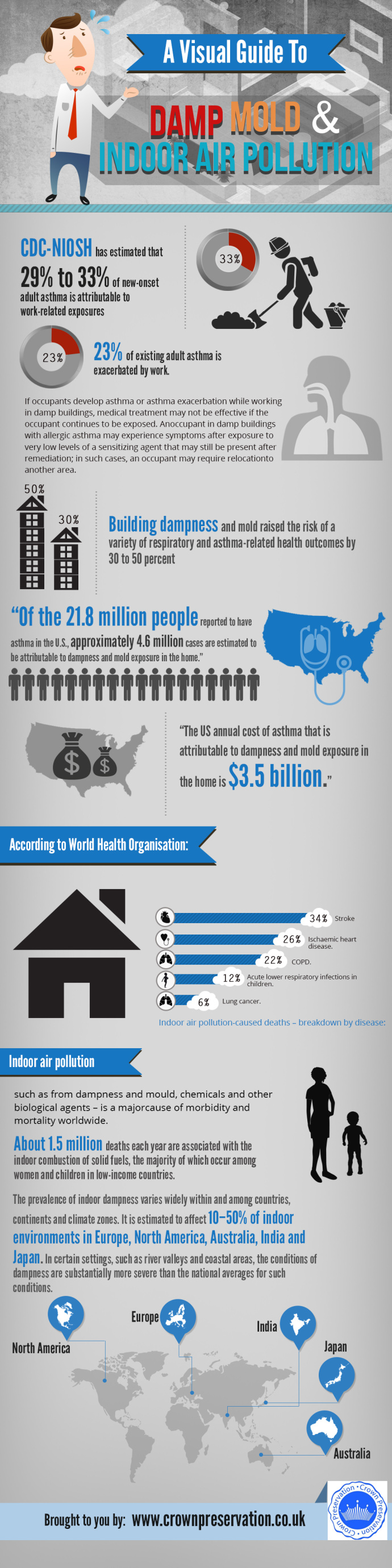
According to research by Crown Preservation, if the building has mold, respiratory conditions and asthma increased by up to 50%. Further, it is believed that 21% of the asthma cases or 4.6 million Americans suffer from asthma caused by dampness and mold. The health care costs for asthma in the United States are $3.5 billion each year.
The infographic below provides a macro view of asthma statistics in the United States and the rest of the world.
Asthma Statistics
Asthma Statistics in Georgia

Asthma Statistics in Georgia
According to the CDC, about 10% (more than 900,000 people) of the residents of Georgia suffer from asthma.
The average number of adults in the United States that have asthma is 13.5%; in Georgia, the percentage of adults that have asthma is below the national average and only 12.7%.
Statistically, however, asthma rates among children in Georgia are about 3% higher than the national average of 13.3%, sitting at around 16.1%.
Simply put, compared to the national average, more children in Georgia suffer from asthma.
Legal Evidence Citing Link Between Mold and Asthma

Legal Evidence Citing Link Between Mold and Asthma
In 2013, NBC Dateline produced a documentary called Breathless.
The key conclusion made by the documentary: rates of asthma in public housing managed by the New York City Housing Authority (NYCHA) was much higher among children then it was in private housing.
This revealing documentary furthered the cause of frustrated tentants, who sued NYCHA for violating the Americans With Disabilities Act.
The tenants core argument was that NYCHA was not respecting their health because they were not properly fixing moisture problems that was causing respiratory ailments and asthma. In short, NYCHA’s lack of action to address moisture problems was perpetuating the disability caused by asthma, particularly for children.
NYCHA eventually settled out of court and agreed that mold and moisture was a health threat. This recognition is very important because a public housing authority, that housed more than 400,000 tenants, finally agreed that mold causes respiratory ailments and asthma, demonstrating that they understood that moisture was the root cause of the problem.
Research Studies on Mold and Asthma

Research Studies on Mold and Asthma
Finish Mold and Asthma Study
In 2001, Dr. Maritta Kilpelainen, based out of the University of Turku in Finland, surveyed 10,000 students about the dampness of their homes. The students were asked to report back on the frequency of colds and other respiratory ailments.
Her survey study revealed the following:
- Students were twice as likely to have asthma if they found visible mold in their homes.
- The odds of having at least four colds per year increased by 50% if there was visible mold.
- There was a higher risk of lung infections, bronchitis and pneumonia, in students’ homes that had visible mold and water damage.
Cincinnati Mold and Asthma Study
Since Dr. Kilpelainen did not take actual swab samples of the mold or do air quality tests, her study is considered anecdotal and not conclusive; “mold minimizers” cite her study as more of a theory than actual proof that there is a link between mold and asthma.
In 2012, researchers in Cincinnati, led by Tiina Reponen, decided to explore the link between mold and asthma further by studying the effect of mold on children.
The researchers studied the effects of mold on about 300 children and found that there are three mold species harmful to children: Aspergillus ochraceus, Aspergillus unguis and Penicillium variabile. All three of these molds are prevalent in water damaged homes.
Reponen, co-author of the study, concluded:
“While it is known that mold is a risk factor for asthma, this is the first study that quantitatively measured mold and after adjusting for commonly known risk factors, found an association with asthma. Previously, other studies had shown qualitative or anecdotal associations.”
This conclusion clearly indicates that mold exposure in infancy can cause asthma, so it is very important that expectant mothers and families with small children avoid living in water damaged buildings.
Taiwan Mold and Asthma Study
The 2014 study out of Taiwan: Current asthma in schoolchildren is related to fungal spores in classrooms, adds further proof that mold does cause asthma.
Researchers studied children, ages 6 to 15, in 44 schools, and made the following conclusion:
“Classroom Aspergillus/Penicillium and basidiospores are significantly associated with childhood asthma and asthma with symptoms reduced on holidays or weekends (ASROH). Government health policy should explore environmental interventions for the elimination of fungal spores in classrooms to reduce the prevalence of childhood asthma.”
UK Mold and Asthma Study
In the same year, 2014, a study out of the UK made similar conclusions about mold and asthma. Dr. Richard Sharpe of the University of Exeter Medical School found that high levels of the fungal species Penicillium, Aspergillus, and Cladosporium poses a significant health risk to people with asthma, worsening the symptoms in both children and adults.
Sharpe and his team reviewed 17 studies that were done in eight different countries and concluded:
“Cladosporium, Alternaria, Aspergillus, and Penicillium species were found to be present in higher concentrations in homes of asthmatic participants. Exposure to Penicillium, Aspergillus, and Cladosporium species were found to be associated with increased risk of reporting asthma symptoms by a limited number of studies. The presence of Cladosporium, Alternaria, Aspergillus, and Penicillium species increased the exacerbation of current asthma symptoms by 36% to 48% compared with those exposed to lower concentrations of these fungi, as shown by using random-effect estimates. Studies were of medium quality and showed medium-high heterogeneity, but evidence concerning the specific role of fungal species was limited.” (Indoor fungal diversity and asthma: A meta-analysis and systematic review of risk factors)
Other conclusions from this study, included the following:
- Dampness and fungal contamination in the home has been consistently shown to increase the risk of asthma and the severity of its symptoms.
- Majority of the evidence reviewed focuses on the exacerbation of asthma symptoms, and few assess their role in the development of asthma.
- So far Aspergillus and Penicillium species have already been linked to an increase in the risk of asthma development in children, but we know little about the effects of the other species we considered.
- Dampness is one of the major factors affecting the growth of mold inside homes, a problem which has been on the rise as aging houses are sealed and retrofitted with new energy efficient technology. We currently know very little about how people’s living habits can contribute to indoor air quality, and ultimately affect their health. This study highlights the need for homes to have adequate heating, ventilation and home maintenance, all factors that will help to reduce the presence of mold and its effects on asthma symptoms.
The Impact of Mold Removal in Alleviating Asthma
The Impact of Mold Removal in Alleviating Asthma
The research studies cite both quantitative and qualitative evidence correlating a strong link between mold and asthma.
From an economic stand point, the health care costs related to asthma are $3.5 billion dollars. Much of the treatment focuses on the use of medications, a band aid solution because drugs and inhalers may not be addressing the root cause, mold.
Will the health care community and insurance providers finally begin acknowledging the positive impact that mold remediation will have? Michael Pinto, CEO of Wonder Makers, believes there is a strong argument for the environmental causes of asthma to one day be addressed by health insurance providers that see the benefits of mold removal as an asthma preventative measure.
Failure to address the cause negatively impacts the sufferer’s health and also has a significant economic cost from a health care standpoint and lost productivity.
Considering the health costs of asthma, it makes logical sense for the real cause of asthma, i.e. mold to be addressed and removed, particularly if there are children in the home.
“It’s proof of common sense that you want to take care of mold in the home. It’s just proving that if you don’t do that, your kids are more likely to develop asthma.” (Gary Steven, an allergist at the Allergy, Asthma & Sinus Center in Milwaukee)
Furthering the argument to remove mold for asthma relief, a study published in the scientific journal Thorax concluded that mold remediation – the removal of visible mold – improved respiratory illnesses:
- Asthma and rhinitis symptoms and the use of medications to treat them were reduced in patients who took part in a randomized controlled trial to see if removing visible household mold would relieve their symptoms.
- After a year the intervention group (those whose mold was removed) reduced their use of medications by 22 percent while the controls reduced their medications by 16 percent.
- The intervention group also reported about 24 percent net improvement in rhinitis and rhino conjunctivitis symptoms than the control group.
- The intervention group also showed an improvement in wheezing that affected their activities like sleeping and speaking (31 percent vs. 7 percent improvement reported by the control group).
If you suffer from asthma, one of the most important steps that you can take to improve your condition is to determine if you have mold in your home. Consider getting the air quality of your home tested to determine if the trigger is mold because the short term cost of removing the mold could net long term health benefits and savings in health costs as well.
Mold B Gone is here to help and committed to serving mold sensitized residents and asthma sufferers. If you suspect that mold is making you sick, call us, 678-697-6267 or contact Mold B Gone for further assistance. Our goal is to help you live a healthier and happy life. Most importantly, we truly empathize with your situation and are committed to helping you and guarantee our services.
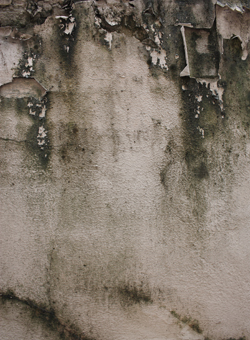
by Eric Brown | Sep 13, 2015 | Basement Mold, Flood Clean Up, Indoor Air Quality, Mold Facts, Mold Information, Mold Removal, Questions and Answers, Water Damage Restoration
How Do I Prevent Mold In My Basement?
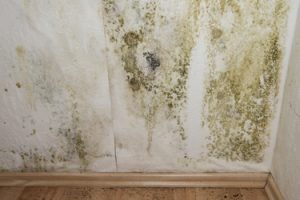
How Do I Prevent Mold In My Basement?
The past three articles have focused on flood and water damage restoration.
1. Top 3 Facts About Water Damage Restoration
2. Three Steps to Reduce Flood Damage
3. What Are The Top 3 Water Damage Hazards?
The final article in this series provides you with ten tips to prevent mold in your basement. Implement these tips to avoid future headaches and costly mold removal in the future.
Fix The Flooding Source!
The first step to preventing future flooding is to determine the cause and fix it. Most basements flood because of backed up drains, leaky pipes, human error (i.e. leaving a tap on), sewer back ups, the lack of a sump pump and/or a malfunctioning sump pump.
Start The Clean Up As Soon As Possible!
The onset of mold will begin within 24 to 48 hours, so it is essential that you begin the clean up immediately.
Hire Experienced Professionals!
If mold is not properly contained and cleaned properly, it can become airborne and contaminate even larger areas of the property.
You need to hire properly trained professionals, like Mold B Gone, who understand how to properly restore a water damaged property and prevent mold growth. Mold growth prevention is important because of the health impact it has and also because mold will impact the structural integrity of the property.
Remove All Wet and Contaminated Materials!
Most insurance companies will not recommend a complete gut for cost savings. Usually they recommend that it is necessary to only remove one foot of drywall above the flood line.
We do not because this could result in long term mold problems because moisture can creep up behind the surface. For this reason, we recommend a complete gut of the basement because the extra short term cost could result in significant long term cost savings.
The last thing you want to happen is for a reconstruction to occur only to find out six months later that you now have a mold problem.
Removal of all the drywall is not our only recommendation. We also suggest the removal of following: all flooring, including the sub-floor; insulation because it absorbs moisture; and finally, if the electrical panel was submerged under water, it should be replaced as well.
Avoid Using Bleach For Clean Up!
As stated by Michael Pinto, CEO of Wonder Makers Environmental:
“Perhaps the most misunderstood aspect of bleach when proposed as a cleaner or sanitizing agent is that its effectiveness is greatly reduced in the presence of organic material. To be a successful sanitizer, bleach must be used on clean materials and surfaces. This is why bleach products are used in the laundry after the wash cycle or in a commercial kitchen as a component in the third sink after the dishes have been washed and rinsed. The efficacy of bleach as a sanitizer is also compromised by heat and light. Despite the fact that the chlorine odor may linger for some time after use, bleach loses strength so quickly that it is not considered to have a residual effect that would prevent future bacterial or fungal growth.”
Do Not Begin Any Rebuild Until the Basement Is Completely Dried Out!
We understand that a flooded basement disrupts your life and you want to resume your normal routine as soon as possible. However, patience is the key.
To avoid any future mold issues that could make you sick, measure the humidity levels and ensure that job was done properly by hiring a third party to perform an indoor air quality test.
In addition, if the flood water was category 3, we recommend that swab tests be performed to ensure that the cleaning process was done effectively.
Only after it is verified that the basement is completely dry and sanitized and clearance testing verifies that the indoor air quality is healthy should the basement rebuild begin.
Properly Insulate Your Basement!
According to Mike Holmes, a respected contractor, insulation is one of the most important factors in preventing basement mold:
“When air, which is full of moisture, leaks into that insulation, it will inevitably lead to mould. Here’s why: Your basement, like every room in your home, has its own natural air convection. The air nearest the ceiling is warmer, and the air nearer the floor is cooler. The cold air at the bottom pushes the warm air up. As it rises, it comes into contact with the cooler exterior wall and releases the moisture it’s holding. It condensates. That air and moisture — if it’s able to get into the batt insulation through a gap in the seal — will wick into the insulation. Over time, it will soak that batt to the point that water can drip down the walls and pool on to the floor….You need a thermal break to stop hot from meeting cold….So, use closed cell spray foam insulation or rigid foam insulation, which will provide a thermal break and not trap any moisture. If you’re using foam insulation boards, make sure you Tuck Tape every seam, and spray-foam all corners and joints to create a 100% seal and a perfect thermal break. That way, you’ll know that anything you do inside your finished basement won’t have to be torn out in a few years because of mould.”
Cross-Ventilate!
If possible, open the windows on all sides of your basement in the evenings when the air is cooler to create a cross-ventilation air flow which will prevent excessive moisture and also ensure that a steady stream of fresh air is circulating throughout the basement.
Ensure Water Drains Away From Your Home’s Foundation!
One of the most effective ways to prevent water intrusion is to ensure that water is not sloping towards the foundation of your home but away from it. This is particularly important if your basement walls are porous and can trap moisture, which can lead to mold. To avoid this, ensure that the ground slopes away from the foundation walls of the home and your downspouts extend at least 6 feet away from the property.
Invest In A Dehumidifier!
To prevent excess moisture in your home, use a dehumidifier and consider waterproofing your basement by sealing cracks in the floor and walls with hydraulic cement and a concrete waterproofing sealer where the floor meets the walls.
Questions, call us, 678-697-6267, or contact us via e-mail. We look forward to serving you! 🙂

by Eric Brown | Sep 11, 2015 | Health, Indoor Air Quality, Mold Facts, Mold Information, Mold Remediation, Mold Removal, Questions and Answers, Water Damage Restoration
Beware Of These Top Three Flooding Health Hazards!

Beware Of These Top Three Flooding Health Hazards!
Our previous articles outlined the top three facts about water damage restoration and three steps to reduce flood damage. The purpose of this article is explain the top 3 health hazards created by water damage.
The primary goal of water damage restoration is to help you get back to your normal routine by restoring your property to its pre-flood condition.
The secondary goal of restoration professionals it to minimize these three water damage health hazards:
1. Mold Growth
2. Bacteria Growth
3. Structural Damage
Hazard #1: Mold Growth
Where there is moisture, there will be mold. Unfortunately, if you experience water damage from a flood, the issue of mold is a bigger concern because there is so much moisture to promote mold growth. Mold is a problem because it can cause illness and this is the primary reason you want to prevent mold from growing.
Research done by Dr. Harriet Ammann, a mycotoxin expert, shows that mold exposure can damage the bodies systems:
- Vascular: blood vessel fragility, hemorrhage from tissues or lungs
- Digestive: diarrhea, vomiting, hemorrhage, liver damage, fibrosis and necrosis
- Respiratory: trouble breathing, bleeding from lungs
- Neurological: tremors, loss of coordination, headaches, depression, multiple sclerosis
- Skin: rashes, burning, sloughing, photosensitivity
- Reproductive: infertility, changes in reproductive cycles
- Immune: Immunosuppression
Interviews with mold survivors shows that chronic mold exposure can lead to mycotoxicosis. The negative impact of mold on the health is growing and has been well documented most recently in articles written by the CEO of Wonder Makers Environmental, Michael Pinto in three key articles:
1. Medical Evidence that Connects Mold Exposure to Illness Keeps Piling Up
2. The Answer to the Mold Illness Questions Is: All of the Above
3. Do People Really Get Sick From a Little Mold in Their House?
One of the keys to preventing mold growth is to ensure that the water damaged area is completely dry before any reconstruction occurs. Unfortunately, this does not occur all the time, particularly when you hire inexperienced restoration contractors. To avoid this from happening, be sure that you pre-qualify your contractor and do your due diligence, review this article to learn more about the pre-qualifying process.
Hazard #2: Bacteria Growth
As explained in a previous article, one of the main priorities of a restoration contractor is to determine the category hazard of the water, ie. is it category 1, 2, or 3. This is very important because the worse type of water is black water which can cause some serious health conditions: gastroenteritis; Weil’s disease also known as Leptospirosis; Hepatitis; acute respiratory illnesses; and tetanus.
The number one rule about water damage is the longer you wait, the worse it will get. This is particularly true when you are trying to prevent hazardous bacteria from growing because category 1 water can turn into category 2 water and eventually category 3 water, which is the most toxic and causes many illnesses.
Hazard #3: Structural Damage
Water damage can impact the structural integrity of a property because large amounts of water can degrade the strength of the materials.
This is particularly true when mold begins to grow because mold feeds on the material and will continue to feed until it has finished consuming the material. This is the reason wood will rot when mold contaminates it.
As the wood is consumed and begins to rot, this will negatively impact the structural integrity of the home creating a health hazard, not to mention rotting wood will reduce the value of the property as well.
How Do I Protect My Family and Property If My Home Is Flooded?
Hiring an experienced professional is the most important step to protecting the health and well-being of your family. Experienced restoration professionals, like Mold B Gone, will not advise you to rush into the reconstruction phase of your restoration project because they understand that the key to preventing mold is to ensure that the flood affected area is completely dry.
Reconstruction after restoration is essential to restoring the daily routine of your life. However, if the property is reconstructed and moisture is still present, this will create long term headaches and costs because mold will grow. To avoid mold growth, patience is the key to allow the area to dry completely.
You will know that reconstruction has occurred to soon if you begin to have condensation on your windows; smell musty odors; and find other clues that moisture is present including water stains, new or increased allergy symptoms, cracked or peeling paint, loose drywall tape or wall paper, rusty metal, and drawers or doors that stick.
If you do have a mold problem, then please avoid fly-by-night mold removal contractors that lack experience and credentials. They may present you with cheaper mold removal estimates, particularly if they tell you they can remediate your mold with ozone, do all the clean up with bleach, or simply run a machine that fogs and kills the mold.
To avoid the pitfalls of hiring fly-by-night operators who do not offer a guarantee and lack experience, hire a professional like Mold B Gone that has years of experience, specialized training, equipment, and a solid reputation in the community. Experienced contractors will provide you with a recovery plan of action that outlines what will be done to address the water damage and prevent mold growth. The plan will outline the following for you:
- An assessment of the category of water and extent of damage;
- A scope of work that will assess structural issues based on the class of damage;
- Content removal and cleaning plan;
- Steps required to remove excess water;
- A drying and monitoring strategy using air movers and dehumidifers; and
- A sanitizing plan to ensure a healthy environment.
Furthermore, we do not recommend that you begin the cleanup or tear up yourself, particularly because of the potential hazards that asbestos may cause if asbestos containing materials become air borne. However, if you have contacted a professional and are waiting for them to arrive and must begin some of the clean up yourself, take the following precautions:
- Have the area cleared by emergency workers if you have standing water in an area where fuse boxes and/or electrical circuitry is submerged before attempting to pump out the water.
- Turn off your gas line.
- Wear an N95 or N100 respirator mask, available at most hardware and medical supply stores.
- Wear rubber boots and puncture-resistant gloves. Ideally, don a polypropylene coverall.
- Be sure to carefully dry any belongings you want to try to save.
- Items that should be thrown out, particularly if they have been underwater include the following: carpet, carpet padding, and rugs; upholstered furniture; computers, microwaves, window A/C units, or any appliances that have fans; papers and books; and food items, including canned foods if they were in contact with flood waters.
The primary purpose of water damage restoration is to restore the property to pre-loss condition. Before the reconstruction phase of the project begins, we recommend that you consult with an environmental consultant to do post remediation tests, particularly if there was any mold, category 2 or 3 water present. This is an important step before reconstruction because it will verify that the water damage restoration was done properly.
If you have questions, call us, 678-697-6267 or use our online form. We look forward to serving you!

by Eric Brown | Aug 30, 2015 | Health, Indoor Air Quality, Mold Facts, Mold Information, Mold Inspection, Mold Remediation, Mold Removal, Questions and Answers
Are You Mold Sensitized?

Are You Mold Sensitized?
In March of this year, Wonder Makers Environmental, based in Michigan, launched www.moldsensitized.com with the goal of educating consumers, contractors, and health professionals on the health concerns caused by mold. The website’s goal is to be the ultimate resource of mold information and contains many articles written by the CEO, Michael Pinto.
Since launching the website, many mold sensitized individuals have been interviewed. Five key lessons can be learned from these interviews.
- There is a lack of appreciation in the medical community of the impact mold can have on certain individuals.
- Symptoms from mold sickness are broad, leading to multiple mis-diagnosis of patients by many doctors.
- Mold sensitized individuals seek help from multiple medical practitioners because their illnesses continue.
- The mold sensitized individual eventually learns that mold has been the cause of their sickness.
- Because traditional remediation approaches do not adequately address their sensitivities, mold sensitized individuals often are forced to seek alternative shelters.
According to experts featured on the MOLDY documentary, 28 percent of the population have genes that make them highly susceptible to mold-related illness. Putting this into perspective, and based on the population of the metro Atlanta area, there are approximately 1.5 residents susceptible to mold sickness.
According to Dr. Richie Shoemaker, a physician and expert in the field of biotoxin-related illness and author of the book Surviving Mold, the most common condition associated with mold illness is Chronic Inflammatory Syndrome.
What Is Chronic Inflammatory Syndrome?
Chronic Inflammatory Response Syndrome (CIRS), also known as Sick Building Syndrome (SBS), is a combination of illnesses or aliments that are in direct relation with an individual’s place of work or home environment:
An acute and chronic, systemic inflammatory response syndrome acquired following exposure to the interior environment of a water-damaged building with resident toxigenic organisms, including, but not limited to fungi, bacteria, actinomycetes and mycobacteria as well as inflammagens such as endotoxins, beta glucans, hemolysins, proteinases, mannans, c-type lectins and possibly spirocyclic drimanes, plus volatile ogranic compounds.
The term Sick Building Syndrome was first coined by the World Health Organization in the 1980s and it is believed that it is caused by poor air quality caused by water damage.
According to Shoemaker:
This illness happens after exposure to the interior environment of a Water-Damaged Building (WDB). There are many ways buildings become home to a toxic mix of microbes, fragments of microbes, and harmful chemicals. Buildings can host fungi, bacteria, mycobacteria, and actinomycetes as a result of construction defects like inappropriate ventilation; faulty construction of crawl spaces or inadequate building design; flat roofs or fake stucco cladding without adequate caulking; incomplete basements exposed to saturated ground water conditions; or not correcting water leaks.
According to Shoemaker, 25% of the population has a genetic pre-disposition to CIRS; women tend to report more symptoms than men:
Genes made them prime targets for an assault by their own innate immune systems….exposure to the interior environment of a Water-Damaged Building (WDB), [causes] an innate immune response that is going haywire.
Individuals exposed to the toxins in a water damaged building suffer from chronic illness because their bodies are trying to eliminate the foreign substances that stay in the body resulting in chronic inflammation and multiple symptoms. In fact, one of the reasons that it is so difficult to diagnose CIRS is due to the fact that there are 37 symptoms: fatigue; weakness; aches; muscle cramps; unusual pain; ice pick pain; headache; light sensitivity; red eyes; blurred vision; tearing; sinus problems; cough; shortness of breath; abdominal pain; diarrhea; joint pain; morning stiffness; memory issues; focus/concentration issues; word recollection issues; decreased learning of new knowledge; confusion; disorientation; skin sensitivity; mood swings; appetite swings; sweats (especially night sweats); temperature regulation or dysregulation problems; excessive thirst; increased urination; static shocks; numbness; tingling; vertigo; metallic taste; and tremors.
Because of the large number of symptoms and different combinations that a patient can have, CIRS is difficult to diagnose.
If you have been suffering from ill-health for an extended period of time and the treatments that you are prescribed do not seem to help, then here are some recommended action steps.
- Listen to your body. If you are feeling sick and despite under-going multiple treatments still continue to feel sick, then do not give up on trying to find out what the cause is.
- Research mold sickness. The website, www.moldsensitized.com, has a significant amount of information on mold and it’s impact on health and is constantly updating the site with new information on its blog. In particular, you may want to read these articles: Medical Evidence that Connects Mold Exposure to Illness Keeps Piling Up;
Do People Really Get Sick From a Little Mold in Their House?;
What is Stachybotrys Mold?;
The Mystery of Mycotoxins in Mold Contamination;
The WHO on Mold;
TOP 10 Questions and Answers About Water-Damaged Buildings;
- Review the experiences of mold survivors to gain greater insight into mold sickness. One of the primary reasons you want to do this is so that you will have some further evidence that you can take to your preferred medical practitioner.
- Continue to educate yourself. Because of the lack of knowledge in the mainstream medical community, you need to take a lead role in determining whether mold is making you sick.
- Finally, if after all your research, you think that mold is the problem, then verify the existence of mold in your home by investing in a mold inspection and air quality test.
What Should I Do If I Am Diagnosed With Mold Sickness?
If you suspect that you are sick because of mold, then the next step is to find a Doctor that has knowledge about mold sickness. To find listings of environmental doctors throughout the world, click here.
Two Steps To Recovery!
Once you are diagnosed, there are two distinct steps to your recovery.
Seek Medical Treatment
Medical treatment is designed to detox your body and allow your immune system to recover and begin to regain its strength. The detox strategy will be prescribed by your physician who will likely recommend that you remove yourself from the property that has been making you sick until it is safe to occupy again.
Remediate Your Home
The process of removing mold from your home and ensuring that you can move back in without experiencing further sickness is the long term solution to health recovery.
In the past, mold sensitized individuals were forced to abandon their primary residences even after remediation because contractors did not understand the Big Picture of how the remediation and cleaning activities have to be coordinated with the medical and building maintenance aspects of the project.
If you want to invest into mold remediation, we recommend that you hire a contractor that has invested in the remediation for sensitized individuals training. Our team are currently the only mold remediation company in Atlanta that have graduated from this course. We work closely with the other graduate, Healthy Air, for all for all of our pre-testing and post testing on all homes and businesses we perform remediation work on. In addition, Mold B Gone specializes in whole house and room sanitizing to reduce the amount of bacteria and pathogens in your home allowing you to breath easier and healthier.
Mold B Gone offers mold sensitized individuals these five key benefits:
- Commitment to completing the job correctly the first time, with the understanding that our goal is provide you with a safe place to live or work because our team knows that our work practices can impact your health.
- Clear understanding that the environmental portion of projects with sensitized individuals has many facets (i.e., source removal, content cleaning, HVAC decontamination, whole structure cleaning, building performance improvements, etc.) and will provide services only in those areas where they are qualified.
- Clear understanding that your project requires procedures that are more protective than the current standard of care for the mold remediation industry.
- Commitment to specific project endpoints that have been designed for sensitized individuals (endpoints that incorporate the latest health/science data).
- Long term cost savings, peace of mind, and less anxiety because we will be familiar with situations like yours and the most effective techniques for this stringent remediation.
Mold B Gone is here to help and committed to serving mold sensitized individuals. If you suspect that mold is making you sick, call us, 678-697-6267 or contact us via e-mail for further assistance. Our goal is to help you live a healthier and happy life. Most importantly, we truly empathize with your situation and are committed to helping you and guarantee our services.
How Do I Know If Mold Is #Making Me Sick? Wondering if you are sensitive to mold? This article explains how to determine if you are mold sensitized, seeking treatment, and the next two steps to health!
Posted by Mold-B-Gone Remediation, LLC on Sunday, August 30, 2015