by Eric Brown | Apr 7, 2017 | Health, Indoor Air Quality, Killing Mold, Mold Information, Mold Inspection, Mold Remediation, Mold Removal, Questions and Answers, Toxic Mold
Essential Information You Should Know About Professional Mold Inspectors!

Essential Information You Should Know About Professional Mold Inspectors!
Mold B Gone has been serving residents in the Atlanta, Georgia area since 2009. We are experts at iaq testing, crawl space encapsulation, mold inspections and mold removal.
In a previous article we explained how you can determine if you have mold and what you should and should not do if you discover mold.
One of the key recommendations was to call a professional to do a thorough inspection.
The purpose of this article is to explain what the inspector does when they visit your home or business.
Mold Inspectors Have Two Key Goals!
The primary goal of a mold inspector is to first determine what is causing the mold. That is, they want to figure out what the source of moisture is that is causing the mold.
The second goal is to determine the extent of contamination and what type of mold is present so that a proper removal and remediation plan can be put into place.
Like a detective looking for clues, during the mold inspection, the inspector will gather information about the property by taking four actions:
- Looking For Visual Clues
- Asking Questions
- Measuring Moisture Levels
- Sampling Suspect Mold
#1 Looking For Visual Clues
#1 Visual Clues
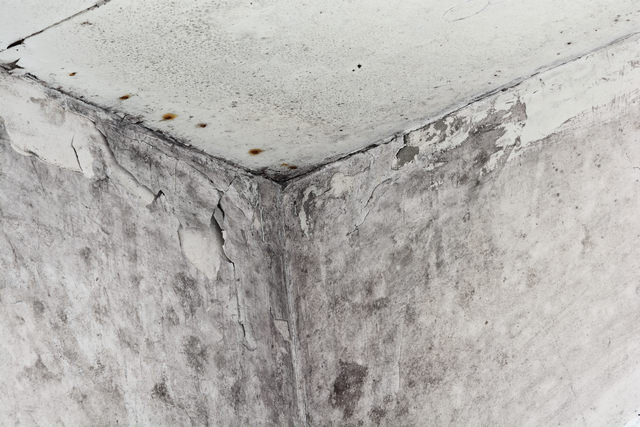
Prior to entering the home or building, the inspector will examine the landscaping and determine if seepage could be a potential problem by examining the drainage system to determine if water flows away or towards the property.
The inspector will also look at the facia, eaves, and drain spouts to determine if there are any potential areas where water could be entering the property.
The whole purpose is to rule out any external sources of moisture intrusion.
Once this is complete, the inspector will look for visual clues of moisture inside of the property, including water stains, under sinks, behind appliances, behind baseboards, window condensation, etc.
#2 Asking Questions

#2 Asking Questions
The inspector will likely ask many questions to gather information about the building history, health of occupants, and potential moisture events that could be causing mold.
- Does anyone have any negative health affects when in the building yet feel better when not in the building? Important to know because if occupants are suffering ill health, this could indicate that there are indoor air quality issues potentially caused by mold.
- What year was the property built? This question gives the inspector some idea of how old the the structure is and potential aging concerns that could lead to moisture issues.
- How long have you owned and or lived, worked in or been renting the house or building? If you have experienced ill health, the length of time in the building could give clues as to the extent of the air quality issues.
- Does the house have a sump pit and pump? Many homes have sump pits and pumps to prevent flooding, but it is important that they are functioning properly.
- Ever had any leaks such as dishwashers, water heaters etc? If the answer is yes, then this could provide further clues as to where the potential moisture issues originated from that caused the mold issues.
- Previous floods or sewer backups such as toilet overflows? Again, if the answer is yes, strong clue of the potential cause of mold concerns.
- Do the windows leak or sweat? If the windows leak or sweat this could indicate that there are moisture issues in the home causing mold.
- Are the windows original? If the windows were recently replaced and not installed properly, this could cause moisture issues leading to mold.
- What year was the roof last shingled? One of the most common causes of moisture in homes, is leaky roofs. If the home is older and the roof has not been inspected, this could be a potential source of the mold problem.
- Is the furnace high efficiency and is there a HRV heat recovery ventilation system in place? The HVAC system of the home is the lungs of the home. If it is not operating properly, the air quality could be poor.
- Do the bathrooms have exhaust fans? Bathrooms create significant amounts of moisture in the home. If there are no exhaust fans, this could be a significant source of moisture potentially leading to mold issues.
- Are the fans vented to the outside environment or just into the attic? Fans vented into attics is a common construction flaw that leads to mold problems in properties.
- Is the dryer vented outside? Dryers should be vented outside, if not, this will create significant moisture issues.
- Have any upgrades to the exterior been done within the past ten years? Important question because the potential moisture problems could have been caused by poor construction practices during the upgrade.
- Major upgrades to the interior? This is another important question because sometimes during interior renovations mold is discovered but not properly cleaned up and can result in cross-contamination throughout the home.
Answers to these questions will help the inspector assess how and where the potential moisture concerns are originating from. It is important to understand that any mold remediation that occurs should only begin once the underlying moisture problems are fixed.
#3 Measuring Moisture Levels
#3 Measuring Moisture Levels
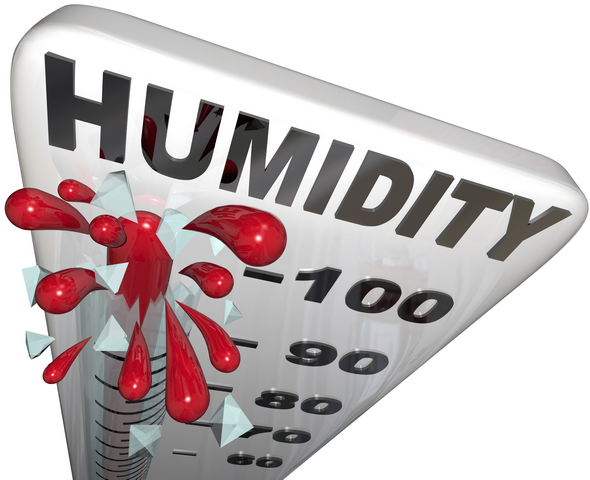
High humidity is one of the strongest indications that there are moisture problems in the property. During a mold inspection the inspector will note down the relative humidity and temperature of each room. If there are specific rooms that have higher levels of relative humidity, this could be a clue that there is a mold problem in the room.
#4 Sampling Suspect Mold
#4 Sampling Suspect Mold
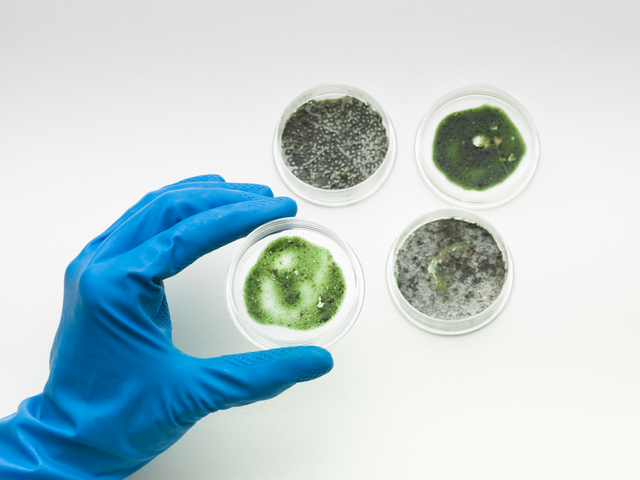
The last step is to try to figure out what type of mold is present. The sampling strategy of the inspector could involve taking actual swab or tape samples. Some inspectors may also recommend that an air quality test be done as well to measure the spore count in the home compared to the outside air. The samples from such tests should be sent to an independent third party lab for examination.
As a final note, it should be noted that a home could have moisture issues that are not found through a visual inspection. This is one of the challenges that most mold inspectors face because mold can be hidden and sources of moisture can be hidden as well. A perfect example is if the property has leaky pipes, creating moisture and mold. If, during the questioning process, the inspector suspects that the problem could be leaky pipes, they may recommend that a thermal imaging test be done to examine the hot and cold spots in the home which will help pinpoint the area where the leak is taking place.
A credible mold inspector will take a proper amount of time to determine if there are mold concerns and then recommend a proper course of action. If you have your home inspected and it takes less than 15 minutes and you are told it will cost tens of thousands of dollars to fix, then definitely get a second opinion.
Got Mold Inspection Questions?
Questions? We are here to help and guarantee our services. Call 678-697-6267 or send us an e-mail.

by Eric Brown | Feb 24, 2017 | Can Black Mold Poison You?, Can Mold Kill?, Health, How Toxic Is Mold?, Indoor Air Quality, Killing Mold, Mold and Pets, Mold Facts, Mold Information, Mold Inspection, Mold Remediation, Mold Removal, Questions and Answers, Stachybotrys Black Mold, Toxic Mold
Dog Dies Tragically After Licking Mold From Food Dish!

Dog Dies Tragically After Licking Mold From Food Dish!
Recently, there was a news article about a dog that died after licking mold.
Sarah Dent’s dog, Dexter, suffered from toxic shock after licking mold residue from a blown over food dish. When she took her dog to the vet, he was already unconscious. Dexter got sick because he had ingested mycotoxins, which comes from moldy food.
According to the Veterinarian that treated Dexter:
It’s not all moldy food that causes it, but a lot of moldy food can carry this mycotoxin. The onset of symptoms is normally quite quick, usually between half an hour to an hour. There are some things we can do to help stop it if it’s seen straight away. If the dog’s brought straight down to us then we can normally make them sick and that can help them bring a lot of it up. But unfortunately if they’ve started tremoring that can be risky, so in that case we’ll usually use things like anaesthetics and anti-seizuring drugs.
This article will further explain why your pets can get sick from mold, symptoms to look for, and how to get them treatment.
Why Can Mold Be Toxic To Your Pets?
Why Can Mold Be Toxic To Your Pets?
There are three distinct types of molds: allergenic, pathogenic, and toxigenic.
Toxigenic molds pose the most serious health risk to both humans and animals because they have aflatoxins.
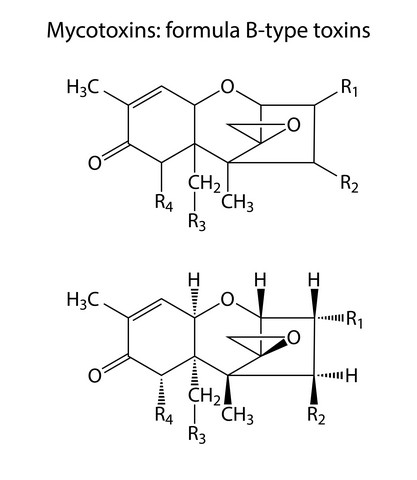
Aflatoxins are naturally occurring mycotoxins produced by the mold Aspergillus.
Aspergillus flavus and Aspergillus parasiticus are two of the most toxic and most carcinogenic molds leading to many health risks, including speculation that it can cause some types of cancer.
According to Veterinary Practice News:
Aflatoxins are produced on peanuts, soybeans, corn and other cereals in the field or during storage when moisture content and temperatures are sufficiently high for mold growth. High doses of aflatoxins result in severe hepatocellular necrosis, and prolonged low dosages result in reduced growth rate and liver enlargement. Pets that have consumed the affected product and are exhibiting symptoms of illness including sluggishness or lethargy combined with a reluctance to eat, vomiting, yellowish tint to the eyes or gums, or diarrhea should be seen by a veterinarian.
Another mold species, Stachybotrys chartarum, which is harmful to humans, can also have an impact on the health of household pets.
In 2007, the Journal of the American Veterinary Medical Association, published a study that documented the case of toxic black mold poisoning in pets. The study was prompted after two cats died of pulmonary hemorrhage and subsequent blood tests showed the presence of a toxin produced by Stachybotrys chartarum, which can cause respiratory-related health problems, pulmonary hemorrhage and death.
Seven months prior to the cat’s death, the owners home sustained water damage due to flooding. At the request of the researchers, the home owner had it checked for mold. The mold inspection found a severe mold contamination of the walls leading the researchers to conclude that toxic mold was the cause of the death.
Symptoms Of Mold Exposure!

Symptoms Of Mold Exposure!
The symptoms of exposure to mold may vary somewhat depending on what type of pet you have. For instance, a dog or cat may show somewhat different symptoms than a guinea pig or rabbit.
Common symptoms of mold exposure include:
- Excessive scratching in the absence of fleas
- Pets may develop sores and/or bleed from excessive scratching
- Excessive licking
- Hair loss due to excessive scratching and/or licking
- Coughing
- Sneezing
- Runny nose
- Runny eyes
- Labored breathing
- Wheezing sound when breathing
- Loss of appetite
- Lethargy
- Lameness (because of bleeding in the joints)
- Nosebleeds
- diarrhea
- Kidney problems
- Liver problems
Getting Treatment For Your Pet!

Getting Treatment For Your Pet!
If you suspect that you pet is suffering from mold exposure, you should take them to the Veterinarian immediately.
The treatment may involve a blood transfusion (if the pet bleeds unduly) and antibiotics to fight secondary infections. Your vet will repeat blood tests to monitor liver function. The pet must rest to reduce the risk of knocks and bumps, which could cause bleeding.
In addition, once your pet is treated, do not bring them back in your home until you determine why you have mold and how you can remove the mold from your home. You do not want to bring your pet back into the home because continued exposure to mold could make your pet’s symptoms worse and permanent damage to the respiratory system or even death could result.
The final step, once you determine why you have mold is to hire a professional to remove the mold and ensure that the indoor ecology is healthy for your family and pets.
Got Mold Questions?
If you suspect that you, a family member, or your pet is suffering from mold exposure, contact Mold B Gone.
Mold B Gone has been serving the residents of Georgia since 2009 and we have the training and experience to effectively advise you of the best course of action to effectively remove the mold and ensure that it is done properly.
Most importantly, we offer a guarantee on our services to provide you with further peace of mind!
Call 678-697-6267 or contact us via e-mail. 🙂
by Eric Brown | Feb 9, 2017 | Crawl Space Vapor Barrier, Crawlspace Mold, Health, How Toxic Is Mold?, Indoor Air Quality, Killing Mold, Mold Facts, Mold Information, Mold Inspection, Mold Remediation, Mold Removal, Questions and Answers, Toxic Mold
Is Your Crawl Space Contaminating Your Indoor Air?
Top 5 Ways Your Crawl Space Affects Your Home!
Crawl Spaces are very popular in Atlanta, Georgia and other southern states for several reasons.
First, they tend to be cheaper than laying a foundation for a basement slab.
Second, crawl spaces make it much easier to access pipes and other utilities.
Third, if the soil is unstable, it is simpler to install a crawl space by bringing the house up to or above ground level.
Finally, there are aesthetic reasons. A raised house makes it look bigger.
The purpose of this article is to explain how and why your crawl space could be contaminating your indoor air.
What’s In My Crawl Space?
If you have not visited your crawl space, take a look. Typically, you will find the following:
- Dirt. Most homeowners have a bare dirt or rock crawl space.
- Ductwork. Many of your home appliances run out through the crawl space area. Washers, dryers, and plumbing pipes are often found running along the ceiling of the crawl space, to be vented or piped to the outdoors or external holding tanks. Ductwork for the home heating and cooling systems are also usually found here.
- Plumbing Pipes. Home plumbing is usually found in your crawl space, funneled outside to your septic tank or the sewer system. These pipes are usually heavy duty so most homeowners are unconcerned about their safety. However, these pipes still require maintenance and care. Changes in temperature during the warmest and coldest months as water flows through them can cause condensation. Condensation and the increase of moisture in the air leads to mold growth.
- Electrical Wiring. Along the ceiling and walls of the crawl space you will usually see electrical wiring. Keeping these safe from the gnawing teeth of crawl space vermin is important.
- Vents. You will also notice various vents along the bottom walls of your house. These vents allow for air movement and ventilation for your crawl space.
- Insulation. Insulation is important. If you see nothing but bare beams and dirt, this is a concern. Up to 40% of your air comes up from the crawl space. You can lose up to 45% of your home’s heating and cooling energy through non-insulated crawl spaces. In addition, non-insulated crawl spaces are will incur mold growth and attract insects, rodents, and other crawl space vermin.
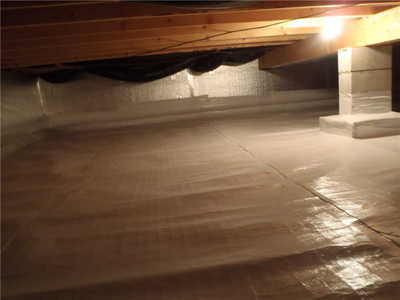
- Vapor Barrier. Vapor barriers help maintain the health of your crawl space and your family. Crawl spaces protected from excess moisture are less likely to develop mold or allow vermin and insects into your home. Vapor barriers protect not only your crawl space, but your entire home.
- Beams. Beams, heavy wooden or metal support structures, keep your home structurally sound. These beams run vertically and horizontally through your crawl space structure.
- Drains/Pumps. You may also notice a drain in the floor of your crawl space. Usually this is a sump pump, a water pump designed to carry any excess water away from the house in the case of a flood. Drains allow excess water to drain away a safe distance from the house, usually 6 feet or more.
- Critters and Other Creepy Crawlers. It’s all too common that a homeowner pokes his head into his crawl space to discover a happy population of insects, mice, rats, squirrels, or even snakes! Getting these invaders out of your home can be challenging. To be safe, call a pest control company.
Four Clues That You Have Issues With Your Crawl Space!
While you are taking a look at your crawl space, give Mold B Gone a call if you find any of these problems:
- Standing Water or Water Damage: Water damage can weaken the foundations and walls of your home, and needs to be dealt with quickly.
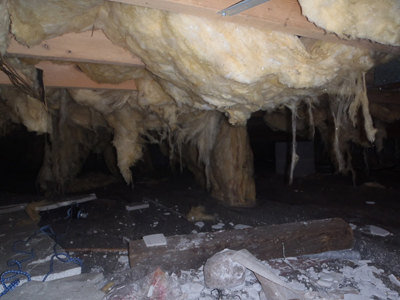
- Mold. Mold can be hazardous. If you have large areas of mold spreading across your beams, in your insulation, or along the ground it needs to be removed. Left unchecked, mold can severely damage your home and your air quality.
- Ruined Insulation: No insulation lasts forever, though some types of insulation are more long lasting than others. When insulation is falling to pieces or has rodents nesting in it, it’s time to remove the old insulation and replace it.
- High Humidity: Knowing your crawl space humidity is essential to keeping it clean and safe. Vapor barriers are an important part of a crawl space because it prevents moisture and high humidity, something that creates a breeding ground for mold and pests. If you have a bare dirt floor, crawl space encapsulation is important.
Now that you understand what is in your crawl space and the top four signs that you may have issues with your crawl space, the remainder of this article will list the top 5 ways your crawl space affects your home.
#1 Poor Air Quality
Moisture accumulates in your crawl space because of high humidity, changing temperatures that leads to condensation, rainy weather, and the lack of preemptive solutions, like a vapor barrier. For this reason, it is important that the moisture content of your crawl space is monitored properly.
If the moisture content of your crawl space is not monitored, mold and rot will grow in the insulation or on the wooden beams. When the mold grows, it releases mycotoxins that can seep through the floorboards of your home, which in turn can cause sickness.
Even though the mold is growing under your home, you need to take action because 40% of the air in your home seeps up through the crawl space.
Simply put, if your crawl space has mold problems, then the indoor air quality of your home will be negatively affected.
#2 High Energy Bills
Properly insulating your crawl space will save on utility costs because the insulation prevents temperature transfers. This will ensure that your home stays cool when the air conditioner is running and warm if you need to heat your home during the colder months.
#3 Rodents and Insects
Despite the fact that your crawl space may be surrounded by a thick layer of concrete serving as the foundation, your crawl space may not be as predator-proof.
There are two key reasons that rodents and insects can affect your home.
First, droppings and feces left behind will affect the air quality inside your home.
Second, certain rodents, like squirrels will get curious and start chewing on any exposed electrical wires, ruin insulation, or rip holes in a vapor barrier.
#4 Damaged Subfloor
Moisture accumulation in your crawl space will not only affect the air quality of your home, it can also seep through the ceiling of the crawl space and damage your sub-floor. When this occurs, it will begin to warp and eventually need to repaired or replaced.
#5 Compromised Foundation
More than just the subfloor, however, moisture problems can also cause issues for the foundational level of your home. The wooden beams that hold up your home’s structure can be damaged by consistent exposure to high levels of moisture, condensation, or humidity. In some not-so-uncommon cases, crawl spaces have actually flooded, causing significant structural damage that resulted in thousands of dollars of repair work.
Got Crawl Space or Mold Questions?
Call 678-697-6267, or contact us via e-mail.
We look forward to serving you! 🙂
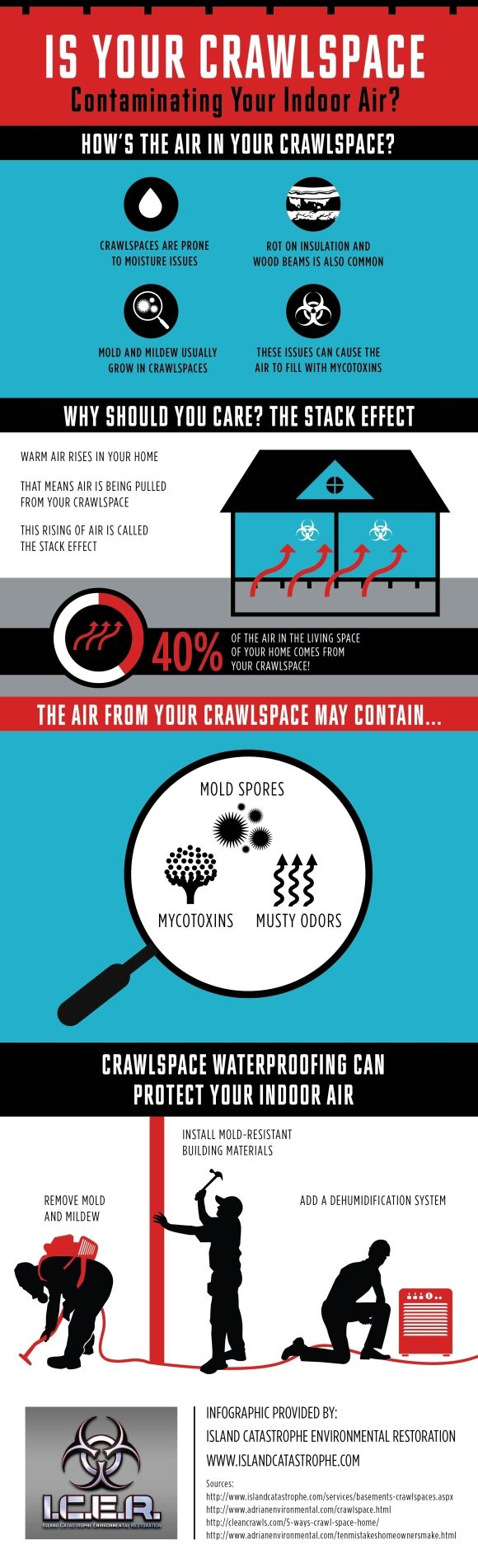
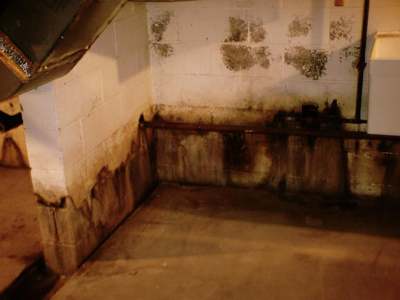
Crawl Space Contaminating Your Indoor Air Infographic Summary
Crawl Space Contaminating Your Indoor Air Infographic Summary
by Eric Brown | Jan 13, 2017 | Basement Mold, Beware Of Mold When Buying A Home, Flood Clean Up, Health, Indoor Air Quality, Killing Mold, Mold Facts, Mold Information, Mold Inspection, Mold Remediation, Mold Removal, Mold Removal Cost, Questions and Answers, Top 15 Mold Prevention Tips, Toxic Mold, Water Damage Restoration
The Key To Mold Prevention Is Moisture Control!
The Key To Mold Prevention Is Moisture Control!
Mold spores are all around us, outside and indoors. Mold actually serves a purpose in our eco-system to consume dead organic materials.
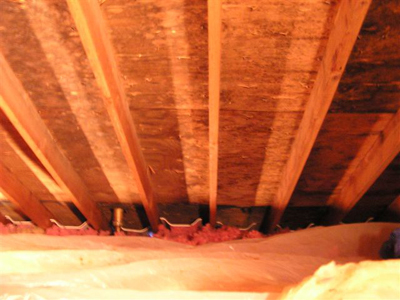
Problems with mold arise indoors primarily because our homes are made of dead organic materials, meaning mold can grow anywhere in your home: on carpet, clothing, food, paper, and even in places you can’t see, such as the backside of drywall, areas inside walls around leaking or condensing pipes, and above ceiling tiles.
The simplest way to detect a mold problem is using your own senses. A musty odor is one indication. Not only is mold smelly, but can be many different colors from black and gray to orange and green. Watermarks on the ceiling and walls are also a telltale sign.
There are two key reasons, you should be concerned about preventing mold.
First, mold can be difficult and costly to remove.
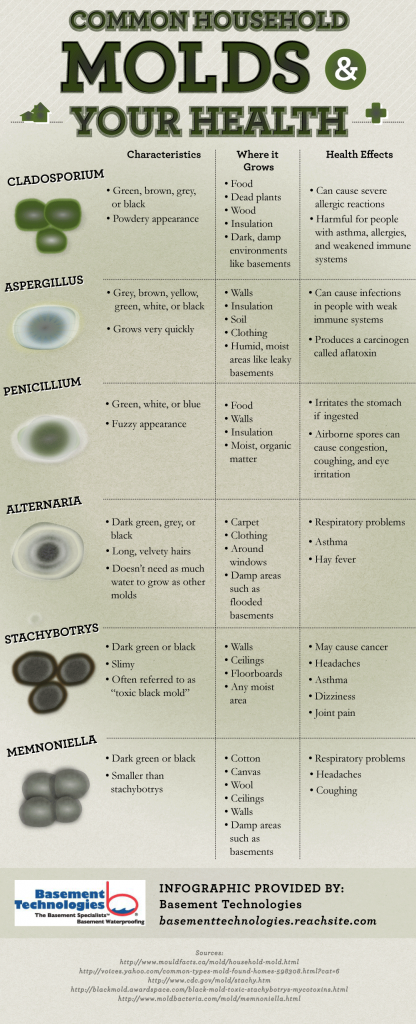
Second, mold can produce allergens, irritants, and mycotoxins that can compromise your health. Because mold spores are very small and can easily be inhaled into the lungs, it is harmful to live in a home with high mold levels.
Mold Can Compromise Your Health
Mold growth can be prevented. Mold growing in your home requires moisture, warmth, and food. Depriving mold of any of these three items will stop it from growing, but it will not kill the mold that is already there. Mold spores will remain dormant, and if the moisture, warmth and food all reappear, mold will begin to grow again.
So what can you do if you’re concerned about mold growing in your home?
Listed below are the top 15 mold prevention tips.
The Top 15 Mold Prevention Tips
Mold Prevention Tip #1: Audit Your Home For Problem Areas!
It is difficult to mold-proof a home. However, you can take proactive steps to determine if you have problems that could lead to mold concerns.
Does the basement flood?
Do you notice frequent condensation on windows?
Is there a water stain on the ceiling from a persistent leak?
Is your basement damp?
Does water flow into your home’s foundation?
Addressing these questions may entail some upfront costs to fix, but it will be worth the investment in preventing future mold problems.
It is also important to note that if you are renovating your home or considering building a new home, that you may want to consider researching mold prevention products, including mold-resistant drywall and sheetrock, and mold inhibitors for paints.
Mold-resistant drywall is recommended because traditional drywall is made up of gypsum plaster core pressed between piles of paper, making it highly susceptible to mold. What this means is that in the presence of moisture and water, traditional drywall acts like a sponge absorbing the moisture leading to mold. Since traditional drywall is so porous, the only remedy to removing the mold is to tear out the drywall.
In contrast, mold-resistant drywall is paperless because the gypsum core is covered in fiberglass, meaning it is water-resistant and therefore less susceptible to mold growth. Moisture resistance drywall should be used in bathrooms, laundry rooms, basements, and kitchens because these areas of the home are most prone to moisture.
Mold Prevention Tip #2: Dry Wet Materials Immediately!
Mold can not grow without moisture and given the right conditions, it will begin growing within 24 to 48 hours.
With this in mind, tackle we areas right away.
- Don’t leave wet clothes or other items lying around the house, dry them outside if possible.
- Dry spills on carpet and floors.
- Dry your clothes after washing them by putting them in the dryer soon after the wash cycle is complete.
- If heavy rainfall causes seepage into your basement, make sure you dry the area promptly and contact a company to waterproof your basement to prevent future occurrences.
- If you experience a flood event, dispose of water-damaged carpets, bedding, and furniture if they can not be dried completely. Ideally, contact a restoration company to manage the clean up and drying process.
Mold Prevention Tip #3: Clean, Disinfect, and Dry Surfaces!
Vacuum and clean regularly to remove possible sources of mold growth.
Pay special attention to bathrooms and other areas of your home that are likely to generate a lot of moisture.
Non-porous surfaces (tile, stone, laminate) can be cleaned well with disinfectants and other cleaners.
Mold Prevention Tip #4: Repair Water Leaks!
Repair water leaks in your roof, windows, or any other part of the home as soon as possible.
Over time, constant leaks will cause moisture to buildup leading to mold growth.
Mold Prevention Tip #5: Use Area Rugs!
In portions of your home that are susceptible to moisture, use area rugs or washable floor surfaces rather than wall-to-wall carpeting. If you use area rugs, launder them periodically.
Mold Prevention Tip #6: Increase Air Flow!
Prevent moisture buildup by increasing the air flow within your home. Without good air flow, excess moisture can appear on your walls, windows, and floors.
To increase air circulation, open doors between rooms, move furniture away from walls, and open doors to closets.
In addition, open windows to allow fresh air to flow indoors.
If you don’t already have an HVAC system that has an outside air intake to bring in a steady stream of outside air, consider installing one.
Mold Prevention Tip #7: Proper Ventilation!
Routine daily activities such as cooking, taking a shower, and washing laundry can create excess moisture in your home.
Prevent moisture with proper ventilation.
Vent appliances that produce moisture (clothes dryers and stoves) to the outside, not to the attic or crawl space.
Use AC units and dehumidifiers (especially in humid climates), but make sure they don’t produce moisture themselves by checking them periodically and cleaning them as directed by the manufacturer.
Energy-efficient homes are prone to holding moisture inside. For this reason, it is important that you open windows or use exhaust fans in the kitchen and bathroom (especially when you are showering).
Mold Prevention Tip #8: Make Sure Your Storage Room Is Dry!
Most homeowners have a room where they store materials such as books, clothes, camping gear, and other occasional use items.
It is important that you check the humidity of your storage room and make sure that there is no excess moisture because most of the materials you are storing are ample sources of food for mold.
Ideally, use your garage, a well built shed that prevents moisture intrusion, or a dry storage unit and not the inside of your home. Make sure there is air circulating in the storage area as well.
Mold Prevention Tip #9: Control Humidity!
Clues that your home has excess humidity include condensation on windows, pipes, and walls. If you notice condensation, dry the surface immediately and address the source of moisture, and invest in a dehumidifier if necessary.
To measure the humidity levels in your home, purchase a moisture meter from your local hardware store.
Ideally, the indoor humidity of your home should be between 30 and 60 percent.
In the winter, it is recommended that humidity levels are below 40 percent to prevent condensation from appearing on the windows.
Mold Prevention Tip #10: Check Your Attic!
Make sure that your exhaust fans are not venting into the attic because this will create excess moisture and lead to mold.
Also, your attic needs ventilation as well, so check this.
Insulation is important, particularly in cooler climates because snow accumulation on the roof can lead to ice damning issues which will cause moisture issues.
Mold Prevention Tip #11: Check Your Crawl Space!
Most homes in the Southern United States have crawl spaces.
Crawl spaces are a breeding ground for mold because there is so much excess humidity.
Mold growth in the crawl space is a particular concern because it will also impact the indoor air quality of your home.
If you find excess moisture or mold issues in your crawl space, then the area should be cleaned properly and the mold removed. To prevent future mold issues, wall-to-wall guide, durable, 14 mil vapor barrier should be installed over the ground and up sidewalls to 6 inches below floor joists. Installation of a dehumidifier will also help control humidity.
Mold Prevention Tip #12: Prevent Basement Condensation!
The cool basement floor and walls can be a source of moisture build-up, leading to mold and that musty smell many encounter in their basements.
To prevent condensation and future moisture issues, improve air circulation, run a dehumidifier, and install a foundation drain.
Ideally, make sure the basement walls are insulated properly to keep the walls warm and limit condensation.
As a final note, if you find that there is moisture intrusion into your basement through seepage, consider hiring a contractor to water proof the area.
Mold Prevention Tip #13: Direct Water Away From Your Home!
One of the best methods to prevent seepage into your crawlspace or basement is to ensure that water around your home sufficiently slopes away from the foundation of your home.
Do not put gardens or plants too close to your foundation so that watering them could cause water to flow toward your house.
If you water your lawn with a sprinkler, make sure the water does not hit your house or the area next to the foundation.
Mold Prevention Tip #14: Keep Your Gutters and Downspouts Clear of Debris!
Debris in your gutters or downspouts could block the flow of water from your roof. To prevent water accumulation, clean your gutters regularly and have them inspected for damage. It is also a good idea to check your ceiling for water stains, particularly after heavy storms.
In addition, make sure the area under your downspouts is properly graded so that rainwater from the roof flows away from your foundation. If the water is not flowing away from the foundation, extend your downspouts.
Mold Prevention Tip #15: Check Your Plants For Mold!
Plants help keep your indoor air clean. Unfortunately, mold grows in the soil of house plants and can also grow on the leaves, leading to higher levels of mold spores in the home. To hinder mold growth in plant soil, add some Taheebo tea to your house plant water in a mild solution. The oil of this tree, which withstands fungi even in rain forests, helps hinder mold growth in plant soil and can be found at natural food stores.
Questions? Mold B Gone is here to help. We are mold removal and mold prevention specialists backing our services with a minimum guarantee of 5 years. Call 678-697-6267 or send us an e-mail.
The infographic below is an exceptional summary of mold. Enjoy!

Mold Summary

by Eric Brown | Dec 2, 2016 | Can Black Mold Poison You?, Can Mold Kill?, Christmas Tree Mold, Chronic Inflammatory Response Syndrome (CIRS), Health, Indoor Air Quality, Killing Mold, Mold and Asthma, Mold and Sinusitis, Mold Facts, Mold Information, Mold Remediation, Mold Removal, Toxic Mold
What Is Christmas Tree Syndrome?

What Is Christmas Tree Syndrome?
Last year, a newspaper article was published to explain the potential health concerns caused by your Christmas tree: “How CHRISTMAS TREES can cause hay fever hell: Pollen grains, dust and mould can trigger sneezing, coughing and a runny nose”
The article dubbed the illness, Christmas Tree Syndrome, because 1 in 3 (approximately 35 percent) people get sick, suffering from hay fever like symptoms, soon after the Christmas tree is set up in the home.
This article explains what causes Christmas Tree Syndrome and provides recommendations on how you can minimize the potential health issues caused by this indoor air quality issue.
What Are The Health Symptoms of Christmas Tree Syndrome?

What Are The Health Symptoms of Christmas Tree Syndrome?
Typical signs that your tree is making you ill include the following:
- Asthma attacks, usually triggered by cladosporium mold
- Rhinitis
- Runny nose
- Sinus pain
- Sneezing
- Wheezing
- Coughing
- Cold like symptoms, that subside when away from the home or the room with the tree in it.
Mold Is The Cause Of Christmas Tree Syndrome!
Mold Is The Cause Of Christmas Tree Syndrome!
Prior to the studies documented below, it was thought that tree pollen or even weed killer applied to Christmas trees made people ill.
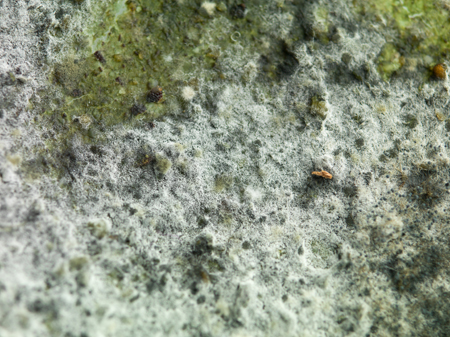
However, as the studies below conclude, the core cause of Christmas Tree Syndrome is mold, which releases spores and causes allergic reactions:
“Researchers at St. Vincent’s Medical Center in Bridgeport, Connecticut, found that a room containing a fresh Christmas tree for two weeks had mold levels that were five times the normal level. Other studies have shown that levels this high can cause allergic rhinitis and asthma symptoms, says the study’s coauthor, allergist and immunologist Philip Hemmers.”
In another study Dr. John Santilli, compared the level of mold spores in the home before and after the tree was placed in the home. The normal level of mold spores is 800 per cubic meter, but within 14 days of the Christmas tree being in the home, the level of mold spores increased to 5,000 spores per cubic meter.
Another scientific study by allergy specialist, Dr. Lawrence Kurlandsky at Upstate Medical University in New York set out to determine why respiratory illnesses peak around Christmas. The study found 53 different kinds of mold, including, aspergillus, penicillium, cladosporium and alternaria, which can trigger asthma attacks, sneezing and a runny nose. One of the key conclusions made by this study was 70 percent of the molds found triggered allergies and asthma.
What Can I Do To Minimize Mold Exposure From My Christmas Tree?

What Can I Do To Minimize Mold Exposure From My Christmas Tree?
Mold spores are found naturally on Christmas trees, which will flourish once they are in a centrally heated home.
With this in mind, if you can manage Christmas with an artificial tree, that is the best solution. Please note, artificial trees can accumulate a layer of dust and even mold if not stored properly. Be sure to store your artificial tree in a dry area and preferably in plastic tubs to minimize exposure to moisture and dust.
However, if you must use a live Christmas tree, here are some tips to minimize the health impact:
- Thoroughly hose down your tree and let it dry before bringing it into the house. If you bought your tree at a nursery, ask if they have tree washing services.
- Clean all ornaments and lights before putting on the tree; they can harbor dust and molds. Store all decorations in plastic containers that can be easily wiped down since cardboard can potentially attract dust and mold.
- Minimize exposure. If you’re sensitive to molds, keep a live Christmas tree no more than four to seven days.
- Run an air purifier in the same room as the Christmas tree. This may help alleviate symptoms.
- Allergy medication may also help alleviate some symptoms as well.
- Since mold spores may accumulate the longer your tree is in the house, consider getting rid of it first thing on the 26th.
Happy holidays from your friends at Mold B Gone. If you have questions, we are here to help! If you think you have mold, call us, 678-697-6267 or contact us via e-mail for further assistance.
by Eric Brown | Oct 21, 2016 | Basement Mold, Crawlspace Mold, Health, Indoor Air Quality, Mold Facts, Mold Information, Mold Remediation, Mold Removal, Questions and Answers, Toxic Mold
Top 3 Reasons Your Crawlspace Has Mold!
Top 3 Reasons Your Crawlspace Has Mold
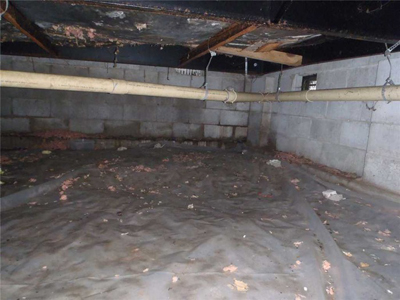
Crawlspaces are the ideal environment for mold to thrive.
Most crawlspaces are dark, dirty, and humid. Bugs like to live in there. They’re vented to the outside air in the summer (and in the winter if you neglect to close your vents) which can be very humid and this defeats the purpose of venting.
Mold is a fungus that requires moisture and high humidity to grow and thrive.
Like plants, mold has cells. However, unlike a plant that has chlorophyll and able to makes it’s food through photosynthesis, mold can not feed without moisture.
Mold reproduces by releasing it’s spores, this is mold’s survival mechanism.
In addition to moisture, mold also requires the right temperature of 41 degrees fahrenheit up to 100 degrees fahrenheit, common in Atlanta, Georgia and the South.
The final ingredient mold needs to thrive is food: high cellulose materials such as paper and wood, drywall, wallpaper, carpet, ceiling tiles, dust, and dirt.
Now that you understand why mold grows in your crawlspace, the remainder of this article will list and explain the top three reasons why you have moisture in your crawlspace and what you can do to fix the humidity issues.
How To Measure The Relative Humidity Of Your Crawlspace?
The easiest way to determine the relative humidity of your crawlspace is to use a hygrometer or you could install a digital thermo-hygrometer with a remote sensor to track it.
If the relative humidity is greater than 50% this could cause moisture issues that leads to mold.
Mold will begin to grow at 50%, and will thrive when the humidity is greater than 70%.
The key to ensuring that your crawlspace does not become a source of mold is to figure out how to control the humidity.
Listed below are the top three reasons your crawlspace has high humidity.
#1 Water Accumulation
If your crawlspace has standing water, you probably have a drainage problem or a plumbing leak. This needs to be fixed immediately.
You do not want water to accumulate in your crawlspace because this will compound your potential mold problems, not to mention as mold grows it will impact the indoor air quality of your home and health.
#2 Moisture Evaporating from the Ground
When homes are built with crawl spaces, most builders neglect to cover the ground, meaning that the crawlspace is covered with dirt.
Dirt has moisture and as the moisture evaporates, it will increase the humidity in your crawlspace.
Unfortunately, this is a common problem in Atlanta, Georgia, and other southern states. To prevent moisture from evaporating from the ground, the easiest solution is to cover it up with a vapor barrier during crawlspace encapsulation.
#3 Outdoor Air Coming in through the Crawl Space Vents
The third reason your crawlspace could have moisture issues is through the vents.
When you bring outdoor air into the crawlspace, the relative humidity can increase.
Cool air cannot hold as much moisture as warm air, so the air that enters is now closer to its saturation point, referred to as the dew point.
It might be 60% relative humidity outside, relative to a temperature of 90 degrees fahrenheit, but when that air enters the crawlspace and cools down to 75 degrees fahrenheit, the relative humidity jumps up to 95%.
In the past, we were told that crawlspaces needed to be ventilated. Now, however, we are learning that crawlspaces need to be treated almost as if they were living spaces. In other words, areas that are in contact with your living space affect your living space.
Fixing Your Crawlspace Humidity and Mold Problems
If your crawlspace is vented and the relative humidity is high, you need to fix the problems. It is not as simple as installing a dehumidifier either.
If you have water accumulation, the source of the water must be addressed. If it is a plumbing issue, fix the leak. If the problem is caused by drainage, this must be fixed as well.
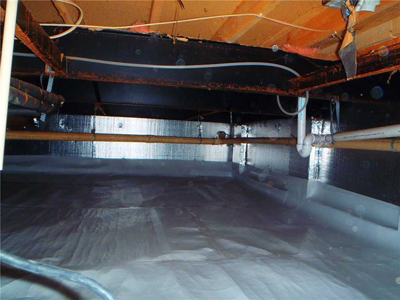
If the problem relates to moisture evaporating from the ground or outdoor air coming into your vents, this can be fixed with crawlspace encapsulation.
Mold-B-Gone Remediation, LLC specializes in drying out damp crawlspaces and turning them into dry, healthy foundations for your home.
Our dry-space crawlspace system includes the following:
- Thorough cleaning of the crawlspace, including mold removal and prevention.
- Installation of a wall-to-wall guide, durable, 14 mil vapor barrier.
- Attachment of the vapor barrier over ground and up sidewalls to 6 inches below floor joists.
The end result is an energy efficient, healthy home.
Got Crawlspace Mold Questions?
If you are concerned about humidity in your crawlspace, call 678-697-6267 or send us an e-mail. We look forward to serving you! 🙂