by Eric Brown | Apr 15, 2016 | Air Conditioning, Attic Mold, Basement Mold, Beware Of Mold When Buying A Home, Bleach and Mold, Can Black Mold Poison You?, Can Mold Kill?, Christmas Tree Mold, Chronic Inflammatory Response Syndrome (CIRS), Crawlspace Mold, Dead Mold Spores, Flood Clean Up, Health, How Toxic Is Mold?, Indoor Air Quality, Killing Mold, Mold and Asthma, Mold and Depression, Mold and Infants, Mold and Multiple Sclerosis, Mold and Parkinson's Disease, Mold and Pregnant Women, Mold and Sids, Mold and Sinusitis, Mold Facts, Mold In Apartment, Mold In The Bible, Mold Information, Mold Inspection, Mold Remediation, Mold Removal, Mold Removal Cost, Mold Risk During Renovation, Mold Sensitized Success Story, Questions and Answers, Sewer Backup, Sippy Cup Mold, Stachybotrys Black Mold, Top 15 Mold Prevention Tips, Toxic Mold, Water Damage Restoration
The Ultimate Mold Education Resource

The Ultimate Mold Education Resource
The goal of Mold B Gone is to educate our customers about mold. We strongly believe that an educated and informed consumer can make better decisions when they have concerns about mold.
Included in this article are 36 links to articles that will help you learn about mold.
Please bookmark this page because we will update it with new articles as they are researched and published.
If you have questions about mold removal, crawl space mold removal and encapsulation, other services we offer, and/or our 1 year up to 25 year guarantee, call us, 678-697-6267, or send us an e-mail. We look forward to serving you. 🙂
Mold Facts and Information (7 Articles)

Mold Facts and Information (7 Articles)
Priests were the equivalent of today’s mold inspectors. This article lists the three passages cited in Leviticus. Learn more!
Mold Fact 1: The Key Ingredient Mold Needs To Thrive Is Moisture. There are 9 more mold facts explained in this article. What do you think they are?
Top 4 Reasons Mold Grows In Your Attic! The purpose of this article is to explain why mold grows in your attic and prevention tips.
Top 3 Reasons Your Crawlspace Has High Humidity. This article explains why your crawlspace is humid, why this leads to mold and how you can fix the problem!
Steps Residents Can Take If They Have Mold In Their Apartment! This article explains what you can do if you find mold in your apartment. Learn more!
Top 10 Reasons Mold Is Scary!
Here are the top 10 reasons we believe that mold is scary. Enjoy!
This article provides you with information to help you determine if you have a mold problem and explains what you should and should not do if you do find mold.
Black Mold (2 Articles)
Black Mold (2 Articles)
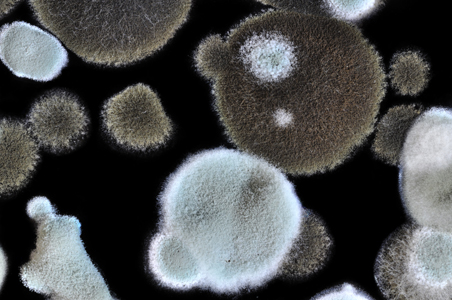
Recently a news article featured a woman who believes that she was poisoned by toxic black stachybotrys mold. This article explores this topic further!
Stachybotrys is considered the king of molds because exposure to this toxic black mold causes 15 serious health conditions. Learn more!
Mold and Health (13 Articles)

Mold and Health (13 Articles)
Wondering if you are sensitive to mold? This article explains how to determine if you are mold sensitized, seeking treatment, and the next two steps to health!
This article explains why mold can be toxic, listing 10 specific health conditions. Learn more!
Potential Health Complications Mold Exposure Has On Pregnant Women and Infants! Questions answered about SIDS, asthma, miscarriage, and pulmonary hemorrhage.
This article article explains why mold grows on sippy cups, why it could make your child sick, and how you should properly clean the sippy cup!
Mold Remediation Improves Health! This article explains why, citing an interview with Jack and Helen Graham, a Mold Sensitized Success Story!
Could Some People Diagnosed With Multiple Sclerosis Actually Be Suffering From Mold Sickness? This article explains how and why. Learn more!
One in Three people get sick from their Christmas tree. This article explains why and what you can do to feel better. Learn more.
Why Do Some People Get Sick From Mold And Others Do Not? This article explains why 1 in 4 people have a genetic predisposition to mold illness.
This article explains why many suffering from CIRS are diagnosed with depression caused by mold. Both scientific and anectodal data are cited. Learn more!
Does Mold Cause Parkinson’s Disease? The purpose of this article is to explain why and how mold could be a possible cause of Parkinson’s Disease.
Top 3 Reasons Mold Sickness Is A Hidden Epidemic! You could be sick from mold and not even know it. This article explains why mold is a hidden epidemic!
37 million Americans suffer from sinusitis. Cause? This article lists the top 10 stats and facts citing MAYO clinic research that believes mold is the cause!
According to the CDC, rates of asthma among children in Georgia is 3% above the national average. Is mold a factor? This article cites stats and research!
Water Damage and Mold (4 Articles)
Water Damage and Mold (4 Articles)
Concerned about sewer backups? This article explains what causes sewers to backup and how you can prevent this from happening. Learn more!
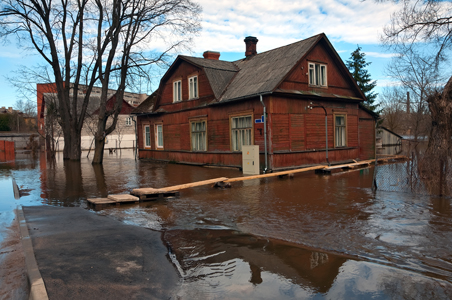
Flood and water damage not only disrupts your life but can also be hazardous to your health! This article explains the top 3 hazards and prevention measures!
A flooded home or business is always a stressful situation. This blog provides you with the 3 steps required to reduce flood damage and most importantly, mold!
Water damage restoration restores a property to pre-loss condition after a flood. Check out the top 3 facts. Hint: Mold is not the only concern.
Mold Inspection and Prevention (7 Articles)

Mold Inspection and Prevention (7 Articles)
Mold growth can be prevented. This article list the top 15 mold prevention tips, to help you live in a mold free home.
Top 3 Reasons A Mold Inspection Is Essential! This article explains why you should submit an offer to purchase, subject to a home AND mold inspection!
Home improvement is an American tradition. But, did you know that 6 out of 10 homes could have mold? Renovating can cause serious problems. Learn more!
If you are concerned about mold in your basement or your basement was recently flooded, implement these 10 tips to prevent mold growth. Learn more!
If you or someone in your family suffers more frequently from colds or flus and you are not sure why, the cause could be poor indoor air quality. Learn more!
The purpose of this article is to explain how you air conditioner could be a source of mold contamination making you sick and what you can do to fix it.
Wonder what happens during a mold inspection? This article answers all your questions, listing the top 4 actions taken by reputable inspectors.
Mold Removal (3 Articles)
Mold Removal (3 Articles)
Have a mold concern, wondering what it will cost to remove? This article provides you with a detailed explanation of how mold removal cost is determined!
Mold sprays, bleach, biocides, and fungicides are an ineffective “short cut” to mold removal. Killing mold is not the answer! This article explains why.
Mold Removal Is Referred To As Mold Remediation Because Professionals Follow These 8 Steps. This article explains the steps and why you need to hire a pro!

by Eric Brown | Apr 1, 2016 | Can Black Mold Poison You?, Health, How Toxic Is Mold?, Indoor Air Quality, Mold Facts, Mold Information, Mold Remediation, Mold Removal, Questions and Answers, Toxic Mold
Why Is Mold A Concern?

Why Is Mold A Concern?
“Mold can also be completely harmless, but in some situations, it can be truly deadly.” (Dr. Travis Stork, E.R. Physician)
“One study found a child’s risk of asthma can double from simply smelling mold.” (Dr. Jim Sears, Pediatrician)
Most homes and buildings have mold because they offer the three ingredients mold needs to grow:
- Food, which includes materials high in cellulose content such as paper and wood. Drywall, wallpaper, carpet, ceiling tiles, dust, and dirt, are also food sources for mold.
- Temperatures of 41 degrees to 100.4 degrees Fahrenheit present the perfect environment for mold.
- Finally, water is the key ingredient. Mold can not grow without moisture. Where there is moisture, you will find mold. This is one of the reasons that leaking pipes, roofs and ceiling, sewer backups, floods, and condensation end up causing mold issues.
Mold is a concern because we spend up to 90 percent of our time indoors, creating a situation ripe for health issues.
Ten Health Conditions Caused By Mold
Mycotoxins are naturally occurring substances produced by mold and are pathogenic to animals and humans.
In fact, the T-2 mycotoxin, is so toxic that it has been used in war time situations as a biological war agent. In aerosol form it is referred to as “yellow rain” and was used in Vietnam, Laos, and several other wars.
Some molds, particularly stachybotrys (black mold) and aspergillus are very toxic and constant exposure can lead to serious health issues.
Health risks from mold increase in areas where the relative humidity is above 55%, primarily because higher humidity means higher moisture and mold thrives in this climate.
Mold is toxic and can cause the following ten health conditions:
- Pulmonary hemorrhage or pulmonary hemosiderosis (primarily in infants)
- Nose bleeds
- Immune system suppression (resulting in increasing numbers of infections)
- Hair loss
- Dermatitis
- Chronic fatigue
- Psychological depression
- Diarrhea
- Sore throats
- Headaches and other flu-like symptoms
Top Ten Mold Prevention Tips Prescribed By The Doctors TV Show
- Potential health effects and symptoms associated with mold exposures include allergic reactions, asthma, and other respiratory complaints.
- There is no practical way to eliminate all mold and mold spores in the indoor environment; the way to control indoor mold growth is to control moisture.
- If mold is a problem in your home or school, you must clean up the mold and eliminate sources of moisture.
- Fix the source of the water problem or leak to prevent mold growth.
- Reduce indoor humidity (30 to 60 percent is recommended) to decrease mold growth by: venting bathrooms, dryers, and other moisture-generating sources to the outside; using air conditioners and de-humidifiers; increasing ventilation; and using exhaust fans whenever cooking, dishwashing, and cleaning.
- Clean and dry any damp or wet building materials and furnishings within 24 to 48 hours to prevent mold growth.
- Clean mold off hard surfaces with water and detergent, and dry completely. Absorbent materials such as ceiling tiles, that are moldy, need to be replaced.
- Prevent condensation: Reduce the potential for condensation on cold surfaces (e.g., windows, piping, exterior walls, roof or floors) by adding insulation.
- In areas where there is a perpetual moisture problem, do not install carpeting (e.g., by drinking fountains, by classroom sinks, or on concrete floors with leaks or frequent condensation).
- Molds can be found almost anywhere; they can grow on virtually any substance, provided moisture is present. There are molds that can grow on wood, paper, carpet, and foods.
Questions? Mold B Gone is here to help. We are mold remediation professionals and back our work with a written guarantee. Call 678-697-6267 or send us an e-mail. We look forward to serving you. 🙂

by Eric Brown | Feb 12, 2016 | Air Conditioning, Beware Of Mold When Buying A Home, Can Black Mold Poison You?, Can Mold Kill?, Crawlspace Mold, Health, Indoor Air Quality, Mold Facts, Mold Information, Mold Inspection, Mold Remediation, Mold Removal, Mold Removal Cost, Mold Sensitized Success Story, Questions and Answers, Stachybotrys Black Mold, Toxic Mold
Interview With Jack and Helen Graham: Mold Sensitized Success Story

Interview With Jack and Helen Graham: Mold Sensitized Success Story
For the past four years, I suffered from upper and lower digestive issues, extreme fatigue, and weakness. I was diagnosed with the lethal condition, idiopathic pulmonary fibrosis (unknown cause, hence no treatment). Later it was determined that the fibrosis was caused by acid reflux, which is treatable. I began to have difficulty breathing, which made me question the quality of our indoor air. The link between my health problems, poor indoor air quality and mold seems to be confirmed by the fact that when the house was retrofitted with new equipment and extensively cleaned my symptoms have largely been alleviated. Medical tests have shown improvement in my breathing and improved lung health. (Helen Graham)
The whole purpose of the Remediation for Sensitized Individuals course is to help sensitized individuals live healthier and better lives.
Johnny Wells, owner of Mold-B-Gone, invested in the training from Wonder Makers Environmental so that he can offer a higher level of service and expertise to individuals suffering from mold related illnesses. Johnny also works with Stephen Andrews of HealthyAirUSA, another graduate of the course. Together, they are serving the needs of mold sensitized individuals in Atlanta, Georgia and surrounding areas.
Below is an interview with Jack and Helen Graham, who hired Mold-B-Gone and HealthyAirUSA, to investigate the indoor air quality of their home and most importantly remediate the mold and make sure that the indoor air quality contributed to their health and well-being.
1. When was mold identified as the cause of your sickness?
17 years ago we moved into our 2800 square foot three story dream home, which was approximately 30 years old. We are very fastidious with the cleaning and maintenance of the home.
Within two years of moving in, we began to find leaking issues with sewer pipes and other pipes in the home. In addition to fixing these issues, over the years we also installed a new roof, flooring, chimney, outside exterior, windows, and doors. We even hired a restoration company to remediate some mold and dry out other areas in the home.
Despite our efforts to fix moisture issues and remediate mold, Helen’s health continued to deteriorate.
In Helen’s words:
“For the past four years, I suffered from upper and lower digestive issues, extreme fatigue, and weakness. I was diagnosed with the lethal condition, idiopathic pulmonary fibrosis (unknown cause, hence no treatment). Later it was determined that the fibrosis was caused by acid reflux. I began to have difficulty breathing, which made me question the quality of our indoor air.”
2. What caused the mold in your house?
The mold was not obvious. We had noticed there was more dust on our furniture, though we were keeping our furniture and interior surfaces very clean.
When the Mold-B-Gone specialists inspected our home they used high intensity lights shown at an angle and on nearly every surface there were tiny specks of white mold spores.
What we learned is that in any home here in the South where the humidity is almost always above 70% and where homes are air-conditioned, mold invariably exists, no matter how much one cleans. This is even more prevalent in older homes.
3. What remediation contractor did you use?
“After 71 years of health and physically energetic living, I experienced fatigue, shortness of breath, and bodily pains. A colleague I worked with 7 years ago was so sick and weak she had to crawl up her home stairs. After seeing her early this year, she was energetic, enjoying her career and family, and looked wonderful. We had switched places: she was healed, and I was quite sick. Her thriving health seemed miraculous, so I asked her how she became well.”
Initially we had another mold removal specialist do an inspection of our home. He took pictures inside the ducts and above the drop-down ceiling and wanted to remove all the ducts and air flow systems. The estimated cost was $59,000 and the time for completion was two months.
The price, time, and other factors seemed high. We felt scare tactics were employed hearing twice the unacceptable statement, “I am sure you want your wife to live, don’t you?” Both of us decided not to hire that company.
Helen’s condition continued to worsen. Luckily, one of Helen’s colleagues, who had chronic debilitating effects from mold, recommended HealthyAirUSA and Mold-B-Gone.
After their work was complete, her health improved dramatically.
Specifically, we hired them for three key reasons.
First, their assessment of the problems was thorough and very professional. They used specialized equipment to measure humidity and moisture levels in each area of the home.
Second, they educated us on the different types of mold and fungi and explained how they would resolve the problem. There is no shame in having home mold. We always thought homes get mold if they are not cleaned properly, so we have been conscientious about maintaining the cleanliness of our home.
Finally, the cost was reasonable. The total cost for remediation, including new equipment not proposed by the first remediator, was $22,000, and it would only take 6 to 8 days!
4. How long did it take for the work to be completed?
We were impressed by the persons in the crew, and enjoyed their professionalism, competence and respect for our home. We enjoyed being with them in the mornings before we left for work.
The work was finished in 8 days, as they predicted. They worked Wednesday, Thursday, and Friday to overhaul all the air flow systems and returned the next Monday for 5 days to clean every object in the home. We had the weekend to ourselves, which seemed miraculous to us!
They explained in advance exactly what was going to happen and did not miss a beat in holding to their schedule.
They completed the job exactly as they said they would. We were introduced to every person who came into our home, and given a full appraisal of their experience.
At the end of the job they checked the air quality in every room to ensure that the fungal ecology was at healthy levels.
5. What difference do you think it made working with a mold sensitized trained contractor?
Both of us noticed the effects of clean air immediately.
It made all the difference in the world to have a mold-sensitized trained contractor!
They knew what needed to be done. Both mold remediation, as well as the machinery and air circulation that were needed to cleanse the air and keep humidity at 40%, so mold could not be present.
They said that the air quality in the Master Bedroom was “surgical room quality.”
The air just seems “pure,” “fresh,” “hygienic,” “blue—if that is an image of cleanliness.”
We still have our house cleaned every two weeks, but the accumulation of dust is a tenth of what it was.
Perhaps the sense of the air quality is physiological, perhaps it is psychological, but Helen feels her breathing and energy are much better. I (Jack) have always grown up in old musty-smelling houses, but now that we have become educated about the harmful effects of mold, we are most grateful for the quality of this home improvement, and for the trust that we have experienced in the people who did this work.
6. What were the main steps/processes involved in the remediation?
After we made the decision to get the work done, we met with Johnny of Mold-B-Gone and Stephen of HealthyAirUSA as soon as possible. They told us that it would take 6-8 days and were very clear about what would happen on each day. We had assumed we would have to move out while the work was being done, yet they said that would not be necessary…what superb news!
With respect to specific steps, this is what they did.
They brought in a top tier duct cleaning service using 10,000 lbs of suction pressure. Then the edges of every duct opening where it meets the ceiling, were sealed. A large HEPA Air Cleaning system was added above the Master Bedroom. Then a large dehumidifier was added to dry out the entire house and keep the humidity of the house at a constant 47 percent, a level where no mold can grow and yet the wood does not dry and crack. The ceiling tiles in the lower level were all removed and cleaned on both sides and re-installed, the wood joists and all surfaces were coated with a mold preventative.
Once this step was completed, Mold-B-Gone brought in their team of five technicians who did a basement to roof cleaning of every surface and object, wiping every surface with a mold prevention cleaner developed by Johnny Wells. They were meticulous, cleaning every lamp, every object, every picture, every piece of furniture turned upside down, every drawer removed, emptied, cleaned, the contents cleaned, every one of about 3000 books individually cleaned. They took particular interest and care in cleaning about 60 antiquity objects dating from 5000 BCE to about 850 CE. This process took five days and they cleaned 12 rooms, including the garage.
For added “peace of mind”, there was a site supervisor that ensured that each step documented for us was followed through upon.
7. Further thoughts?
We highly recommend HealthyAirUSA and Mold-B-Gone because of the care and respect they demonstrated for the contents of home. Most importantly, they were easy to work with, friendly, and did an exceptional job.
Months after they were finished, Mold-B-Gone returned to investigate the mold on the caulking of the master shower. When Johnny and his staff supervisor, Rick, arrived it was liking seeing cherished friends. They are excellent professionals, fun and down-to-earth. They removed the contaminated caulking and re-caulked the shower and even brought ladders in to replace light bulbs in the hall entry at no extra cost.
Working with them was a marvelous experience because of their attitude, work ethic, and outstanding work. We have already referred friends and family to Mold-B-Gone and HealthyAirUSA because of their exceptional service.

We highly recommend Mold-B-Gone because of the care and respect they demonstrated for the contents of our home. Most importantly, they were easy to work with, friendly, and did an exceptional job!
Have A Mold Concern?
Call 678-697-6267 or use the form below!
[contact-form to=’sanjay@moldbgonega.com’ subject=’Mold B Gone Lead’][contact-field label=’First Name’ type=’name’ required=’1’/][contact-field label=’Last Name’ type=’name’ required=’1’/][contact-field label=’Phone’ type=’text’ required=’1’/][contact-field label=’Email’ type=’email’ required=’1’/][contact-field label=’Message’ type=’textarea’ required=’1’/][/contact-form]
by Eric Brown | Feb 5, 2016 | Basement Mold, Crawlspace Mold, Health, Indoor Air Quality, Mold Facts, Mold Removal, Questions and Answers, Toxic Mold
Top 3 Reasons Your Crawlspace Has High Humidity
Top 3 Reasons Your Crawlspace Has High Humidity
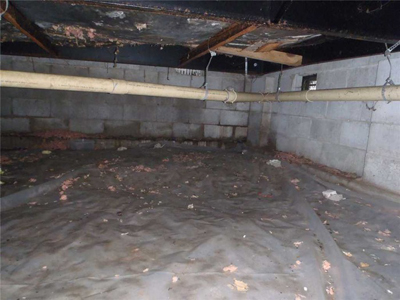
Crawlspaces are the ideal environment for mold to thrive.
Most crawlspaces are dark, dirty, and humid. Bugs like to live in there. They’re vented to the outside air in the summer (and in the winter if you neglect to close your vents) which can be very humid and this defeats the purpose of venting.
Mold is a fungus that requires moisture and high humidity to grow and thrive.
Like plants, mold has cells. However, unlike a plant that has chlorophyll and able to makes it’s food through photosynthesis, mold can not feed without moisture.
Mold reproduces by releasing it’s spores, this is mold’s survival mechanism.
In addition to moisture, mold also requires the right temperature of 41 degrees fahrenheit up to 100 degrees fahrenheit, common in Atlanta, Georgia and the South.
The final ingredient mold needs to thrive is food: high cellulose materials such as paper and wood, drywall, wallpaper, carpet, ceiling tiles, dust, and dirt.
Now that you understand why mold grows in your crawlspace, the remainder of this article will list and explain the top three reasons why you have moisture in your crawlspace and what you can do to fix the humidity issues.
How To Measure The Relative Humidity Of Your Crawlspace?
The easiest way to determine the relative humidity of your crawlspace is to use a hygrometer or you could install a digital thermo-hygrometer with a remote sensor to track it.
If the relative humidity is greater than 50% this could cause moisture issues that leads to mold.
Mold will begin to grow at 50%, and will thrive when the humidity is greater than 70%.
The key to ensuring that your crawlspace does not become a source of mold is to figure out how to control the humidity.
Listed below are the top three reasons your crawlspace has high humidity.
#1 Water Accumulation
If your crawlspace has standing water, you probably have a drainage problem or a plumbing leak. This needs to be fixed immediately.
You do not want water to accumulate in your crawlspace because this will compound your potential mold problems, not to mention as mold grows it will impact the indoor air quality of your home and health.
#2 Moisture Evaporating from the Ground
When homes are built with crawl spaces, most builders neglect to cover the ground, meaning that the crawlspace is covered with dirt.
Dirt has moisture and as the moisture evaporates, it will increase the humidity in your crawlspace.
Unfortunately, this is a common problem in Atlanta, Georgia, and other southern states. To prevent moisture from evaporating from the ground, the easiest solution is to cover it up with a vapor barrier during crawlspace encapsulation.
#3 Outdoor Air Coming in through the Crawl Space Vents
The third reason your crawlspace could have moisture issues is through the vents.
When you bring outdoor air into the crawlspace, the relative humidity can increase.
Cool air cannot hold as much moisture as warm air, so the air that enters is now closer to its saturation point, referred to as the dew point.
It might be 60% relative humidity outside, relative to a temperature of 90 degrees fahrenheit, but when that air enters the crawlspace and cools down to 75 degrees fahrenheit, the relative humidity jumps up to 95%.
In the past, we were told that crawlspaces needed to be ventilated. Now, however, we are learning that crawlspaces need to be treated almost as if they were living spaces. In other words, areas that are in contact with your living space affect your living space.
Fixing Your Crawlspace Humidity and Mold Problems
If your crawlspace is vented and the relative humidity is high, you need to fix the problems. It is not as simple as installing a dehumidifier either.
If you have water accumulation, the source of the water must be addressed. If it is a plumbing issue, fix the leak. If the problem is caused by drainage, this must be fixed as well.
If the problem relates to moisture evaporating from the ground or outdoor air coming into your vents, this can be fixed with crawlspace encapsulation.
Mold-B-Gone Remediation, LLC specializes in drying out damp crawlspaces and turning them into dry, healthy foundations for your home.
Our dry-space crawlspace system includes the following:
- Thorough cleaning of the crawlspace, including mold removal and prevention.
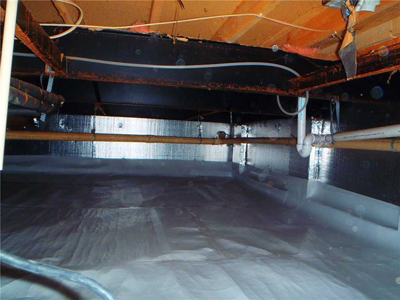
- Installation of a wall-to-wall guide, durable, 14 mil vapor barrier.
- Attachment of the vapor barrier over ground and up sidewalls to 6 inches below floor joists.
The end result is an energy efficient, healthy home.
If you are concerned about humidity in your crawlspace, call 678-697-6267 or send an e-mail. We look forward to serving you! 🙂
by Eric Brown | Jan 25, 2016 | Basement Mold, Beware Of Mold When Buying A Home, Flood Clean Up, Health, Indoor Air Quality, Killing Mold, Mold Facts, Mold Information, Mold Inspection, Mold Remediation, Mold Removal, Mold Removal Cost, Questions and Answers, Top 15 Mold Prevention Tips, Toxic Mold, Water Damage Restoration
The Key To Mold Prevention Is Moisture Control!
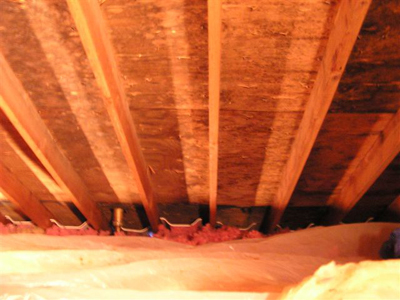
The Key To Mold Prevention Is Moisture Control!
Mold spores are all around us, outside and indoors. Mold actually serves a purpose in our eco-system to consume dead organic materials.
Problems with mold arise indoors primarily because our homes are made of dead organic materials, meaning mold can grow anywhere in your home: on carpet, clothing, food, paper, and even in places you can’t see, such as the backside of drywall, areas inside walls around leaking or condensing pipes, and above ceiling tiles.
The simplest way to detect a mold problem is using your own senses. A musty odor is one indication. Not only is mold smelly, but can be many different colors from black and gray to orange and green. Watermarks on the ceiling and walls are also a telltale sign.
There are two key reasons, you should be concerned about preventing mold.
First, mold can be difficult and costly to remove.
Second, mold can produce allergens, irritants, and mycotoxins that can compromise your health. Because mold spores are very small and can easily be inhaled into the lungs, it is harmful to live in a home with high mold levels.
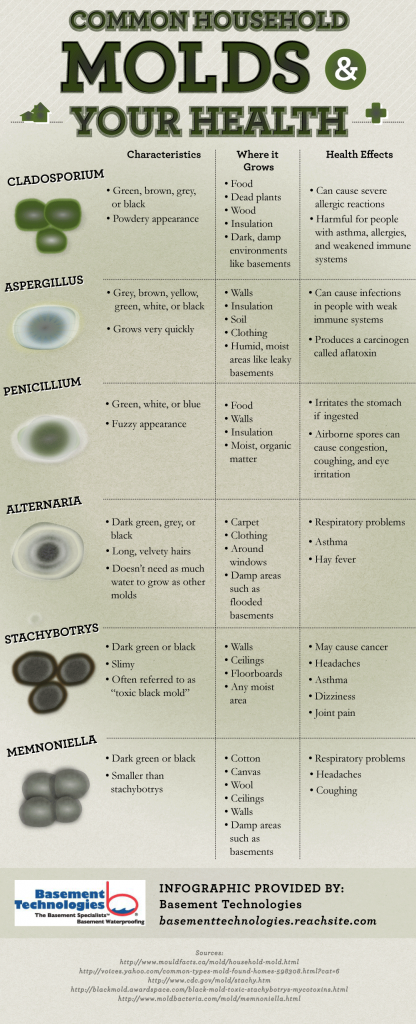
Mold Can Compromise Your Health
Mold growth can be prevented. Mold growing in your home requires moisture, warmth, and food. Depriving mold of any of these three items will stop it from growing, but it will not kill the mold that is already there. Mold spores will remain dormant, and if the moisture, warmth and food all reappear, mold will begin to grow again.
So what can you do if you’re concerned about mold growing in your home?
Listed below are the top 15 mold prevention tips.
The Top 15 Mold Prevention Tips
Mold Prevention Tip #1: Audit Your Home For Problem Areas!
It is difficult to mold-proof a home. However, you can take proactive steps to determine if you have problems that could lead to mold concerns.
Does the basement flood?
Do you notice frequent condensation on windows?
Is there a water stain on the ceiling from a persistent leak?
Is your basement damp?
Does water flow into your home’s foundation?
Addressing these questions may entail some upfront costs to fix, but it will be worth the investment in preventing future mold problems.
It is also important to note that if you are renovating your home or considering building a new home, that you may want to consider researching mold prevention products, including mold-resistant drywall and sheetrock, and mold inhibitors for paints.
Mold-resistant drywall is recommended because traditional drywall is made up of gypsum plaster core pressed between piles of paper, making it highly susceptible to mold. What this means is that in the presence of moisture and water, traditional drywall acts like a sponge absorbing the moisture leading to mold. Since traditional drywall is so porous, the only remedy to removing the mold is to tear out the drywall.
In contrast, mold-resistant drywall is paperless because the gypsum core is covered in fiberglass, meaning it is water-resistant and therefore less susceptible to mold growth. Moisture resistance drywall should be used in bathrooms, laundry rooms, basements, and kitchens because these areas of the home are most prone to moisture.
Mold Prevention Tip #2: Dry Wet Materials Immediately!
Mold can not grow without moisture and given the right conditions, it will begin growing within 24 to 48 hours.
With this in mind, tackle we areas right away.
- Don’t leave wet clothes or other items lying around the house, dry them outside if possible.
- Dry spills on carpet and floors.
- Dry your clothes after washing them by putting them in the dryer soon after the wash cycle is complete.
- If heavy rainfall causes seepage into your basement, make sure you dry the area promptly and contact a company to waterproof your basement to prevent future occurrences.
- If you experience a flood event, dispose of water-damaged carpets, bedding, and furniture if they can not be dried completely. Ideally, contact a restoration company to manage the clean up and drying process.
Mold Prevention Tip #3: Clean, Disinfect, and Dry Surfaces!
Vacuum and clean regularly to remove possible sources of mold growth.
Pay special attention to bathrooms and other areas of your home that are likely to generate a lot of moisture.
Non-porous surfaces (tile, stone, laminate) can be cleaned well with disinfectants and other cleaners.
Mold Prevention Tip #4: Repair Water Leaks!
Repair water leaks in your roof, windows, or any other part of the home as soon as possible.
Over time, constant leaks will cause moisture to buildup leading to mold growth.
Mold Prevention Tip #5: Use Area Rugs!
In portions of your home that are susceptible to moisture, use area rugs or washable floor surfaces rather than wall-to-wall carpeting. If you use area rugs, launder them periodically.
Mold Prevention Tip #6: Increase Air Flow!
Prevent moisture buildup by increasing the air flow within your home. Without good air flow, excess moisture can appear on your walls, windows, and floors.
To increase air circulation, open doors between rooms, move furniture away from walls, and open doors to closets.
In addition, open windows to allow fresh air to flow indoors.
If you don’t already have an HVAC system that has an outside air intake to bring in a steady stream of outside air, consider installing one.
Mold Prevention Tip #7: Proper Ventilation!
Routine daily activities such as cooking, taking a shower, and washing laundry can create excess moisture in your home.
Prevent moisture with proper ventilation.
Vent appliances that produce moisture (clothes dryers and stoves) to the outside, not to the attic or crawl space.
Use AC units and dehumidifiers (especially in humid climates), but make sure they don’t produce moisture themselves by checking them periodically and cleaning them as directed by the manufacturer.
Energy-efficient homes are prone to holding moisture inside. For this reason, it is important that you open windows or use exhaust fans in the kitchen and bathroom (especially when you are showering).
Mold Prevention Tip #8: Make Sure Your Storage Room Is Dry!
Most homeowners have a room where they store materials such as books, clothes, camping gear, and other occasional use items.
It is important that you check the humidity of your storage room and make sure that there is no excess moisture because most of the materials you are storing are ample sources of food for mold.
Ideally, use your garage, a well built shed that prevents moisture intrusion, or a dry storage unit and not the inside of your home. Make sure there is air circulating in the storage area as well.
Mold Prevention Tip #9: Control Humidity!
Clues that your home has excess humidity include condensation on windows, pipes, and walls. If you notice condensation, dry the surface immediately and address the source of moisture, and invest in a dehumidifier if necessary.
To measure the humidity levels in your home, purchase a moisture meter from your local hardware store.
Ideally, the indoor humidity of your home should be between 30 and 60 percent.
In the winter, it is recommended that humidity levels are below 40 percent to prevent condensation from appearing on the windows.
Mold Prevention Tip #10: Check Your Attic!
Make sure that your exhaust fans are not venting into the attic because this will create excess moisture and lead to mold.
Also, your attic needs ventilation as well, so check this.
Insulation is important, particularly in cooler climates because snow accumulation on the roof can lead to ice damning issues which will cause moisture issues.
Mold Prevention Tip #11: Check Your Crawl Space!
Most homes in the Southern United States have crawl spaces.
Crawl spaces are a breeding ground for mold because there is so much excess humidity.
Mold growth in the crawl space is a particular concern because it will also impact the indoor air quality of your home.
If you find excess moisture or mold issues in your crawl space, then the area should be cleaned properly and the mold removed. To prevent future mold issues, wall-to-wall guide, durable, 14 mil vapor barrier should be installed over the ground and up sidewalls to 6 inches below floor joists. Installation of a dehumidifier will also help control humidity.
Mold Prevention Tip #12: Prevent Basement Condensation!
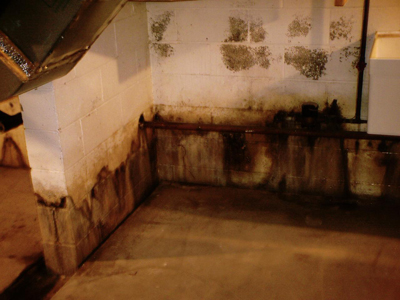
The cool basement floor and walls can be a source of moisture build-up, leading to mold and that musty smell many encounter in their basements.
To prevent condensation and future moisture issues, improve air circulation, run a dehumidifier, and install a foundation drain.
Ideally, make sure the basement walls are insulated properly to keep the walls warm and limit condensation.
As a final note, if you find that there is moisture intrusion into your basement through seepage, consider hiring a contractor to water proof the area.
Mold Prevention Tip #13: Direct Water Away From Your Home!
One of the best methods to prevent seepage into your crawlspace or basement is to ensure that water around your home sufficiently slopes away from the foundation of your home.
Do not put gardens or plants too close to your foundation so that watering them could cause water to flow toward your house.
If you water your lawn with a sprinkler, make sure the water does not hit your house or the area next to the foundation.
Mold Prevention Tip #14: Keep Your Gutters and Downspouts Clear of Debris!
Debris in your gutters or downspouts could block the flow of water from your roof. To prevent water accumulation, clean your gutters regularly and have them inspected for damage. It is also a good idea to check your ceiling for water stains, particularly after heavy storms.
In addition, make sure the area under your downspouts is properly graded so that rainwater from the roof flows away from your foundation. If the water is not flowing away from the foundation, extend your downspouts.
Mold Prevention Tip #15: Check Your Plants For Mold!
Plants help keep your indoor air clean. Unfortunately, mold grows in the soil of house plants and can also grow on the leaves, leading to higher levels of mold spores in the home. To hinder mold growth in plant soil, add some Taheebo tea to your house plant water in a mild solution. The oil of this tree, which withstands fungi even in rain forests, helps hinder mold growth in plant soil and can be found at natural food stores.
Questions? Mold B Gone is here to help. We are mold removal and mold prevention specialists backing our services with a minimum guarantee of 1 year. Call 678-697-6267 or send us an e-mail.
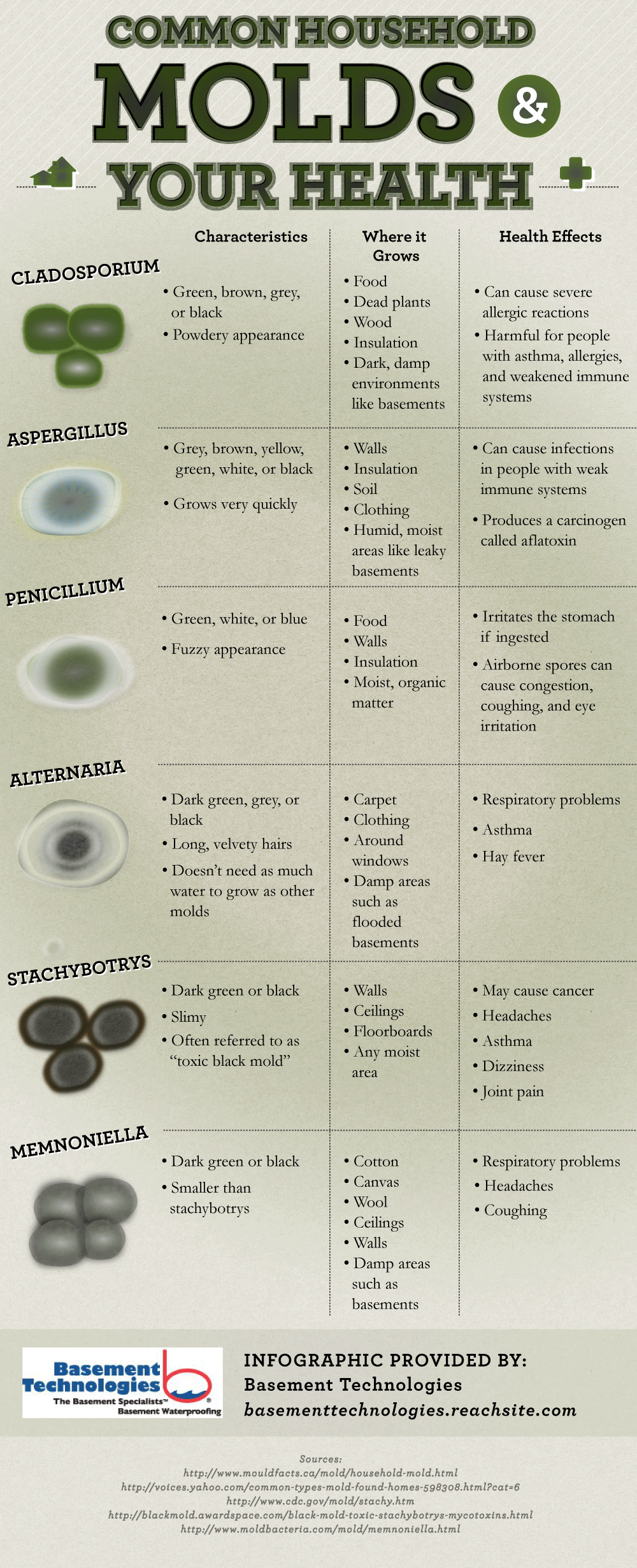
The infographic below is an exceptional summary of mold. Enjoy!

Mold Summary

by Eric Brown | Jan 12, 2016 | Air Conditioning, Basement Mold, Beware Of Mold When Buying A Home, Bleach and Mold, Can Black Mold Poison You?, Can Mold Kill?, Chronic Inflammatory Response Syndrome (CIRS), Flood Clean Up, Health, Indoor Air Quality, Killing Mold, Mold and Asthma, Mold and Depression, Mold and Multiple Sclerosis, Mold and Parkinson's Disease, Mold and Sinusitis, Mold Facts, Mold Information, Mold Inspection, Mold Remediation, Mold Removal, Mold Removal Cost, Mold Risk During Renovation, Questions and Answers, Stachybotrys Black Mold, Toxic Mold, Water Damage Restoration
Top 20 Most Shared Mold Health and Prevention Articles In Georgia
Top 20 Most Shared Mold Health and Prevention Articles In Georgia
August, 2015, marked a historic month for Mold B Gone.
We launched this website, www.moldbgonega.com, dedicated to creating mold awareness for residents of Georgia.
Listed below are the top 20 articles, listed in the order of most viewed.
If you have questions or need help, the Mold B Gone Team looks forward to serving you. Call 678-697-6267 or send us an e-mail!
We have been serving Georgia since 2009 and have built a solid reputation in the state because of our expertise and knowledge, 1 year up to 25 year guarantee, and peace of mind we offer our customers.
Twenty Most Shared Mold Health and Prevention Articles In Georgia
- Are You Sick From Mold Because Of Your Genes?
- Top 10 Facts About Mold
- 7 Places Mold Hides In Your Home!
- Is Mold Sickness A Hidden Epidemic?
- Why Is Black Mold A Health Concern?
- Are Sinus Infections Caused By Mold?
- Can Toxic Black Mold Poison You?
- How Do I Know If Mold Is Making Me Sick?
- Are Dead Mold Spores Harmful?
- How Does Mold Cause Depression?
- Does Mold Cause Multiple Sclerosis?
- What Is The Link Between Mold and Parkinson’s Disease?
- Is Your Air Conditioner Making You Sick?
- 10 Tips To Prevent Basement Mold!
- Top 10 Reasons Mold Is Scary!
- The #1 Mistake Home Buyers Make!
- How Is Mold Removal Cost Determined?
- 8 Steps To Mold Remediation Success!
- What Is The Link Between Mold and Asthma?
- Top 3 Facts About Water Damage Restoration