If your home has cold floors in winter, musty odors, or higher-than-expected energy bills, your crawl space might be working against you. Many homeowners don’t realize that an unprotected crawl space can significantly impact their family’s health, comfort, and finances. Crawl space encapsulation offers a comprehensive solution that transforms this vulnerable area into a controlled environment that protects your entire home.
Key Takeaways
Crawl space encapsulation reduces energy bills by 15% or more through improved insulation and air sealing
Proper encapsulation prevents mold growth and improves indoor air quality by controlling moisture levels below 60% humidity
Encapsulation protects your home’s foundation and structural integrity while potentially increasing property value
The sealed environment deters pests like termites, rodents, and insects from entering your crawl space
Professional encapsulation typically costs $5,000-$15,000 but provides long-term savings and protection for 15-20 years
What are the Benefits of Crawl Space Encapsulation
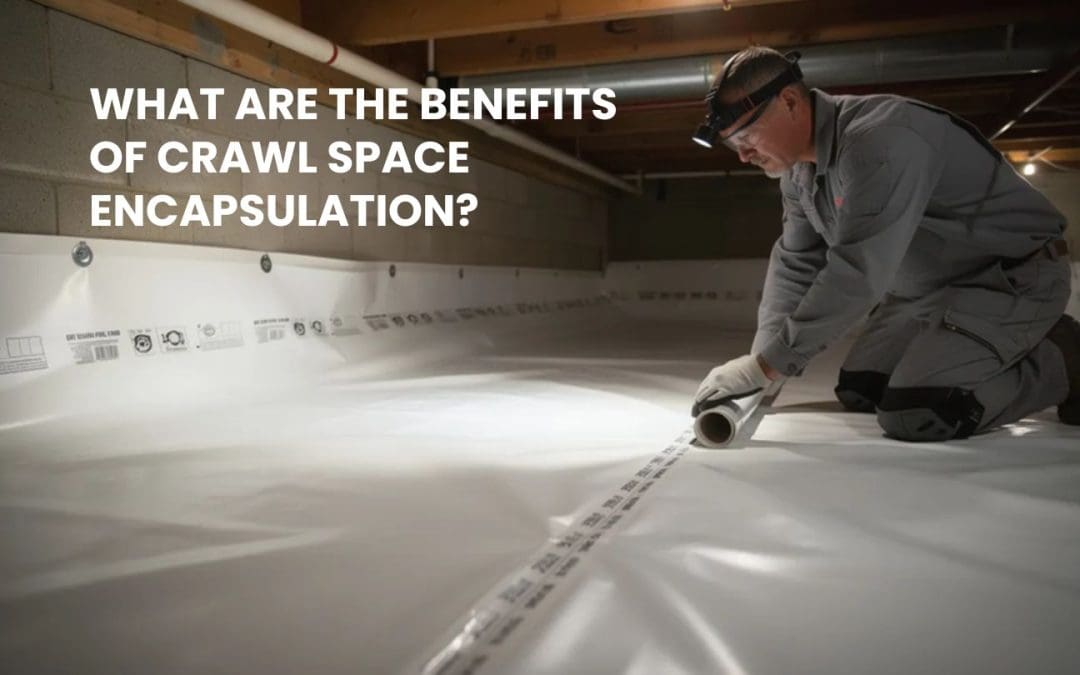
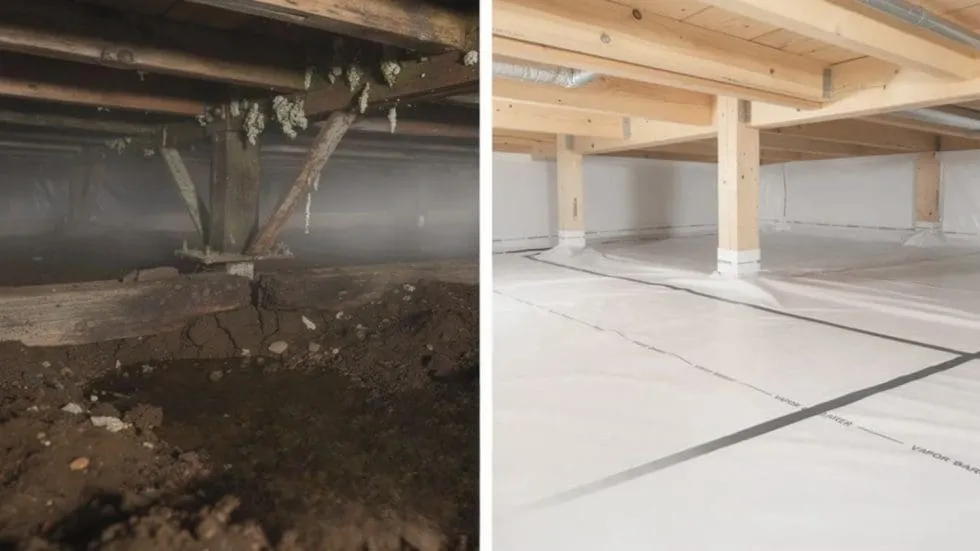
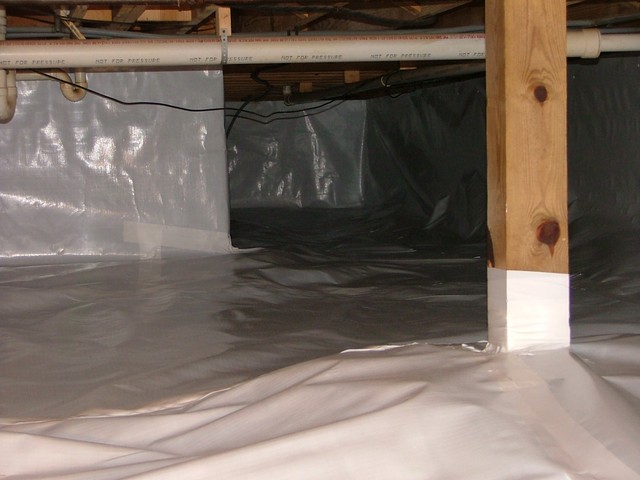
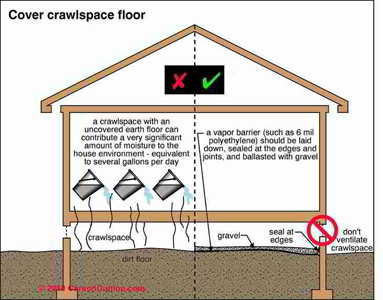
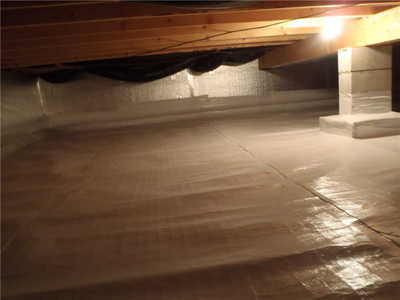
Crawl space encapsulation creates a moisture barrier using heavy-duty polyethylene vapor barriers, typically 10-20 mil thickness, combined with closed-cell spray foam insulation on crawl space walls. This comprehensive system transforms your crawl space from a damp, uncontrolled area into a dry environment that protects your entire home.
The crawl space encapsulation process involves sealing vents and openings to eliminate outdoor air infiltration, which historically brought humid outside air into the cooler crawl space. This created the perfect conditions for mold growth, wood rot, and pest infestations. Modern building science has shown that in humid climates, traditional ventilation actually increases moisture problems rather than solving them, especially when recognizing conditions that contribute to mold in crawlspaces.
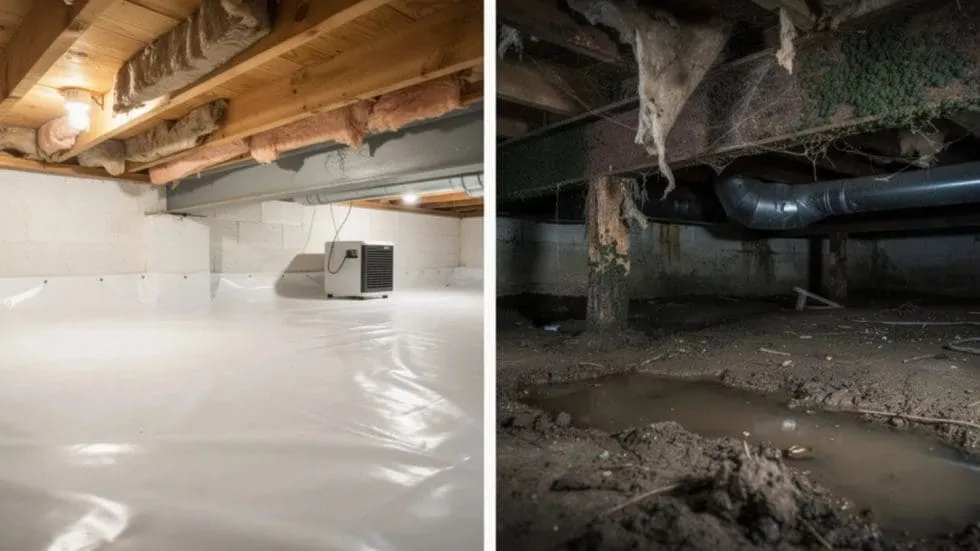
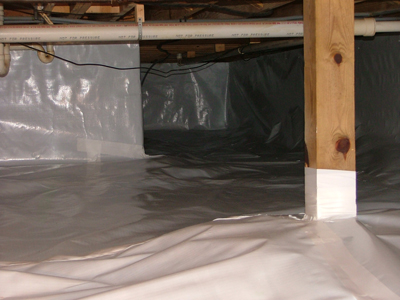
Professional encapsulation creates an airtight seal that prevents ground moisture from entering your home’s living spaces, an essential step when understanding the reasons crawlspaces have mold in unmanaged environments. The system typically includes high-quality materials such as reinforced polyethylene sheeting on the crawl space floor, foam insulation on walls, sealed rim joists, and often a dehumidifier to control humidity levels. Together, these components create a controlled environment that delivers all the benefits of crawl space protection.
While the initial cost ranges from $5,000-$15,000, depending on your home’s size and existing conditions, this represents a long-term investment that typically pays for itself through energy savings and avoided repair costs over 7-10 years. The system’s durability means you’ll enjoy these benefits for 15-20 years or more with proper maintenance.
Energy Efficiency and Cost Savings
One of the most compelling benefits of crawl space encapsulation is the significant reduction in energy costs. Properly encapsulated crawl spaces can reduce your energy bills by 15% or more annually by preventing conditioned air loss and reducing your HVAC system workload.
In traditional vented crawl spaces, your heating and cooling system works harder because conditioned air escapes through the crawl space while unconditioned outdoor air enters your home. This air leakage forces your HVAC equipment to run longer cycles to maintain comfortable temperatures, directly increasing your energy costs.
Encapsulation eliminates this energy waste by creating an air-sealed barrier between your home and the outside environment. The typical payback period for professional encapsulation is 7-10 years through energy savings alone, making it a smart financial investment. For homes with annual energy bills of $2,000, a 15% reduction saves $300-400 yearly, significant savings that compound over time.
Many homeowners also notice immediate comfort improvements that enhance their quality of life. The enhanced energy efficiency means more consistent temperatures throughout your home, reducing hot and cold spots that make certain areas uncomfortable.
Installing 2-3 inches of closed-cell spray foam insulation on crawl space walls provides excellent temperature control that eliminates common comfort problems. This creates a thermal barrier that keeps your crawl space closer to your home’s conditioned temperature year-round.
The most noticeable improvement is the elimination of cold floors during the winter months. Uninsulated crawl spaces allow cold air to chill your floor surfaces, making walking barefoot uncomfortable and forcing you to raise thermostat settings. Proper crawl space insulation maintains warmer floor temperatures, improving comfort while reducing heating costs.
During summer, encapsulation prevents humid outdoor air from entering the space beneath your home, directly addressing factors that explain why mold grows in crawlspaces in regions with high humidity. This controlled environment reduces the cooling load on your HVAC system and helps maintain more consistent humidity levels throughout your home. The result is improved comfort and lower cooling costs during hot weather.
Integration of your crawl space into your home’s conditioned space also eliminates drafts and air infiltration that create uncomfortable temperature variations. The sealed environment ensures that the air you’re paying to heat or cool stays inside your home where it belongs.
Moisture Control and Structural Protection
Effective moisture control is perhaps the most critical aspect of crawl space encapsulation. The reinforced polyethylene vapor barriers prevent ground moisture from evaporating into your crawl space, while sealed vents block humid outside air from entering this enclosed space.
Maintaining humidity levels below 60% prevents wood rot and protects your floor joists, support beams, and other structural components from moisture damage. In humid climates, uncontrolled crawl spaces often experience humidity levels of 80-90%, creating perfect conditions for structural decay that can cost tens of thousands of dollars to repair.
The barrier prevents ground moisture infiltration while the controlled environment eliminates the temperature differentials that cause condensation on pipes, ducts, and wooden structural elements. This comprehensive moisture management protects your home’s structural integrity for decades.
Professional encapsulation also includes proper drainage systems when needed, ensuring that any water intrusion is quickly removed before it can cause damage. This integrated approach addresses both moisture infiltration and any residual moisture that might accumulate over time.
Your home’s foundation benefits significantly from consistent moisture levels around the foundation walls. Soil moisture changes cause expansion and contraction that can lead to foundation cracks, shifts, and costly structural repairs exceeding $10,000.
Crawl space encapsulation maintains stable moisture levels in the soil around your foundation by preventing both excessive drying and moisture buildup. This stability reduces the soil movement that causes foundation problems and helps preserve your home’s structural stability over time.
The controlled environment also protects against freeze-thaw cycles that can damage foundation walls and footings. By maintaining more consistent temperatures in your crawl space, you reduce the risk of frozen pipes and the foundation stress caused by repeated freezing and thawing.
Long-term preservation of your foundation through proper moisture management represents one of the most valuable benefits of encapsulation. Foundation repairs are among the most expensive home maintenance issues, making prevention through encapsulation a wise investment in your home’s future.
Indoor Air Quality Improvements
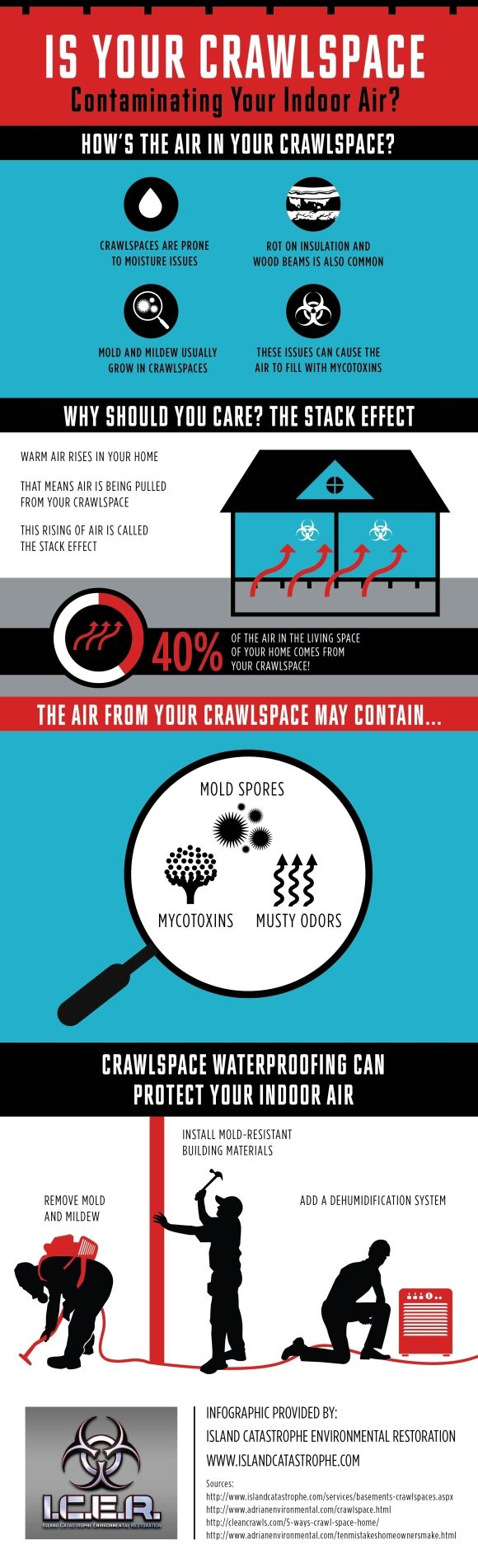
Poor indoor air quality often originates in uncontrolled crawl spaces where mold, mildew, and other contaminants thrive. Building science research shows that up to 40-50% of the air on your home’s first floor can originate from the crawl space due to the stack effect – the natural tendency for air to rise through your home.
Crawl space encapsulation dramatically improves indoor air quality by eliminating the source of many airborne contaminants that contribute to issues such as how crawl spaces affect homes. The controlled environment prevents mold spores, allergens, and pollutants from circulating into your living spaces, creating a healthier living environment for your family.
The elimination of musty odors is one of the most immediate improvements homeowners notice after encapsulation. These odors, caused by decaying organic matter and microbial growth in damp conditions, disappear when the crawl space is kept dry and air circulation is controlled.
Families with members who suffer from allergies or respiratory issues often experience significant relief after encapsulation. The improved air quality reduces exposure to mold spores and other allergens that can trigger symptoms and compromise health.
Creating a dry environment through encapsulation eliminates the dark, moist conditions where mold and mildew thrive. Maintaining humidity below 60% prevents new mold growth while removing existing moisture sources that support microbial colonies.
The barrier prevents ground moisture that feeds mold growth on organic materials like floor joists, insulation, and stored items. Combined with proper air circulation, this creates conditions that prevent mold growth and protect your family’s health.
Protection of building materials from rot and decay preserves your home’s value while eliminating health risks associated with mold exposure. Many homeowners don’t realize that structural damage from mold can compromise both safety and property value until problems become severe.
The controlled humidity environment also prevents the musty odors associated with mold and mildew, creating fresher air throughout your home. This improvement in air quality contributes to a more pleasant living environment and can even help with sleep quality and overall well-being.
Pest Prevention and Control
An encapsulated crawl space eliminates many entry points that pests use to access your home. Sealing vents, gaps, and penetrations creates a physical barrier that blocks rodents, insects, and other unwanted creatures from establishing habitats beneath your home.
The dry environment created by encapsulation is far less attractive to pests that seek out damp, dark spaces for breeding and nesting. Common crawl space invaders like termites, cockroaches, spiders, and rodents prefer moist conditions that encapsulation eliminates.
Professional pest control becomes more effective in an encapsulated crawl space because treatments can be more precisely targeted, and the sealed environment prevents reinfestation from outside sources. The clean, accessible surface also makes it easier to detect any pest activity early.
Eliminating pest habitats protects your home from the structural damage that rodents and insects can cause to wiring, insulation, and wooden components. The investment in encapsulation helps prevent costly pest-related repairs while creating a healthier environment for your family.
Real estate professionals recognize that homes with properly encapsulated crawl spaces often command higher prices and sell more quickly than comparable properties with traditional vented crawl spaces. Buyers appreciate the demonstrated commitment to home maintenance and the protection against future problems.
The enhanced energy efficiency, improved air quality, and structural protection that encapsulation provides make your home more attractive to potential buyers. In markets where moisture and mold concerns are common, encapsulation can provide a significant competitive advantage.
Professional encapsulation demonstrates proactive maintenance that reassures buyers and inspectors about the home’s long-term condition. The system’s 15-20 year lifespan means that new owners will enjoy the benefits without immediate additional investment.
The worthwhile investment in encapsulation often pays dividends beyond the direct energy savings, particularly in humid climates where moisture problems can significantly impact property values.
Improved Access and Usability
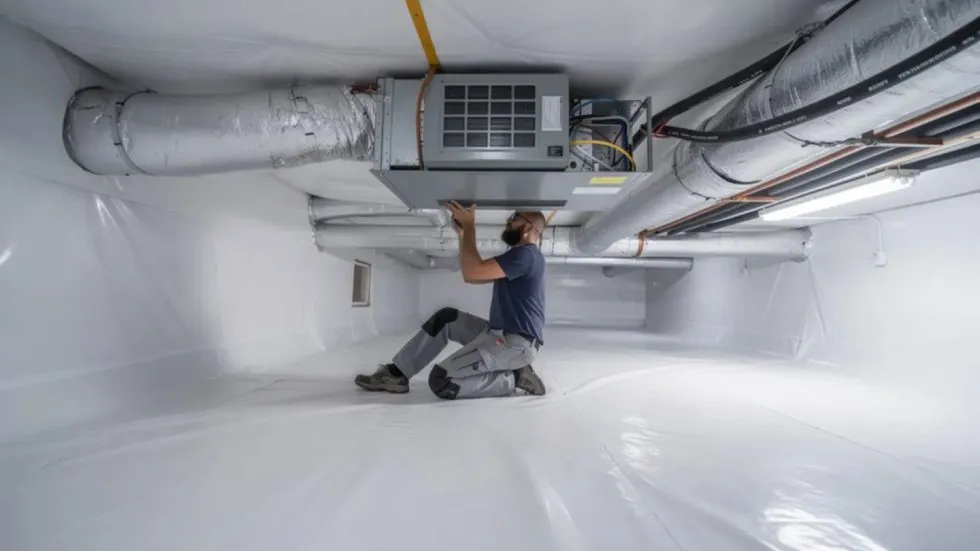
Installing a continuous vapor barrier creates a clean, navigable surface that makes crawl space maintenance much safer and more practical. Service technicians can access HVAC equipment, plumbing, and electrical systems more easily and safely in an encapsulated space.
The dry, clean environment protects equipment and tools during maintenance visits while reducing the risk of accidents or damage. Many homeowners find they can use their encapsulated crawl space for clean, dry storage of seasonal items and emergency supplies.
The improved accessibility makes regular maintenance of your home’s systems more convenient and affordable. HVAC technicians, plumbers, and electricians can work more efficiently in a clean, dry environment, often reducing service call costs.
Enhanced safety for anyone entering the crawl space reduces liability concerns and makes necessary maintenance tasks less daunting for homeowners who want to inspect their own systems periodically.
Plumbing and Infrastructure Protection
Consistent temperature control in your encapsulated crawl space provides excellent protection for plumbing systems that run through this area. Frozen pipes are a common problem in traditional crawl spaces where cold outdoor air can drop temperatures below freezing.
The controlled environment protects your crawl space plumbing from extreme temperature fluctuations that can cause pipe expansion, contraction, and eventual failure. This stability extends the life of your plumbing system and reduces the risk of costly emergency repairs during cold weather.
Mechanical systems benefit from the stable conditions as well. HVAC ductwork performs more efficiently when not exposed to extreme temperatures and moisture, improving system performance while reducing wear and tear.
The dry environment also protects electrical systems from moisture-related damage that can cause short circuits, corrosion, and fire hazards. Professional encapsulation creates optimal conditions for all the infrastructure systems that serve your home.
Installing a sump pump as part of the encapsulation system provides additional protection against water intrusion that could damage mechanical systems. This integrated approach ensures that your home’s essential systems operate reliably in a protected environment.
Creating a Cleaner, Healthier Foundation for Your Home
Crawl space encapsulation offers long-term benefits that protect both your property and your indoor environment. By controlling moisture, reducing mold risk, improving energy efficiency, and enhancing overall air quality, encapsulation provides a strong foundation for a safer, healthier, and more comfortable home.
Professional encapsulation systems typically last 15-20 years with proper maintenance, while some high-quality vapor barriers can remain effective for up to 25 years, depending on material quality and installation. Regular maintenance includes annual inspections and occasional dehumidifier filter changes.
Can I use my crawl space for storage after encapsulation?
Yes, encapsulated crawl spaces provide clean, dry storage areas perfect for seasonal items and emergency supplies. However, you should use protective measures like sleds when moving heavy items to avoid damaging the vapor barrier and ensure proper ventilation around any stored materials.
Will encapsulation work in all climate zones?
Encapsulation is particularly beneficial in Climate Zone 5 and humid climates where moisture control is critical. In very dry regions with low rainfall and stable groundwater levels, traditional ventilation may be sufficient, but encapsulation still provides energy efficiency benefits in most areas.
What maintenance does an encapsulated crawl space require?
Annual inspections are recommended to check for vapor barrier tears or seal failures that could compromise the system’s effectiveness. Dehumidifier filters need periodic replacement every 6-12 months, similar to HVAC system filters, and drainage systems should be checked for proper operation.
Is professional installation necessary for crawl space encapsulation?
While DIY options exist, professional installation ensures proper sealing, appropriate materials, and compliance with local building codes. Improper installation can trap moisture and create bigger problems than before encapsulation, making professional installation a worthwhile investment for long-term success.
Crawlspaces are the ideal environment for mold to thrive.
Most crawlspaces are dark, dirty, and humid. Bugs like to live in there. They’re vented to the outside air in the summer (and in the winter if you neglect to close your vents) which can be very humid and this defeats the purpose of venting.
Mold is a fungus that requires moisture and high humidity to grow and thrive.
Like plants, mold has cells. However, unlike a plant that has chlorophyll and able to makes it’s food through photosynthesis, mold can not feed without moisture.
Mold reproduces by releasing it’s spores, this is mold’s survival mechanism.
In addition to moisture, mold also requires the right temperature of 41 degrees fahrenheit up to 100 degrees fahrenheit, common in Atlanta, Georgia and the South.
The final ingredient mold needs to thrive is food: high cellulose materials such as paper and wood, drywall, wallpaper, carpet, ceiling tiles, dust, and dirt.
If you want to know more about mold, then read: 10 Facts About Mold.
Now that you understand why mold grows in your crawlspace, the remainder of this article will list and explain the top three reasons why you have moisture in your crawlspace and what you can do to fix the humidity issues.
How To Measure The Relative Humidity Of Your Crawlspace!
The easiest way to determine the relative humidity of your crawlspace is to use a hygrometer or you could install a digital thermo-hygrometer with a remote sensor to track it.
If the relative humidity is greater than 50% this could cause moisture issues that leads to mold.
Mold will begin to grow at 50%, and will thrive when the humidity is greater than 70%.
The key to ensuring that your crawlspace does not become a source of mold is to figure out how to control the humidity.
Listed below are the top three reasons your crawlspace has high humidity.
#1 Water Accumulation!
If your crawlspace has standing water, you probably have a drainage problem or a plumbing leak. This needs to be fixed immediately.
You do not want water to accumulate in your crawlspace because this will compound your potential mold problems, not to mention as mold grows it will impact the indoor air quality of your home and health.
#2 Moisture Evaporating From The Ground!
When homes are built with crawl spaces, most builders neglect to cover the ground, meaning that the crawlspace is covered with dirt.
Dirt has moisture and as the moisture evaporates, it will increase the humidity in your crawlspace.
Unfortunately, this is a common problem in Atlanta, Georgia, and other southern states. To prevent moisture from evaporating from the ground, the easiest solution is to cover it up with a vapor barrier during crawlspace encapsulation.
#3 Outdoor Air Coming In Through The Crawlspace Vents!
The third reason your crawlspace could have moisture issues is through the vents.
When you bring outdoor air into the crawlspace, the relative humidity can increase.
Cool air cannot hold as much moisture as warm air, so the air that enters is now closer to its saturation point, referred to as the dew point.
It might be 60% relative humidity outside, relative to a temperature of 90 degrees fahrenheit, but when that air enters the crawlspace and cools down to 75 degrees fahrenheit, the relative humidity jumps up to 95%.
In the past, we were told that crawlspaces needed to be ventilated. Now, however, we are learning that crawlspaces need to be treated almost as if they were living spaces.
Fixing Your Crawlspace Humidity and Mold Problems
If your crawlspace is vented and the relative humidity is high, you need to fix the problems. It is not as simple as installing a dehumidifier either.
If you have water accumulation, the source of the water must be addressed. If it is a plumbing issue, fix the leak. If the problem is caused by drainage, this must be fixed as well.
If the problem relates to moisture evaporating from the ground or outdoor air coming into your vents, this can be fixed with crawlspace encapsulation in Atlanta, GA.
Mold-B-Gone Remediation, LLC specializes in drying out damp crawlspaces and turning them into dry, healthy foundations for your home.
Our dry-space crawlspace system includes the following:
Thorough cleaning of the crawlspace, including mold removal and prevention.
Installation of a wall-to-wall guide, durable, 14 mil vapor barrier.
Attachment of the vapor barrier over ground and up sidewalls to 6 inches below floor joists.
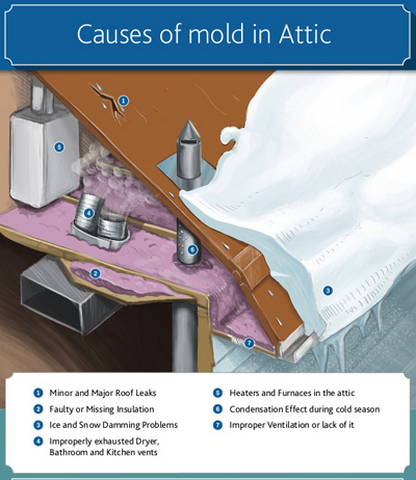
If you have a roof leak, you may see water on your floors and water stains on the ceiling. The good news, you know that you have a problem.
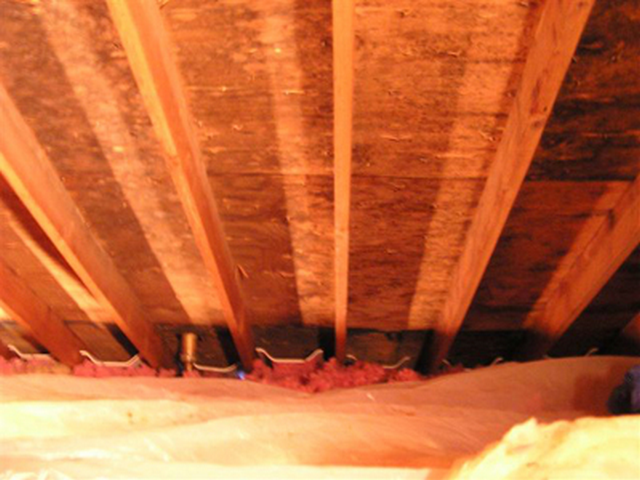
However, if you have a roof leak and it goes unnoticed leading to moisture accumulation in your attic, this will eventually lead to mold growth that you may not even know exists.
This is the reason it is important to inspect your attic several times each year, just to make sure that there is no moisture buildup.
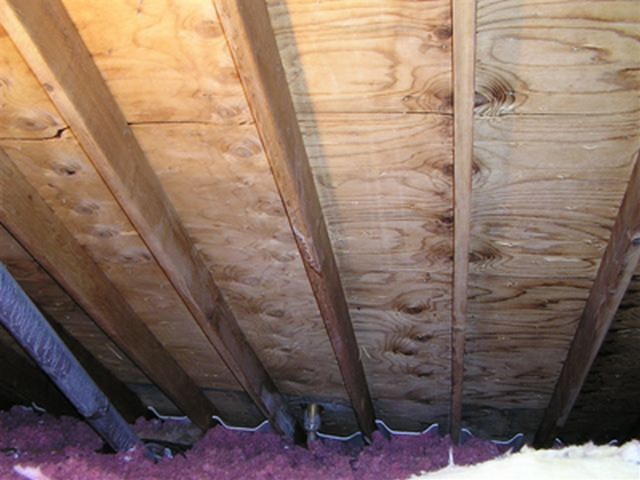
Check for discoloration of insulation and wood (e.g. rafters, sheathing, joists, attic side of fascia boards, etc.).
Check roof valleys (i.e. where two roofs join at an angle), which are highly susceptible to roof leaks.
Observe skylights, chimneys, attic windows and any portion of the attic/roof where dissimilar materials join each other (including flashings). These places are hotbeds for potential moisture intrusion.
If you have a vapor barrier installed, check for condensation. Although this is not really a roof leak, it is nevertheless a sign of a moisture problem. And moisture problems lead to attic mold problems!
Make sure there are no leaks coming from and around attic plumbing stacks.
The first step to addressing the moisture cause is to get your roof repaired, then call us to remove the mold.
#2 Missing Insulation or Improperly Installed Insulation
The quest to save money on heating and cooling bills motivates many Do-It-Yourselfer’s to install more insulation in their attics.
Unfortunately, if the wrong kind of insulation is chosen or if it is installed improperly, this can cause moisture from the lower levels of your home to rise and get trapped in the attic.
As we have written before, the primary cause of mold growth is moisture. Your attic is made of the food mold loves to feed on.
With respect to the type of insulation, if you are layering insulation on top of other insulation, make sure you do not use the kind that has paper or foil backing because it acts as a vapor barrier and can trap moisture in the insulation.
Before you decide to add more insulation to your attic, determine if you need more first. If you are unsure, contact a professional.
#3 Inadequate Attic Ventilation
One of the problems we have encountered in our projects is the fact that insulation is blocking the ventilation ducts that distribute air in the attic.
The lack of ventilation is another major cause of mold growth in your attic.
Air travels up to the attic meaning activities such as cooking, bathing, showering, etc will produce moisture that will makes it way up to the attic. If there is poor ventilation, the moisture gets trapped in the attic and can lead to mold problems.
Check your soffit vents and make sure they are free of insulation, bird nests, and other debris that could be blocking them and preventing proper air flow.
If you are unsure if the ventilation is ideal in your attic, contact a home inspector or give us a call so that we can take a look.
#4 Fans Vented Into The Attic
Mold will grow if there is moisture, food, and warmth.
Poor building practices occur when the dryer vents, plumbing vents, kitchen or bathroom fans are vented into the attic.
Dryer exhaust vents, kitchen exhaust fans and bathroom exhaust fans are designed to pump moisture out of your home. Make sure that they are vented to the outside of your home and not in the attic.
Plumbing stacks in the attic can also be a source of condensation, which can lead to attic mold growth. Plumbing stacks can also emit hazardous gases, so make sure that they too do not terminate inside the attic.
If any of your vents are routed into the attic, hire a reputable contractor to re-route the vents to the outside of your house.
Got Attic Mold Questions?
Once the cause of your attic moisture issues are identified, then the next step is to determine if you have a mold problem.
Mold is nature’s recycler and will grow and proliferate when moisture is present.
Condensation in an attic, heat and humidity from household activities (cooking, showering, etc.), and the fact that the attic provides an excellent food source for mold, provides the ideal conditions.
All mold needs to grow is 24 to 48 hours and as long as the proper conditions exist, it will continue to proliferate.
If you do find mold in your attic, DO NOT use bleach or try to kill the mold!
During the inspection, tape or swab samples of suspected mold may also be taken and sent to a micro-biology lab.
Once the type of mold and spore count is determined, we will provide with a scope of work on the best way to remediate the mold in your attic.
If you suspect that you may have mold in your attic or other areas of your home or business, call 678-697-6267 or send us an e-mail. We look forward to serving you! 🙂
One of the most common problems we encounter is mold in crawl spaces. The purpose of this article is two fold.
First, we will answer the most common questions asked about crawl spaces.
Second, we will explain why crawl space encapsulation is so important by listing and explaining the top 5 reasons your crawl space needs a vapor barrier.
Frequently Asked Questions About Crawl Spaces!
Frequently Asked Questions About Crawl Spaces!
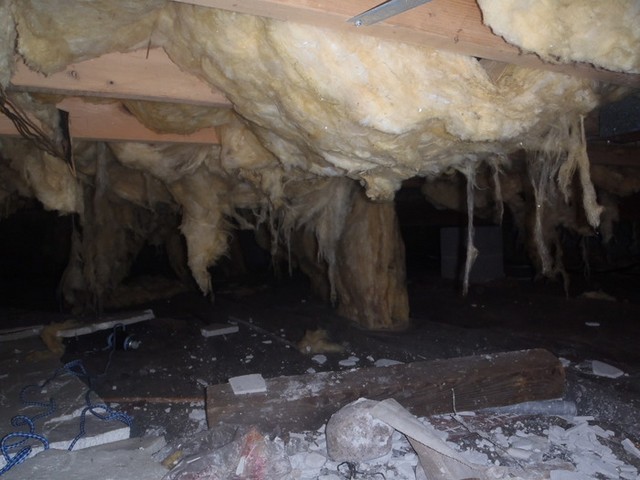
If you look into your crawl space, you may notice standing water, moldy insulation, or a bad smell. Listed below are the top questions we encounter about crawl spaces.
1. Why Does My Crawl Space Get Wet?
Your crawl space could be wet for several reasons:
Cracks in the foundation or walls allow water and moisture to enter your crawl space.
Improper ventilation can allow moisture in.
Poor drainage systems also allow moisture and water in.
Poor maintenance and not sealing the dirt floor is another common reason your crawl space is wet or damp.
2. Why Should I Be Concerned About A Wet Crawl Space?
There are two key problems caused by wet or damp crawl spaces.
First, if your crawl space has standing water or is damp, this will encourage the growth of mold and mildew.
Second, the excess moisture and mold will also cause wood rot and structural deterioration.
Unfortunately, vents will not keep your crawl space dry.
Moisture and humidity can still accumulate in your crawl space, which in turn will lead to mold and wood rot.
In addition, often times the air flow is impeded when the vents get blocked by plants or other object outside the vent. When this occurs, water that collects around the home or drips down the exterior walls can enter your crawl space creating moisture problems.
The ventilation system must be inspected to ensure it is working efficiently. If not, it needs to be fixed.
The next step is to figure out why you have a moisture problem in the crawl space by finding and fixing any cracks, holes, leaks, or damage to the walls, ceiling, and floors.
The final step is to seal up the damaged areas and install fresh insulation, and most importantly install vapor barrier, which is explained in greater detail below.
Now that you have answers to the most common questions we encounter about crawl spaces, the remainder of this article will explain why the installation of vapor barrier is so important.
Five Reasons Your Crawl Space Needs A Vapor Barrier!
Five Reasons Your Crawl Space Needs A Vapor Barrier!
#1: Keep Moisture in the Soil!
According to the EPA, a vapor barrier will keep your home drier and is especially recommended for older homes to control dampness. In Atlanta, where humidity is a big issue, your crawl space likely has moisture and damp issues and a vapor barrier will help keep the moisture down because it will prevent moisture from escaping from the soil.
Installed correctly and spread uniformly across the soil and the the walls of your crawl space, the vapor barrier creates a barrier between moisture and your home.
It is important to keep moisture at a minimum to prevent metal from rusting and corroding.
#3: Prevent Wiring Hazards
Many crawl spaces also have wiring. Water and electricity do not mix well. Accumulation of excess moisture is a potential fire hazard and could create an unsafe environment for anyone that enters the crawl space.
#4: Keep Your Home Dry
Since excess moisture in your crawl space can enter your home through the floor boards, keeping the moisture to a minimum will also help maintain moisture levels in your home.
In addition to a damp free home, a vapor barrier will also reduce your utility bills because your air conditioner will operate more efficiently.
The risk of excess dampness and moisture in your home is mold. If your crawl space is wet and that moisture enters your home, you will not only have mold problems in the crawl space but your home.
As mentioned earlier, mold can cause health problems; moisture control is imperative in both your home and crawl space.
#5: Keep Your Crawl Space Clean
Your crawl space is an area of your home that you can potentially use for storage. In order to ensure that your crawl space is a safe and clean environment, a vapor barrier will reduce moisture and also keep the area clean and less inhabitable for rodents and insects.
If you plan to use your crawl space for other uses, such as storage, we recommend that you use a stronger and thicker barrier.
The most important role that a vapor barrier plays is keeping the moisture in the soil. At the same time, it will help maintain a cleaner and safer environment for you, should you choose to use it for storage or other uses.
Got Crawl Space Questions?
If you have questions about your crawl space, please give us a call, 678-697-6267 or send us an e-mail. We look forward to serving you! 🙂
Top 5 Ways Your Crawl Space Affects Your Home Infographic
If you have not visited your crawl space, take a look. Typically, you will find the following:
Dirt. Most homeowners have a bare dirt or rock crawl space.
Ductwork. Many of your home appliances run out through the crawl space area. Washers, dryers, and plumbing pipes are often found running along the ceiling of the crawl space, to be vented or piped to the outdoors or external holding tanks. Ductwork for the home heating and cooling systems are also usually found here.
Plumbing Pipes. Home plumbing is usually found in your crawl space, funneled outside to your septic tank or the sewer system. These pipes are usually heavy duty so most homeowners are unconcerned about their safety. However, these pipes still require maintenance and care. Changes in temperature during the warmest and coldest months as water flows through them can cause condensation. Condensation and the increase of moisture in the air leads to mold growth.
Electrical Wiring. Along the ceiling and walls of the crawl space you will usually see electrical wiring. Keeping these safe from the gnawing teeth of crawl space vermin is important.
Vents. You will also notice various vents along the bottom walls of your house. These vents allow for air movement and ventilation for your crawl space.
Insulation. Insulation is important. If you see nothing but bare beams and dirt, this is a concern. Up to 40% of your air comes up from the crawl space. You can lose up to 45% of your home’s heating and cooling energy through non-insulated crawl spaces. In addition, non-insulated crawl spaces are will incur mold growth and attract insects, rodents, and other crawl space vermin.
Vapor Barrier. Vapor barriers help maintain the health of your crawl space and your family. Crawl spaces protected from excess moisture are less likely to develop mold or allow vermin and insects into your home. Vapor barriers protect not only your crawl space, but your entire home.
Beams. Beams, heavy wooden or metal support structures, keep your home structurally sound. These beams run vertically and horizontally through your crawl space structure.
Drains/Pumps. You may also notice a drain in the floor of your crawl space. Usually this is a sump pump, a water pump designed to carry any excess water away from the house in the case of a flood. Drains allow excess water to drain away a safe distance from the house, usually 6 feet or more.
Critters and Other Creepy Crawlers. It’s all too common that a homeowner pokes his head into his crawl space to discover a happy population of insects, mice, rats, squirrels, or even snakes! Getting these invaders out of your home can be challenging. To be safe, call a pest control company.
Four Clues That You Have Issues With Your Crawl Space!
While you are taking a look at your crawl space, give Mold B Gone a call if you find any of these problems:
Standing Water or Water Damage: Water damage can weaken the foundations and walls of your home, and needs to be dealt with quickly.
Mold. Mold can be hazardous. If you have large areas of mold spreading across your beams, in your insulation, or along the ground it needs to be removed. Left unchecked, mold can severely damage your home and your air quality.
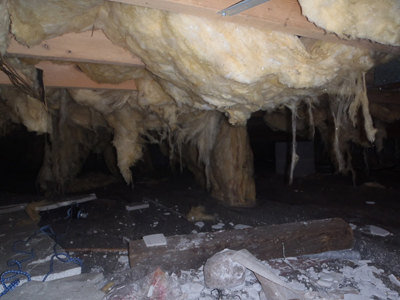
Ruined Insulation: No insulation lasts forever, though some types of insulation are more long lasting than others. When insulation is falling to pieces or has rodents nesting in it, it’s time to remove the old insulation and replace it.
High Humidity: Knowing your crawl space humidity is essential to keeping it clean and safe. Vapor barriers are an important part of a crawl space because it prevents moisture and high humidity, something that creates a breeding ground for mold and pests. If you have a bare dirt floor, crawl space encapsulation is important.
Now that you understand what is in your crawl space and the top four signs that you may have issues with your crawl space, the remainder of this article will list the top 5 ways your crawl space affects your home.
#1 Poor Air Quality
Moisture accumulates in your crawl space because of high humidity, changing temperatures that leads to condensation, rainy weather, and the lack of preemptive solutions, like a vapor barrier. For this reason, it is important that the moisture content of your crawl space is monitored properly.
If the moisture content of your crawl space is not monitored, mold and rot will grow in the insulation or on the wooden beams. When the mold grows, it releases mycotoxins that can seep through the floorboards of your home, which in turn can cause sickness.
Even though the mold is growing under your home, you need to take action because 40% of the air in your home seeps up through the crawl space.
Simply put, if your crawl space has mold problems, then the indoor air quality of your home will be negatively affected.
#2 High Energy Bills
Properly insulating your crawl space will save on utility costs because the insulation prevents temperature transfers. This will ensure that your home stays cool when the air conditioner is running and warm if you need to heat your home during the colder months.
#3 Rodents and Insects
Despite the fact that your crawl space may be surrounded by a thick layer of concrete serving as the foundation, your crawl space may not be as predator-proof.
There are two key reasons that rodents and insects can affect your home.
First, droppings and feces left behind will affect the air quality inside your home.
Second, certain rodents, like squirrels will get curious and start chewing on any exposed electrical wires, ruin insulation, or rip holes in a vapor barrier.
#4 Damaged Subfloor
Moisture accumulation in your crawl space will not only affect the air quality of your home, it can also seep through the ceiling of the crawl space and damage your sub-floor. When this occurs, it will begin to warp and eventually need to repaired or replaced.
#5 Compromised Foundation
More than just the subfloor, however, moisture problems can also cause issues for the foundational level of your home. The wooden beams that hold up your home’s structure can be damaged by consistent exposure to high levels of moisture, condensation, or humidity. In some not-so-uncommon cases, crawl spaces have actually flooded, causing significant structural damage that resulted in thousands of dollars of repair work.
The Ultimate Mold Education Resource (50 Articles)
The Ultimate Mold Education Resource (50 Articles)
The goal of Mold B Gone is to educate our customers about mold. We strongly believe that an educated and informed consumer can make better decisions when they have concerns about mold.
Included in this article are 50 links to articles that will help you learn about mold.
Please bookmark this page because we will update it with new articles as they are researched and published.
This article explains what you should and should not do if you find mold in your home, church, school, day care center, store, office building, restaurant, or hotel!
Top 3 Reasons Your Crawlspace Has High Humidity. This article explains why your crawlspace is humid, why this leads to mold and how you can fix the problem!
This article provides you with information to help you determine if you have a mold problem and explains what you should and should not do if you do find mold.
The purpose of this article is to answer the most common questions asked about crawl spaces and explain why your crawl space needs a vapor barrier. Learn more!
Recently a news article featured a woman who believes that she was poisoned by toxic black stachybotrys mold. This article explores this topic further!
The purpose of this article is to help you determine if mold and the indoor air quality of your child’s school is making them sick and what you can do. Learn more!
Wondering if you are sensitive to mold? This article explains how to determine if you are mold sensitized, seeking treatment, and the next two steps to health!
Potential Health Complications Mold Exposure Has On Pregnant Women and Infants! Questions answered about SIDS, asthma, miscarriage, and pulmonary hemorrhage.
25% of people are genetically pre-disposed to mold illness. This article explains why, citing scientific research and 37 symptoms associated with CIRS.
This article explains why many suffering from CIRS are diagnosed with depression caused by mold. Both scientific and anectodal data are cited. Learn more!
Top 3 Reasons Mold Sickness Is A Hidden Epidemic! You could be sick from mold and not even know it. This article explains why mold is a hidden epidemic!
37 million Americans suffer from sinusitis. Cause? This article lists the top 10 stats and facts citing MAYO clinic research that believes mold is the cause!
According to the CDC, rates of asthma among children in Georgia is 3% above the national average. Is mold a factor? This article cites stats and research!
Flood and water damage not only disrupts your life but can also be hazardous to your health! This article explains the top 3 hazards and prevention measures!
A flooded home or business is always a stressful situation. This blog provides you with the 3 steps required to reduce flood damage and most importantly, mold!
Home improvement is an American tradition. But, did you know that 6 out of 10 homes could have mold? Renovating can cause serious problems. Learn more!
Basements are susceptible to mold growth. The first clue of mold is a musty smell. This article provides you with 10 tips to prevent basement mold. Learn more!
If you or someone in your family suffers more frequently from colds or flus and you are not sure why, the cause could be poor indoor air quality. Learn more!
Have a mold concern, wondering what it will cost to remove? This article provides you with a detailed explanation of how mold removal cost is determined!
Mold sprays, bleach, biocides, and fungicides are an ineffective “short cut” to mold removal. Killing mold is not the answer! This article explains why.
Mold Removal Is Referred To As Mold Remediation Because Professionals Follow These 8 Steps. This article explains the steps and why you need to hire a pro!